
How Physical Education Improves Reading and Math Scores
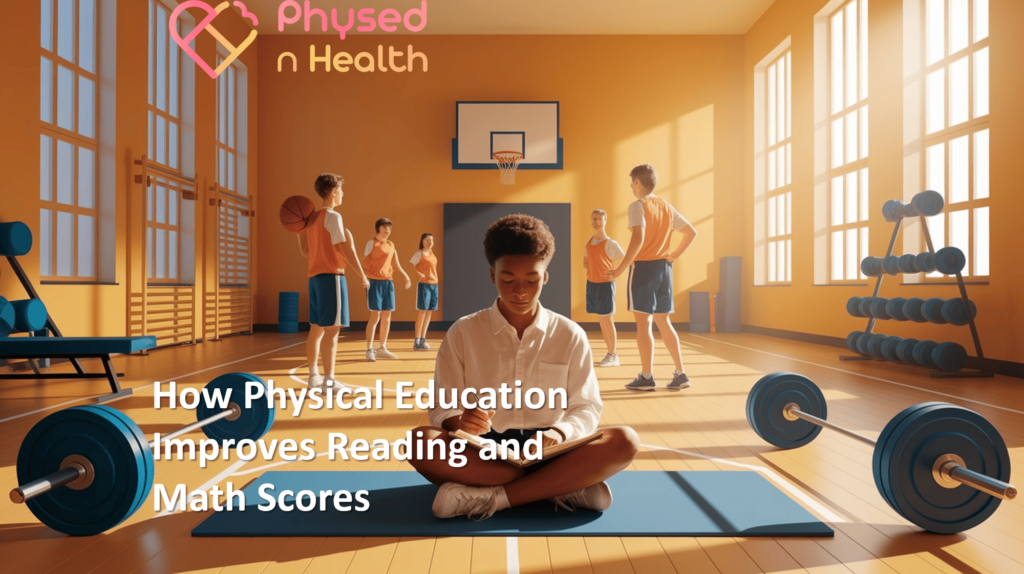
How Physical Education Improves Reading and Math Scores Physical education is more than just movement—it’s a powerful academic tool. Research shows that well-structured physical education (PE) programs significantly boost student achievement in core subjects like reading and math. This article explores how physical education improves reading and math scores, the science behind it, and practical strategies for implementation in schools. The Science Behind Physical Education and Academic Success Numerous studies support the positive connection between physical activity and academic achievement. Students who regularly engage in physical activity demonstrate improved concentration, memory, self-esteem, and verbal skills. A 2023 study in Frontiers in Psychology found that students who exercised for two hours showed academic improvements of 3.249 standard deviations, highlighting a strong link between physical education and cognitive performance. Research also shows an inverted U-shaped relationship—moderate activity improves academic outcomes, while excessive activity (over three hours) can have diminishing returns. This balance is crucial in maximizing the benefits of PE for learning, particularly in reading and mathematics, where scores have declined nationally in recent years. The connection extends to both reading and mathematics. As reading scores continue to decline nationally, with NAEP reporting a two-point drop for both 4th and 8th graders in 2024, implementing effective physical education programs offers a promising strategy to address these concerning trends How Physical Education Enhances Brain Function Physical activity stimulates brain cell growth, increases blood flow, and releases hormones that optimize brain function(link). These physiological benefits translate to better working memory, attention span, and information processing speed—key skills for reading comprehension and mathematical reasoning. Gender-specific responses to physical activity also emerge in the research. Boys show the highest gains with around two hours of exercise, while girls benefit most from one hour, emphasizing the need for personalized, flexible PE programming. Strategies for Improving Reading through Physical Education Integrating Literacy into Movement Embedding literacy activities into PE lessons helps students develop reading skills in a dynamic context (link). Activities such as phonics relay races, vocabulary scavenger hunts, and storytelling yoga reinforce comprehension while keeping students physically active. Reciprocal teaching in PE—where peers guide and provide feedback—also boosts verbal communication and reading comprehension. Using Movement Breaks to Support Reading Focus Short physical activity breaks (3–5 minutes) before or during reading instruction have been shown to increase focus and retention, especially for struggling readers. Activities that cross the midline of the body enhance hemispheric integration in the brain, further supporting literacy development. Strategies for Strengthening Math Skills Through Physical Education Math-in-Motion Activities Integrating math into PE (link) makes abstract concepts tangible. Students can calculate heart rates, graph performance, or measure distances, providing practical applications for math skills. Activities that involve measuring, counting, or spatial awareness help reinforce numeracy and mathematical reasoning in real-world contexts. Structured Games to Reinforce Math Concepts Games that use geometry, symmetry, and estimation teach mathematical thinking through movement. Forming shapes with bodies, solving math challenges in relay races, or estimating then measuring distances are excellent ways to engage kinesthetic learners. Practical Implementation for Educators Designing High-Impact PE Programs Effective PE programs balance direct instruction (for skill introduction) with indirect methods (for creativity and student ownership). Aim for moderate-intensity activity sessions lasting up to two hours to optimize cognitive and academic gains. Use a mix of teaching styles (command, exploration, and reciprocal) to accommodate diverse learners (link). Classroom Integration of Physical Activity Even without a dedicated PE teacher, classroom educators can incorporate standing stations, movement-based transitions, and kinesthetic learning tasks. These methods boost engagement and cognitive functioning throughout the school day. Gaining Administrative Support for PE Initiatives Presenting Research-Backed Results To gain administrative buy-in, present data demonstrating how physical education improves reading and math scores. Use specific statistics—like the 3.249 standard deviation improvement from two hours of physical activity—as evidence. Highlight that physical education is a cost-effective strategy that supports health, academics, behavior, and attendance. Collaborating for Sustainable Programs Form teams that include PE teachers, classroom educators, administrators, and parents to design and refine programs. Offer professional development and establish metrics to track academic and physical outcomes. This collaborative approach ensures long-term success. Optimizing PE Time for Maximum Academic Impact Identifying the Sweet Spot Two hours of moderate physical activity appears to yield the greatest academic benefits. For girls, one hour may suffice, while boys benefit more from two. Tailoring PE offerings based on these findings ensures each student receives the optimal amount of exercise to support their learning. Prioritizing Quality Over Quantity Incorporate activities that engage cognitive processes such as decision-making, pattern recognition, and strategy. Moderate-to-vigorous intensity sessions are best, but accessibility for all students must be maintained. Directly linking PE content to classroom learning strengthens knowledge transfer. Enhancing Learning Through Reflection and Goal Setting Student Journaling in PE Encouraging students to reflect on their physical experiences through journaling enhances comprehension and critical thinking. Prompts like “What strategy did you use?” or “How can you apply this in class?” support metacognition and literacy development. Setting SMART Goals for Academic Growth SMART goals (Specific, Measurable, Achievable, Relevant, Time-bound) help students stay motivated and focused (link). Students who set academic goals often demonstrate improved homework completion and test scores. Integrating goal-setting into PE nurtures discipline, perseverance, and academic accountability(link). Using Student Growth Objectives (SGOs) SGOs help teachers monitor progress and adjust instruction accordingly. These objectives work particularly well in non-tested areas and support cognitive, emotional, and social growth. For example, Carter County Schools saw a 9% increase in reading progress after implementing goal-setting strategies(link). Rethinking the Role of Physical Education The evidence is clear: physical education improves reading and math scores when implemented strategically. Rather than competing with academic instruction, PE supports and enhances it. By embracing an integrated model that values both movement and learning, educators can help students achieve academic success while building lifelong physical literacy. As schools strive to raise achievement, physical education must be viewed as a critical academic intervention, not a luxury. The future of effective education includes physical activity at its core—fueling not only the body but also the
Personalized Fitness Plans: Using AI to Tailor PE to Individual Needs
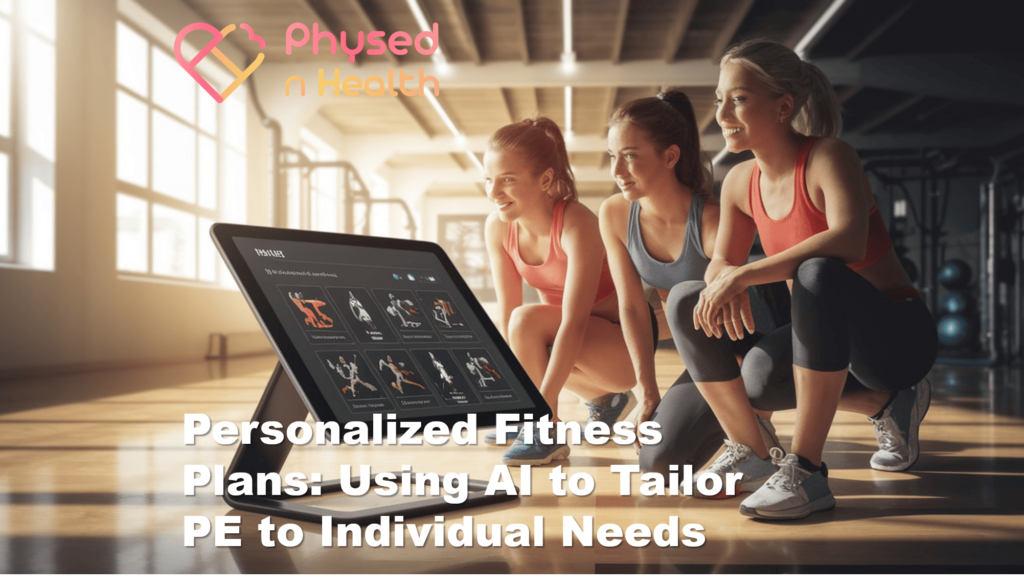
Personalized fitness plans are revolutionizing the way physical education (PE) is delivered, and artificial intelligence (AI) is at the forefront of this transformation. By using AI to tailor PE to individual needs, educators can create customized programs that cater to each student’s goals, abilities, and preferences. This blog explores how AI-powered fitness plans can enhance student engagement and success, provides sample AI prompts for creating personalized programs, and outlines a practical implementation strategy for schools. Why Personalized Fitness Plans Matter in PE Traditional “one-size-fits-all” fitness programs often fail to meet the diverse needs of students in PE classes. Personalized fitness plans address this issue by tailoring activities to individual goals, skill levels, and physical limitations. Using AI to tailor PE to individual needs allows educators to: How AI Enhances Personalized Fitness Plans AI-powered tools analyze data such as fitness goals, body metrics, and activity preferences to create tailored workout plans. These tools also adapt over time based on student progress, ensuring continued effectiveness. Key Benefits of Using AI in PE: Sample Detailed AI Prompts for Personalized Fitness Plans Safeguarding Student Privacy: A Top Priority When using AI to tailor PE to individual needs, protecting student data is paramount. Schools must ensure that personalized fitness plans are created and implemented without compromising student privacy or security. AI tools like ChatGPT can generate highly customized fitness plans using detailed prompts. Below are examples of base prompts and templates you can use: Base Prompt Template “Create a personalized 6-week fitness plan for a [age]-year-old [gender] at a [fitness level] level aiming to [fitness goal]. The program should include [specific types of exercises] while considering [injuries or limitations].” Sample Prompts Advanced Prompt Chain Example These prompts can be used with platforms like ChatGPT or other AI tools to quickly generate tailored plans that meet individual needs. Implementation Strategy for Schools Introducing personalized fitness plans using AI in schools requires careful planning and execution. Below is a step-by-step strategy: 1. Assess Student Needs Collect baseline data such as fitness levels, goals, injuries, and preferences using surveys or wearable devices. 2. Choose the Right Tools Select an AI platform that aligns with your school’s needs and budget. Options like PhysednHealth provide comprehensive solutions tailored specifically for schools. 3. Train Educators Provide professional development sessions on how to use AI tools effectively in PE classes. Resources like the SHAPE America website offer valuable training materials. 4. Pilot the Program Start with a small group of students to test the system’s effectiveness before scaling up school-wide implementation. 5. Monitor Progress Use AI analytics dashboards to track student progress over time and make adjustments as needed. Building Trust Through Proven Results At PhysednHealth, we’ve seen firsthand how personalized fitness plans can transform student outcomes when powered by AI. In 2024 alone: These results highlight the profound impact of using AI-driven personalized fitness plans in schools. Conclusion: Empowering Students Through Personalization The future of physical education lies in personalization—and using AI to tailor PE to individual needs is the key to unlocking every student’s potential. By implementing personalized fitness plans powered by AI, schools can create inclusive programs that foster engagement, improve health outcomes, and build lifelong habits. Ready to transform your PE program? Explore innovative solutions at PhysednHealth or learn more about how technology is reshaping education at PE Scholar. Take the First Step Towards Personalized Fitness Today!Sign Up for a Free Demo with PhysednHealth to discover how AI can revolutionize your school’s PE program. Click here to schedule your demo now and start empowering your students with tailored fitness plans that drive real results! You can also contact us at awesome@physednhealth.com. PhysednHealth is a leading physical education and student wellness technology platform designed to help schools modernize PE with smart, standards-based tools. Our easy-to-use physical education software empowers teachers to track student progress, set SMART fitness goals, and promote mental and physical well-being. Trusted by educators worldwide, PhysednHealth brings data-driven insights, AI-powered assessments, and personalized learning to PE programs—helping students build lifelong healthy habits. P.S. We are actively working on an AI Guide for PE K12 Schools. Email or drop a comment if you would like to see specific information covered in the guide.