
Why PE Teachers Are Now Your Child’s Therapists (And Failing)
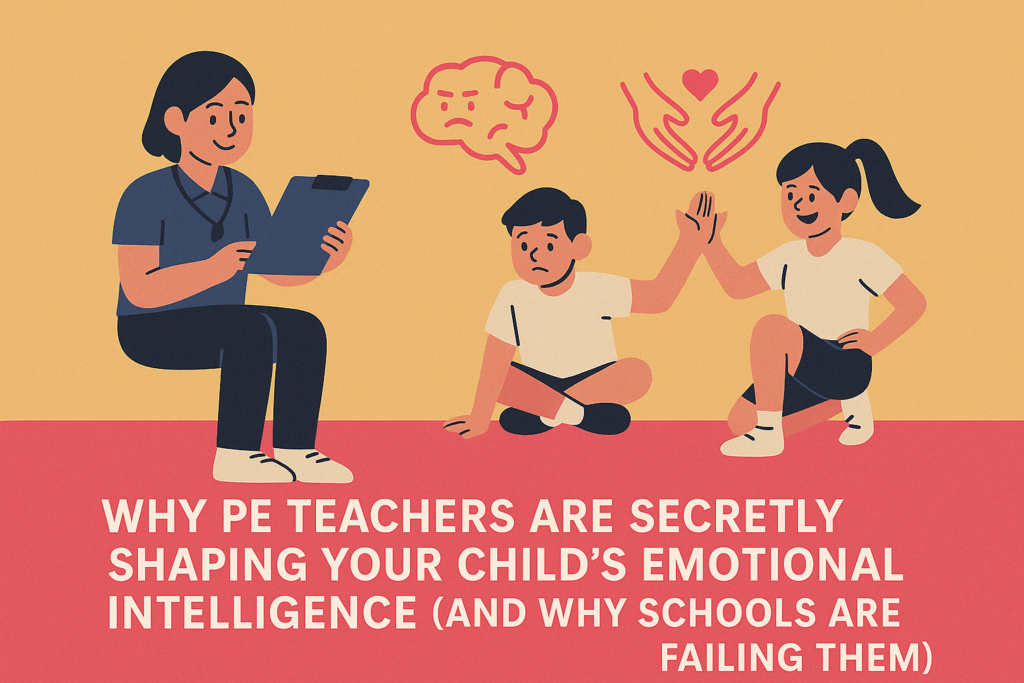
The Hidden Burden on PE Teachers: More Than Just Dodgeball Transform your response to life’s challenges in just 10 minutes a day! Think back to your school days. Gym class probably meant running laps, playing dodgeball, or awkwardly attempting push-ups while the teacher blew a whistle. But what if I told you that today’s PE teachers are doing far more than just coaching sports? They’re now on the frontlines of your child’s emotional and social development—often without the training, resources, or support they need to succeed. And schools are quietly dumping this responsibility on them. Why Physical Education is the Perfect (and Most Overlooked) Place for SEL Social-emotional learning (SEL) has exploded in education, with schools scrambling to teach kids self-awareness, empathy, and resilience. But while classroom teachers struggle to fit SEL into math and reading, PE is a natural fit. Here’s why: Yet, despite this perfect alignment, PE teachers are being set up to fail. The Shocking Reality: Schools Expect SEL Magic Without Support Imagine being told: “Oh, by the way, you’re now responsible for fixing kids’ emotional trauma—good luck!” That’s essentially what’s happening. One teacher put it bluntly: “SEL is essentially therapy, and to do therapy, you need to be trained like a therapist.” Another added: “Our students come from poverty-stricken, broken homes. Throwing an SEL goal at us without support is a joke.” How PE Teachers Can Successfully Integrate SEL (When Given the Right Tools) The good news? It’s possible—if done right. Research shows that structured SEL in PE actually works when teachers have: 1. Explicit SEL Lessons (Not Just Hoping It Happens) 2. The TPSR Model: A Game-Changer for SEL in PE The Teaching Personal and Social Responsibility (TPSR) framework structures SEL into PE: Studies show this reduces conflicts and improves behavior. 3. Schools Must Step Up (Or SEL Will Keep Failing) How can PE teachers measure the impact of SEL on student development To effectively measure the impact of SEL in physical education, PE teachers can employ a combination of quantitative and qualitative assessment methods, supported by recent research findings: Quantitative Measurement Tools Qualitative Assessment Methods Mixed-Method Approaches Combine quantitative and qualitative data for a holistic view: Implementation Considerations By integrating these strategies, PE teachers can systematically evaluate SEL’s impact while reinforcing the skills through intentional practice and reflection. The Bottom Line: SEL Belongs in PE—But Not Like This Physical education is the most underrated SEL powerhouse in schools. But if we keep expecting PE teachers to work miracles without support, we’re setting them—and our kids—up for failure. It’s time to stop pretending. Either give PE teachers the tools they need—or stop acting surprised when SEL programs flop. What do you think? Should SEL be a bigger focus in PE? Or are we asking too much of gym teachers? Comment below! Looking to fundraise? Visit WellPledge to start your campaign today! Learn more at PhysednHealth. Contact us at awesome@physednhealth.com PhysednHealth is a leading physical education and student wellness technology platform designed to help schools modernize PE with smart, standards-based tools. Our easy-to-use physical education software empowers teachers to track student progress, set SMART fitness goals, and promote mental and physical well-being. Trusted by educators worldwide, PhysednHealth brings data-driven insights, AI-powered assessments, and personalized learning to PE programs—helping students build lifelong healthy habits.