
Why Self-Regulation Belongs in PE
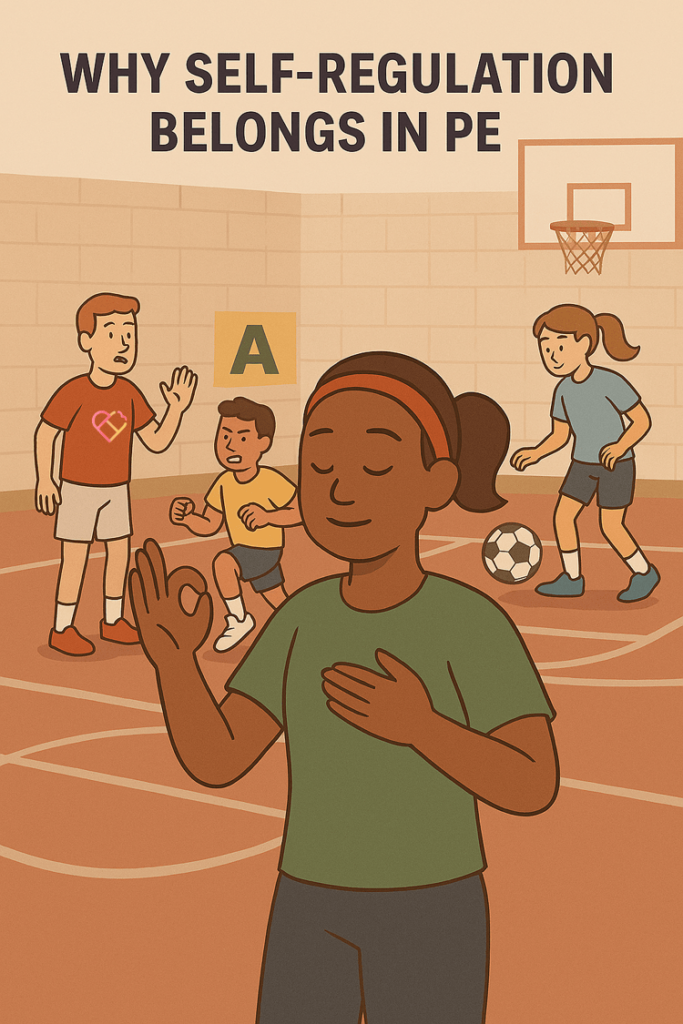
Self-regulation is the ability to manage thoughts, emotions, and behaviors so students can stay focused on goals, even under stress or excitement. In K–12 PE, self-regulation shows up when students handle a bad call, wait for a turn, or reset after losing a game and choosing to stay engaged instead of checking out. Research links stronger self-regulation with higher academic achievement and better classroom behavior, which means every rep students get in the gym can translate into gains in the classroom. Physical activity itself boosts self-regulation, especially when it is moderate-to-vigorous, enjoyable, and includes chances to practice emotional control. Science Behind Movement and Regulation Studies show that regular physical activity is associated with better emotional and behavioral regulation from ages 7–14, partly explaining why active students often do better academically. Outdoor and enjoyable movement experiences may have an even stronger impact on mental well-being and self-regulation than indoor, low-engagement activity. Social-emotional learning (SEL) programs integrated into PE have improved teamwork, self-awareness, and self-management, and reduced behavioral problems like aggression and bullying. When PE intentionally teaches SEL, students gain practical tools for recognizing emotions, pausing, and choosing pro-social behaviors during high-energy games. Everyday Routines That Teach Self-Regulation Embedding self-regulation does not require a new unit; it requires intentional routines you repeat daily. Small, predictable structures help students anticipate expectations and gradually internalize calm-down and reset strategies. Try these daily routines: Regulation Skills Embedded in PE Activities Self-regulation grows fastest when it is practiced inside meaningful, emotionally charged moments like competition, teamwork, and performance. Instead of pausing PE to “teach SEL,” layer regulation prompts into activities students already love. Use these strategies across grade bands: Making It Sustainable and Visible To make self-regulation a lasting part of PE culture, it needs to be named, noticed, and reinforced. When students hear the language consistently, they begin to use it independently with peers and in classrooms beyond the gym. Consider these implementation moves: This science-backed, routine-based approach turns everyday K–12 PE into a powerful training ground for self-regulation, helping students manage energy, emotions, and behavior wherever they go in school. Discover PhysednHealth innovative approaches to promote health and engagement in physical education. Contact us at awesome@physednhealth.com.