
Why PE Teachers Burn Out Even When They Love Their Job
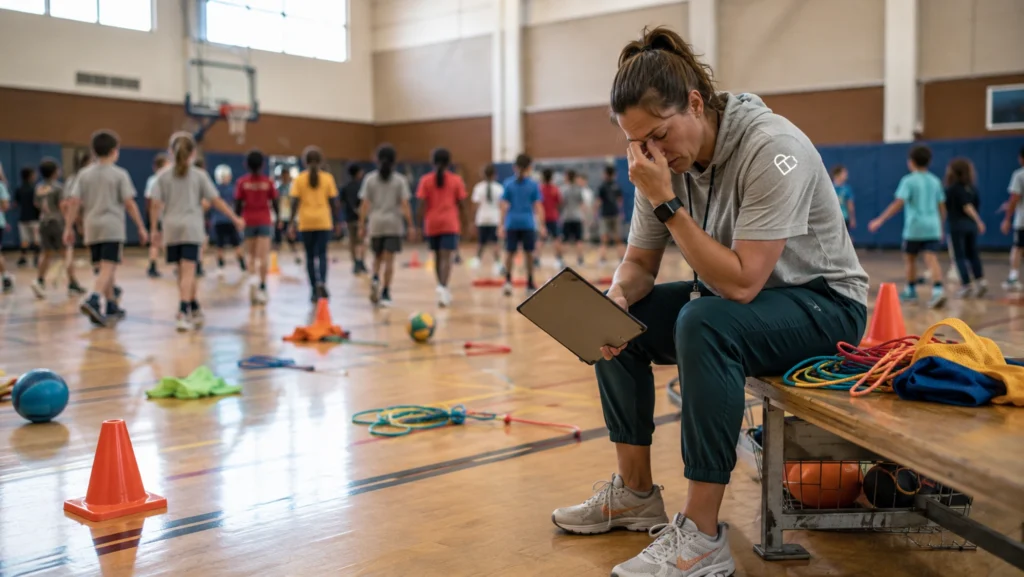
PE teacher burnout is a growing issue in K–12 education, even among educators who genuinely love what they do. While physical education is often associated with energy, movement, and student engagement, the professional demands placed on PE teachers are uniquely intense—and frequently overlooked. The Hidden Complexity of PE Teaching Unlike many classroom roles, PE teachers operate in highly dynamic, high-visibility environments. Research on occupational burnout (Maslach & Leiter, 2016) identifies workload, lack of control, and insufficient recognition as key drivers—and PE teachers often experience all three simultaneously. A typical PE teacher may manage: This creates sustained cognitive and physical load without the natural pauses that classroom transitions or seated instruction can provide. Always “On”: The Visibility Factor PE teachers are rarely out of sight. Unlike classroom teachers who may have moments of independent student work, PE requires continuous engagement and supervision. This constant visibility contributes to: From a cognitive science perspective, this aligns with “attention residue” and fatigue accumulation, where sustained attention without breaks reduces effectiveness over time. The Equipment and Logistics Burden Equipment management is a major, often underestimated contributor to PE teacher burnout. Responsibilities include: These logistical demands add a layer of operational workload not typically required in other subjects, increasing both time pressure and decision fatigue. Grading and Assessment Challenges Assessment in PE has evolved significantly, with a growing emphasis on standards-based grading, skill tracking, and fitness data. However, PE teachers often: Research shows that unclear or inefficient assessment systems are strongly linked to teacher stress and reduced job satisfaction. The Advocacy Pressure PE teachers frequently feel the need to justify their subject’s value within the broader academic landscape. This advocacy burden includes: Over time, this creates emotional labor—especially when PE is undervalued or misunderstood. Why Passion Isn’t Enough Many PE teachers enter the profession driven by a passion for movement, health, and student well-being. However, passion alone does not protect against burnout. According to the Job Demands–Resources model, burnout occurs when demands consistently exceed available resources. For PE teachers, high demands are often paired with: This imbalance leads to emotional exhaustion, even among highly committed educators. Building More Sustainable Systems Addressing PE teacher burnout requires systemic, not individual, solutions. Schools and districts can make meaningful improvements by focusing on structure and support. Key strategies include: For example, schools that adopt digital assessment platforms for PE often reduce grading time significantly, allowing teachers to focus more on instruction and student engagement. Making PE Teachers Feel Seen One of the most powerful interventions is simple acknowledgment. When administrators and stakeholders understand the full scope of PE teaching, it shifts the conversation from “just gym” to a complex, essential educational role. PE teachers are not just facilitating games—they are managing large-scale, high-energy learning environments while promoting lifelong health behaviors. Recognizing that reality is the first step toward reducing burnout and building sustainable programs.