
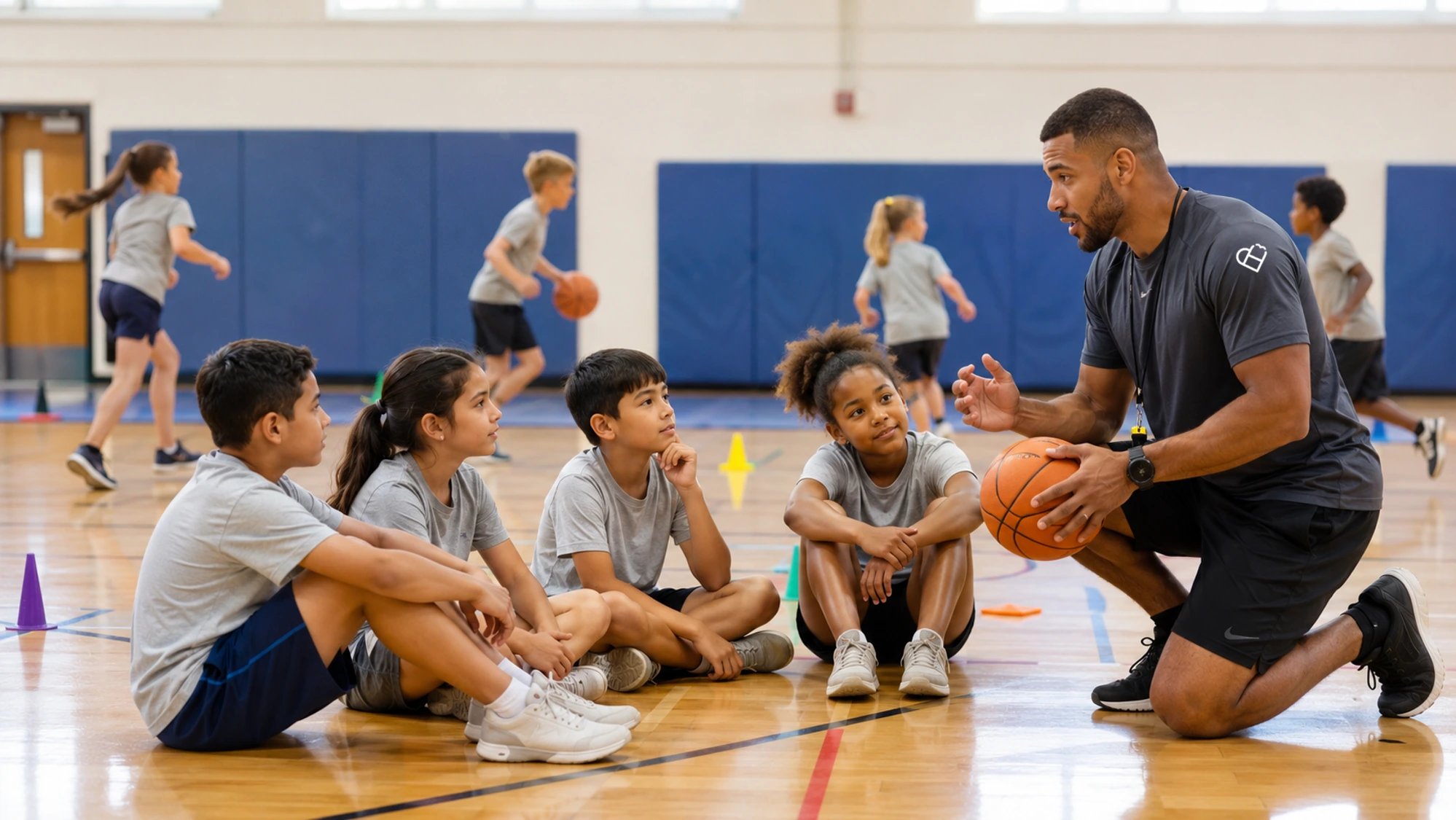
Physical education teachers often feel pressure to keep students moving as much as possible. Because PE is such an activity-driven subject, anything that slows the pace can seem like wasted time. But the science suggests a more balanced view: in PE, the goal is not just to maximize movement, but to maximize learning, engagement, and long-term physical literacy (ncbi).
Why this belief is so common
PE teachers work within a narrow time window, and that creates a strong instinct to protect every minute. If students are sitting, listening, reflecting, or transitioning, it can feel like the class is losing momentum. In a subject where activity is visible, it is easy to assume that only constant movement counts as real instruction (news.ku).
That belief is reinforced by how PE is often perceived. A class full of active students looks productive, while a class with brief pauses for explanation or feedback may look less efficient. Over time, that can create a culture where teachers equate motion with quality, even when the most effective lesson design includes both movement and short instructional pauses.
What the research says
The evidence does support movement as an important part of learning. Physical activity has been linked to better attention, memory, and readiness to learn, which is one reason PE is so valuable in the school day. That means PE teachers are right to care deeply about active time.
But the research also shows that learning is not just about being busy. Students need clear cues, demonstrations, feedback, and opportunities to reflect on what they are doing. In PE, teacher behavior strongly shapes student experience, and instructional quality influences how students understand the purpose of the class and how they carry those habits forward. A few minutes of well-designed instruction can improve the quality of the entire lesson.
Why non-physical time can help
Not all learning in PE happens through movement alone. A short explanation can prevent confusion, a quick demonstration can improve technique, and a brief discussion can help students connect what they are doing to health, strategy, or lifelong fitness. These moments may not look like “exercise,” but they help students get more out of the physical part of the lesson.
This matters because PE is not only about keeping kids active for 30 minutes. It is also about teaching them how to move better, understand why activity matters, and build confidence in being physically active outside of class. If teachers eliminate all non-physical moments, they may actually reduce the quality of student movement and understanding.
A better way to think about instructional time
The real question is not, “How do I keep students moving every second?” The better question is, “How do I make every minute improve learning and movement?”
That shift changes the role of explanation, reflection, and transitions. Instead of seeing them as time thieves, PE teachers can treat them as tools that make movement more effective. A well-placed pause can sharpen focus, improve behavior, and help students practice with purpose. In other words, good PE is not nonstop motion; it is purposeful instruction that leads to meaningful activity (humankinetics).
What science-based PE looks like
Science-based PE balances movement with clarity. It gives students enough structure to understand the task and enough time to practice it well. A strong lesson might include a quick intro, a brief demo, a practice round, feedback, a reset, and then another round of activity.
That approach respects both the physical and educational goals of the class. It recognizes that students learn in stages and that a short instructional pause can prevent bigger losses later. Teachers who plan intentionally are not reducing activity time — they are improving the value of that time.
FAQ
Why do PE teachers protect active time so strongly?
Because PE is a limited-time, activity-centered class, teachers often feel pressure to maximize visible movement. That instinct is understandable, but it can sometimes lead to the mistaken belief that any non-physical moment is wasted.
Does talking in PE reduce learning time?
Not when it is purposeful. Brief instruction, feedback, and reflection can improve technique, behavior, and understanding, which often makes the physical part of the lesson more effective.
Is movement more important than explanation in PE?
Movement is essential, but explanation helps students know what to do, why it matters, and how to improve. The strongest PE lessons combine both.
What is instructional time in physical education?
Instructional time in PE is any time that helps students learn, practice, and improve. That includes movement, but it also includes cues, demonstrations, transitions, and reflection.
How can PE teachers balance movement and instruction?
By keeping explanations short, using clear demonstrations, planning transitions carefully, and giving feedback in ways that support more productive activity. The goal is not less instruction — it is better instruction.
Closing thought
The idea that anything outside direct physical activity steals instructional time comes from a real concern: PE teachers want students moving. But the evidence shows that the best PE lessons are not built on nonstop motion alone. They are built on purposeful teaching that uses movement, explanation, and reflection together to improve learning and lifelong physical activity.
Physednhealth | awesome@physednhealth.com
