
Jump Rope Challenge: Transform Your PE Class
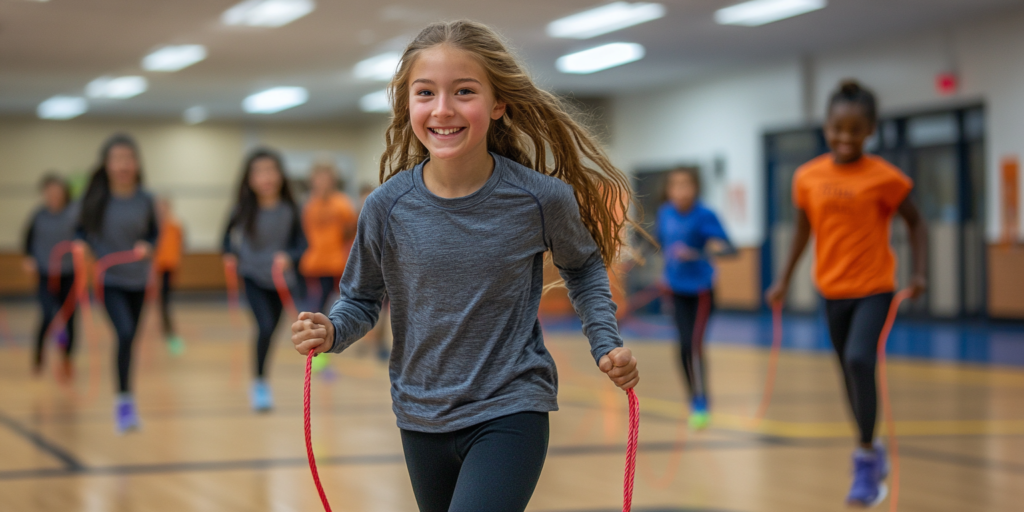
Jump rope exercises are revolutionizing physical education programs across K-12 schools (SHAPE). Discover how PhysednHealth’s digital platform transforms this classic activity into an engaging, measurable fitness jump rope challenge journey for students of all ages. Learn about our innovative tracking tools, reward system, and proven strategies for implementing successful jump rope programs in your PE curriculum. Key Takeaways Benefits of Jump Rope in Physical Education Programs Physical Benefits Modern research shows jump rope training significantly improves cardiovascular health and coordination in students. Regular jumping exercises enhance: Educational Benefits Jump rope programs offer more than just physical advantages. Students develop: PhysednHealth’s Interactive Jump Rope Challenge Features Smart Tracking Tools Our platform offers three specialized training modes: K-12 Jumping Stars Badge System Students earn progressive achievements through our gamified reward system: Implementing SMART Goals in Jump Rope Challenge Training Goal-Setting Framework Transform student potential with our structured approach: Specific Measurable Achievable Relevant Time-bound Comprehensive Lesson Planning Guide For the Jump Rope Challenge Essential Components Duration: 45 minutes Equipment: Jump ropes, PhysednHealth platform access, student journals Lesson Structure Assessment Framework for the Jump Rope Challenge Performance Evaluation Criteria Our comprehensive rubric ensures objective assessment: Get Started with PhysednHealth Transform your PE program with our innovative jump rope platform. Schedule a demo today to experience: Visit PhysednHealth.com to begin your journey toward enhanced physical education.
Fitness Assessment – New PhysednHealth Features
We’re thrilled to announce several new features designed to enhance your experience on the PhysednHealth Fitness Assessment. With these additions, teachers and students will gain even more value and engagement. 1. Timer-Based Push-Up and Curl-Up Test First, track upper body strength and core stability with timed sets and rest periods, while monitoring student progress throughout the year. 2. Customizable High-Intensity Interval Training (HIIT) Tests Next, create personalized HIIT workouts tailored to student needs. Moreover, real-time feedback helps teachers monitor performance and progress. 3. Jump Rope Test Similarly, the classic jump rope test assesses agility, coordination, and endurance. As a result, students can enjoy a fun, interactive fitness challenge with peer comparisons. 4. Customizable Rubrics In addition to assessments, educators can now create custom rubrics for assignments. Consequently, grading becomes more efficient while providing detailed feedback. 5. K12 Standards-Based Curated Resources Lastly, access curated resources aligned with national and state standards. This means teachers can easily find lesson plans, videos, and quizzes tailored to their curriculum. The Impact of These New Features Overall, these updates further strengthen the PhysednHealth fitness assessment features by offering valuable tools that help teachers engage students and promote healthy lifestyles. So, why not try them out today and discover new possibilities for your classroom? For additional standards-based lesson plans, visit SHAPE America and OpenPhysEd. Taking a Holistic Approach to Physical Education As more teachers shift from traditional fitness assessments to student well-being, it is essential to ensure lessons reflect real-life needs. By adopting a holistic approach—considering physical, social, emotional, and mental aspects—teachers can address students’ unique challenges. In turn, this positively impacts their well-being inside and outside the classroom. Learn more about physical activity guidelines from the CDC. Overall, these new fitness assessment features empower educators to create dynamic and meaningful physical education experiences What’s Next? Finally, we’d love to hear from you! What strategies are you using that work well? Please share your experiences to help the community. Contact us to find out more and get started with these exciting features!
Promoting Student Well-being in Physical Education

Modern Approaches to PE The landscape of physical education is evolving. According to the Centers for Disease Control and Prevention, quality PE programs significantly impact academic performance and overall health outcomes beyond traditional fitness metrics. Promoting student well-being in physical education has become a central focus for educators nationwide. Assessment Challenges Traditional assessment methods often overlook crucial factors that affect student engagement and health. Research published in the Journal of Physical Education, Recreation & Dance highlights how conventional standards may not effectively support holistic development, particularly for students with limited access to resources. Implementation Strategies for Success Promoting student well-being in physical education requires innovative approaches, including: Active transportation initiatives Community-based physical activities Mindful movement programs Family-oriented fitness activities Comprehensive Health Integration The Society of Health and Physical Educators (SHAPE America) recommends incorporating: Evidence-based nutrition education Stress management techniques Sleep hygiene awareness Mental health literacy Social-emotional learning activities Measuring Impact Successful programs for promoting student well-being in physical education can be evaluated through: Student engagement metrics Social connection indicators Emotional resilience measures Real-world application of health knowledge Learn how PhysednHealth can enhance your PE program. Looking Forward As educational methods continue to evolve, educators must adapt their approaches to meet changing student needs. This comprehensive strategy supports physical, mental, and emotional development. Share Your Experience What strategies have you implemented in your PE program? Share your experiences to help fellow educators enhance their programs. Contact us to find out more!
Sustainable Transformation in Physical Education? Yes it’s needed.

Teaching PE is very challenging. In fact, I will argue it’s the second hardest thing outside of parenting. It’s a lifestyle. One frustrating thing about PE is the broad framework of the Standards. There’s no uniformity of instruction even among teachers of the same school and same grade level. PE is only successful when it’s memorable and inspiring by bridging the students’ learning with their lifestyle. How can PE be transformed moving forward? Is it its own YouTube channel? Refined standards? Better technology? Google Classroom? FitnessGram? Your input will inspire us all. What’s next? What are you doing that works? Please share so others may benefit. Contact us to find out more!
It works! An activities log for PE engages students and gives teacher valuable insight

Last year, PE teachers designed physical activities tracker/log in PhysednHealth to encourage students to log their activities weekly… Then in January, it happened! Students continued to use the activities tracker even when school was out, on break, or nobody was checking. It worked (not surprised)!!! Students were able to link every day’s unstructured physical activity (helping dad remove the snow) to PE. Engagement and student participation increased by 90%. Teachers gained insight into what students learned in class and how they associated that with their daily lives. Students got in the habit of logging their activities without rewards. The success of the activities log led to school districts adopting a new PE standard next year, asking students to evaluate their health based on their fitness log (we think it should be physical activities log). What’s next? PhysednHealth activities log is part of the free registration. Use it if you don’t have your own. Encourage your students to log their activities outside of school for extra credits, points, etc., until it becomes a habit. Use The 8 Components of a Physical Activity log for PE as a road map to understanding how your students are applying your teachings in their lives (please send us your input if we missed anything). Download the PDF The 8 components of a physical activity for PE What are you doing that works? Please share so others may benefit. Contact us to find out more!
CHILDHOOD IN THE TIME OF COVID by Save the Children

Every Child Has a Right to a Childhood Childhood should be a time when our nation’s youngest citizens develop into the adults who will care for and lead our country, our world, and our shared future. Every child deserves love, care and protection so they can develop to their full potential. Yet for millions of children in the United States – and hundreds of millions more children around the world – childhood is ending too soon. More… What are you doing that works? Please share so others may benefit. Contact us to find out more!
Life doesn’t take a break. Neither should physical activities

Life doesn’t take a break. Neither should physical activities. Keep encouraging your students. How do you keep your students active?
Every teacher should incorporate PE in every class lesson.
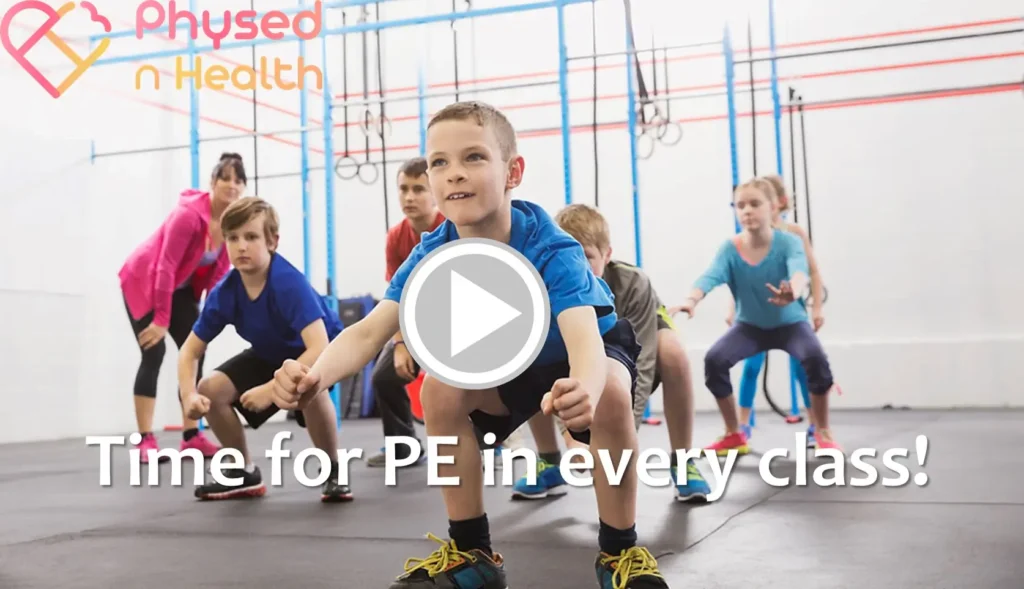
We owe it to our children, to our country. It’s a matter of National Security! Here is how: What can PE teachers do to participate?
Cameras Off. Liabilities. PE Teachers’ Challenges

It’s been three months since school started. Articles and blogs on tips and techniques to get your students to turn their cameras on during online classes abound on the internet. Physical Education is ‘Education in the Physical.’ Teachers must be able to see that the students are performing movements correctly. As if that was not enough, then there’s the issue of liability. You cannot remotely ensure the safety of your students’ environment. What can you do? There is no one solution. There are a few things you can do to minimize the impact. Communicate Safety Rules. Remind your students to make sure their environment is safe before you begin. It helps to let them know what you will cover in advance. Communicate Expectations. Active participation is an essential component of engaging in Online PE. Let your students know what participation means. Communicate privately with students with cameras turned off to find out the reasons and offer alternatives (maybe it’s the parents). Engage your students. Survey shows that students are bored after 10minutes of online class regardless of the subject. Teach for 10minutes or less, and spend the rest of the time engaging your students to demonstrate or share what they’ve learned. Asking those with Cameras turned off to give a demonstration will often reveal the reasons. What are you doing that works? Please share so others may benefit. Contact us to find out more!
8 Steps to an Effective and Engaging Hybrid PE Curriculum Delivery
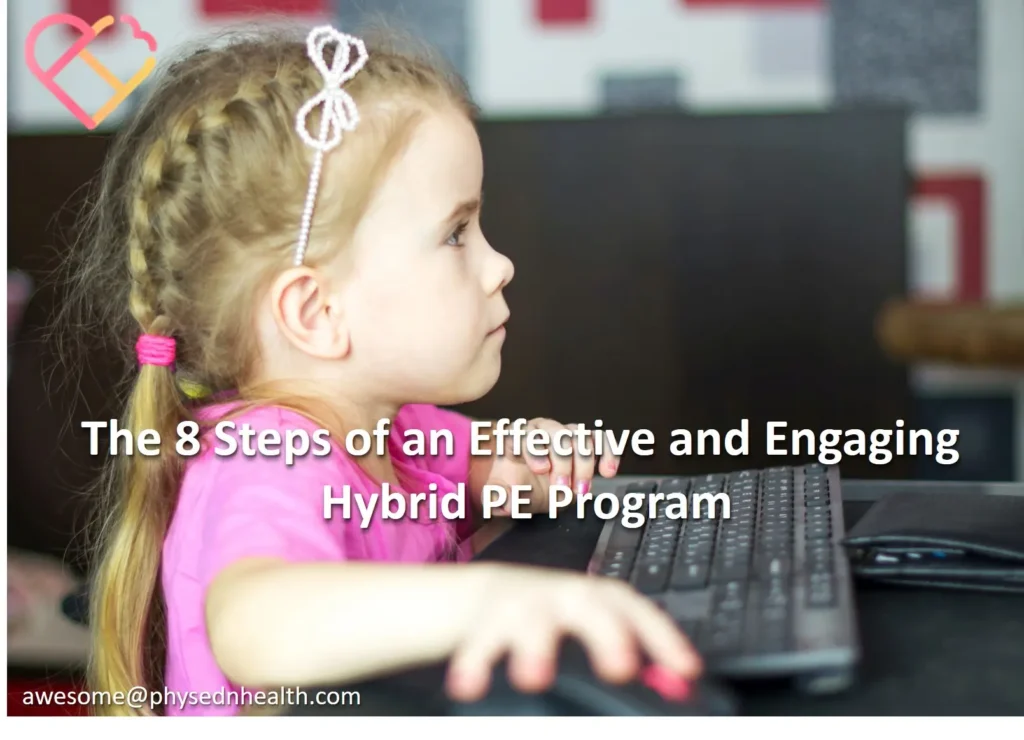
As if it was not difficult enough to teach PE in normal times, the new quarantine environment has create a layer of complexity you must overcome. Why? Because you are still being evaluate as a teacher. What to do? Follow PhysednHealth 8 steps to an Effective and Engaging Hybrid PE Curriculum Delivery: Sign up for your free trial and receive a free copy of our Detailed Infographic or email us at awesome@physednhealth.com Leave us a comment so others can benefit. Contact us to find out more!