
The Future of Physical Education 2026: Technology, Strategies, and Trends
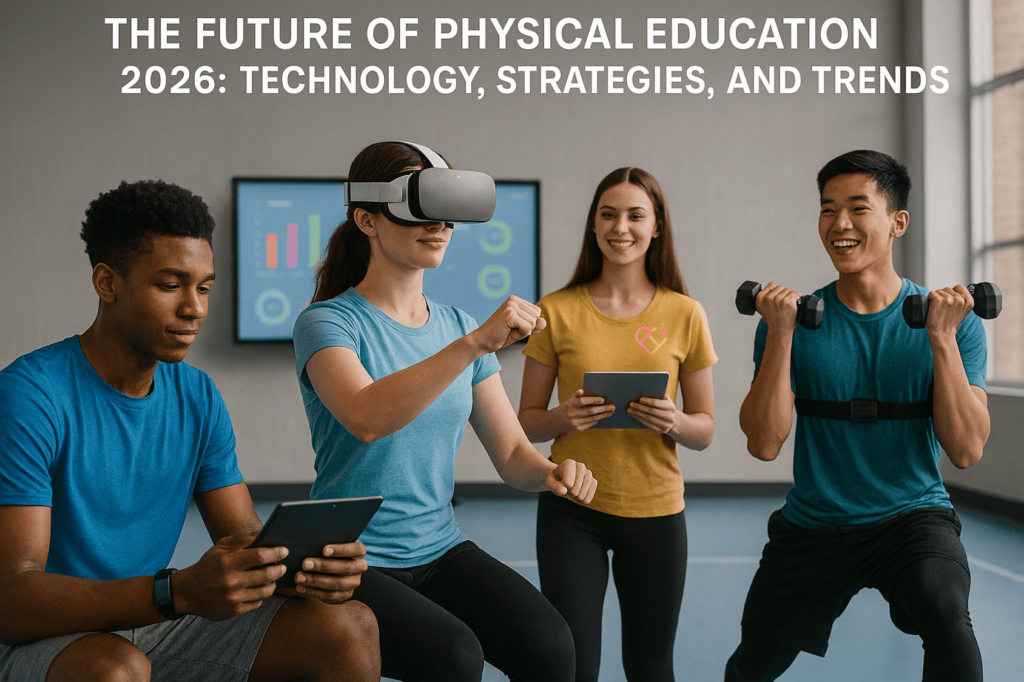
As we approach the 2025-2026 school year, Physical Education (PE) in the USA is undergoing a radical transformation. Gone are the days when “gym class” was solely about lap running. By 2026, PE is predicted to be a data-informed, inclusive, and technology-rich discipline focused on holistic wellness and lifelong movement identity. Based on emerging reports from industry leaders like SHAPE America and themes from upcoming 2026 conferences, here is a fact-based look at the predictions for K-12 Physical Education. 1. Technology: From “Cool Tools” to Integrated Systems In 2026, technology in PE moves beyond novelty to become the backbone of personalized instruction. The “scattershot” approach of using random apps is being replaced by consolidated ecosystems 1. 2. Strategies: “Playground to Purpose” The pedagogical shift for 2026 is defined by the theme of the upcoming ECIS Physical Education Conference: “From Playground to Purpose.”. The goal is to transition students from unstructured play to intentional, lifelong health habits 4. 3. Types of Activities: The Rise of Lifestyle Fitness The curriculum of 2026 favors activities that students can pursue for decades over traditional team sports that often end after high school. Trending Activities for 2026: Activity Type Examples Why It’s Trending Hybrid/Virtual Fitness VR Boxing, Peloton-style in-class cycling Meets “digital natives” where they are; reduces performance anxiety. Lifestyle Sports Pickleball, Rock Climbing, Hiking, Disc Golf High transferability to adult life; encourages community interaction. Gamified HIIT “Four Corner Fitness”, “Sports Mania” High-intensity interval training (HIIT) keeps heart rates up with short, engaging bursts of activity 6. Mindful Movement Yoga flows, Tai Chi, “Build it Wreck it” Balances high energy with emotional regulation and spatial awareness. 4. The Data-Driven Future By 2026, the “black box” of PE grading will be fully opened. Assessments will likely move away from raw athletic metrics (e.g., “run a 7-minute mile”) toward competency-based models 7. Conclusion The physical education classroom of 2026 is a high-tech, emotionally intelligent hub of wellness. By leveraging AI for personalization, adopting inclusive strategies, and focusing on lifestyle activities, educators are preparing students not just for a grade, but for a lifetime of healthy movement. Close your loops for $29. Get your January rosters and assessments set up in minutes. Start the $29 Plan | Download the Title IV Funding Guide
The Zeigarnik Effect: Why You Can’t Relax Over Winter Break (And How to Fix It)
It is the final week. The students are vibrating with sugar and holiday anticipation. The assembly schedule is wreaking havoc on your class periods. You are counting the minutes until the final bell rings on Friday. You think, “Once I get to break, I’ll finally relax.” But for many Physical Education teachers, “break” doesn’t feel like a break. You find yourself sitting on the couch, staring at a holiday movie, but your brain is secretly churning: Did I submit that data? What unit am I starting in January? Did I update the rosters for the new semester transfer students? This inability to switch off isn’t just “teacher guilt.” It is a psychological phenomenon called the Zeigarnik Effect. Here is the science of why your brain won’t let you rest, and the checklist you need to hack your psychology and reclaim your holiday. The Science: Why Unfinished Tasks Haunt Us In the 1920s, psychologist Bluma Zeigarnik noticed something interesting about waiters: they could remember complex orders perfectly—until the food was delivered. Once the task was complete, they instantly forgot the order. She discovered that the human brain has a “privileged status” for unfinished tasks. When a task is incomplete (like an un-planned January curriculum or un-synced rosters), your brain keeps it active in your working memory, rehearsing it over and over to ensure you don’t forget. This creates a low-level background anxiety that prevents true restoration. To enjoy the “Gift of Presence” with your family this week, you don’t just need time off. You need Cognitive Closure. Your Pre-Holiday Survival Strategy To beat the Zeigarnik Effect, you need to close the loops before you walk out the door on Friday. Here is your survival strategy for the final week: 1. For the Students: Induce “Flow State” The kids are chaotic because their routines are disrupted. Don’t try to teach complex new skills this week. 2. For the Admin: The “Data Dump” Nothing ruins a holiday morning like remembering you forgot to email a report. 3. For Your Future Self: The January Setup This is the big one. The looming dread of returning in January is the https://www.google.com/search?q=%231 killer of holiday joy. Give Yourself the Gift of “Done” It feels counterintuitive to add more to your to-do list this week. But by spending 20 minutes setting up your January digital infrastructure now, you are buying yourself 14 days of peace. When you wake up on the first Monday of break, your brain won’t whisper, “What about January?” because you will have already answered that question. You work hard. You deserve a break that actually feels like one. Close your loops for $29. Get your January rosters and assessments set up in minutes. Start the $29 Plan | Download the Title IV Funding Guide
Defend Your Grade Book: Why Objective PE Assessment Data is Your Best Shield

It is the second week of December. Grades are due soon. And then, the inevitable email arrives: “My son is the star quarterback. How is he getting a B in Gym?” Or perhaps: “My daughter says she tries her hardest every day. Why is she failing?” For decades, Physical Education has relied on the “Participation Grade”—a subjective measure of effort and “dressing out.” While well-intentioned, this grading style leaves you vulnerable. When a grade is based on your opinion rather than hard numbers, it is open for debate. To protect your professional integrity and your peace of mind this semester, you need to shift from subjective observation to Objective PE Assessment Data. Here is the science of why parents fight you on grades, and how data acts as your shield. The Psychology: Ambiguity Aversion Why do parents accept a math grade of 78% but argue a PE grade of 85%? Behavioral economists call this Ambiguity Aversion. The human brain prefers known risks over unknown risks. When criteria are ambiguous, the brain fills in the gaps with its own bias. The parent assumes their athletic child is an “A” student because of the Halo Effect—a cognitive bias where one positive trait (athleticism) influences the perception of other traits (effort/grading). Your Shield: The Power of the Data Point You cannot argue with a stopwatch. You cannot debate a heart rate monitor. When you use PhysednHealth to track student progress, you remove the ambiguity. You aren’t giving a grade based on how you feel about a student’s effort; you are reporting on what the student achieved. Here is how to use the features already built into your workflow to defend your grades: 1. The Standardized Rubric Shield Instead of a vague “good effort,” use the Grading Rubric feature found in your assessment configuration. 2. The Heart Rate Defense One of the hardest things to grade is “effort.” A fit student might jog a mile without sweating, while a beginner works at max capacity just to walk it. 3. The Student Ownership Tactic Conflict often arises because the student tells a different story at home than what happened in class. Moving from “Gym Teacher” to “Kinesiologist” When you present objective data, the conversation changes. You are no longer defending your opinion; you are analyzing results. This December, don’t leave yourself open to the “Ambiguity” trap. Use data to validate your students’ growth and protect your professional standing. Need a tool that tracks rubrics and heart rate automatically? PhysednHealth handles the data so you can handle the teaching. Start the $29 Assessment Plan | Download the Title IV Funding Guide
Data Challenges: Bridging the “Data Demand” and the “Clipboard Reality”
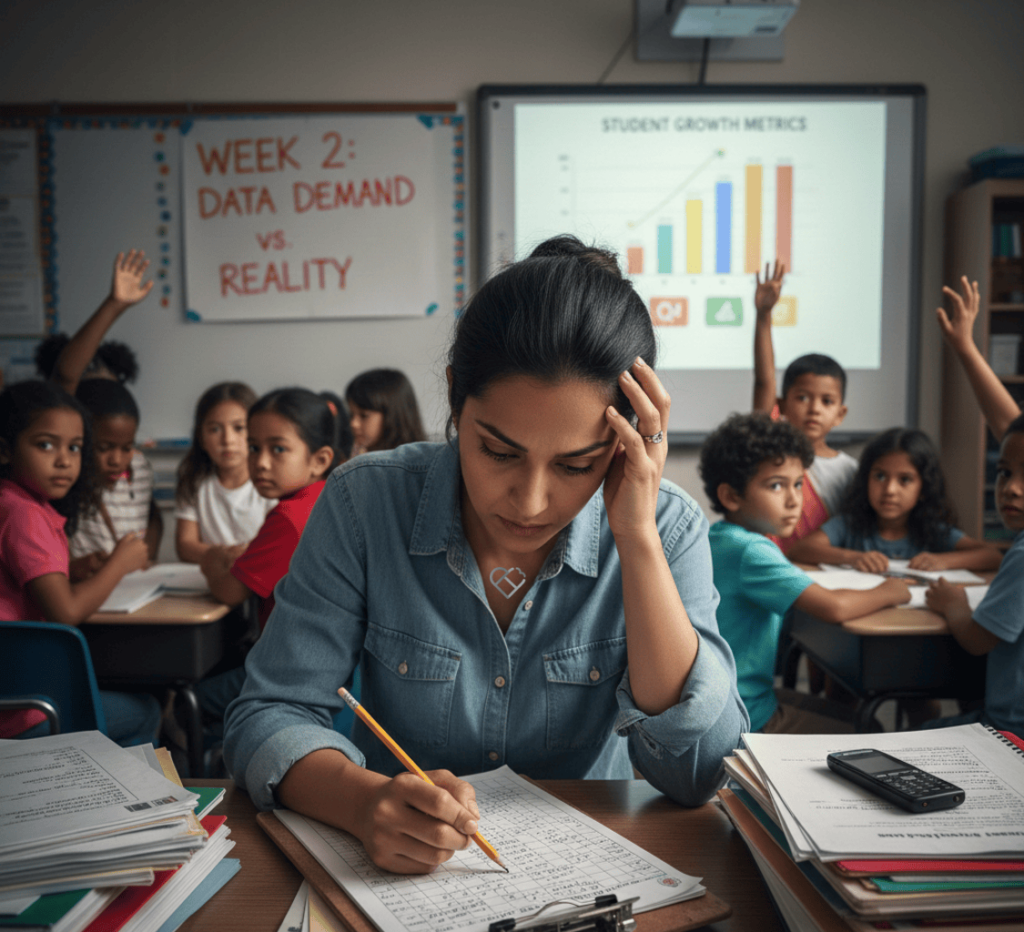
It’s December 2nd, and the air is already thick with the familiar tension of the approaching semester’s end. For many teachers, this time of year brings a specific kind of stress: the “Data Demand.” Suddenly, administrators are asking for concrete proof of student growth, wanting to see the numbers, the graphs, the tangible evidence that your students are progressing. And then there’s the “Clipboard Reality.” You look at your classroom, filled with 40 vibrant, unique individuals. You look at your tools: a well-worn clipboard, a trusty pencil or spreadsheet, and an incredible amount of dedication. The stark contrast between the expectation and the resources can be incredibly frustrating. The Challenge: When Admins Ask, and You’re Under-Resourced We’ve all been there. An email lands, or a conversation starts, and the question is posed: “Can you show us the data demonstrating student growth in your class?” Your mind races. You know your students are growing. You see it every day in their small victories, their “aha!” moments, their increasing confidence. But how do you quantify that when you’re juggling lesson plans, grading, classroom management, and the individual needs of every single child, often without the same technological tools or support that other departments or schools might have? The idea of meticulously tracking every data point for 40 students with just a pencil and paper or spreadsheet feels not just daunting, but frankly, impossible. The Emotion: Feeling Unheard and Unprofessional This challenge often leads to a potent mix of emotions. There’s the feeling of being unheard – your daily efforts, your nuanced understanding of your students’ progress, seem to be overlooked in favor of easily digestible numbers. It can feel like your professional judgment and expertise are being questioned simply because you lack the specific tools or systems that others might possess. This can, in turn, lead to a sense of being unprofessional. When you can’t readily produce the requested data in the format expected, despite your best efforts and tireless work, it’s easy to internalize that as a personal failing. This couldn’t be further from the truth. Your professionalism lies in your dedication, your teaching, and your commitment to your students, regardless of the tools at hand. Bridging the Gap: Finding the Tools That Work for Your Reality So, how do we navigate this “Data Demand” with our “Clipboard or Spreadsheet Reality”? The goal isn’t to stop observing and assessing your students; the goal is to find smart, manageable ways to streamline the collection and reporting of that information. For Physical Education and Health teachers, the solution doesn’t always have to involve fumbling with a tablet while students are in motion. Sometimes, the most effective workflow utilizes the tools you already rely on—like that trusted clipboard and paper—but makes the data digestible for administrators. 💡 Case Study: The PhysednHealth Print, Scan, and Manage Workflow A perfect example of bridging the gap between paper and digital data is the PhysednHealth Assessment Scoring Workflow. This system acknowledges the reality of your dynamic classroom and uses technology to eliminate the time-consuming manual data entry. Here is how you can transform your “Clipboard Reality” into valuable “Data Demand” evidence: This workflow recognizes that observation is data, and it makes the pencil and paper process dramatically more efficient and professional. By using systems like this, you can focus on teaching and assessing, knowing the data is being managed automatically. Remember, you are not alone in this challenge… By using systems that understand your workflow, like the PhysednHealth Print, Scan, and Manage feature, and confidently advocating for your needs, you can bridge the gap and ensure your incredible work in the classroom is recognized. What are your biggest challenges in tracking student growth? Share your tips and experiences in the comments below! Ready to stop grading on weekends? Get fully automated Pre & Post Assessments for just $29/year. Start Your Account Today | Download the Title IV Funding Guide PhysednHealth is a leading physical education and student wellness technology platform designed to help schools modernize PE with smart, standards-based tools. Our easy-to-use physical education software empowers teachers to track student progress, set SMART fitness goals, and promote mental and physical well-being. Trusted by educators worldwide, PhysednHealth brings data-driven insights, AI-powered assessments, and personalized learning to PE programs—helping students build lifelong healthy habits.
The Science of Rest: Why Grading Over Break is Hurting Your Teaching (And How to Stop)

It is a familiar scene for many Physical Education teachers: The turkey is in the oven, football is on the TV, and family is gathering in the living room. But where are you? You’re likely at the kitchen table, surrounded by stacks of clipboards or an endless Excel spreadsheet, trying to finalize pre-assessment data before Monday rolls around. We tell ourselves it’s “dedication.” We tell ourselves we are just “catching up.” But science tells us something different. By refusing to fully disconnect, we aren’t just losing our holiday—we are actively damaging our ability to teach effectively when we return. Here is the science behind PE teacher burnout recovery, and why automating your assessments is the best gift you can give yourself this season. The Myth of the “Working Holiday” In the high-energy environment of the gymnasium, decision fatigue sets in faster than in almost any other classroom setting. You are managing safety, behavior, equipment, and instruction for 30 to 50 students at a time, continuously, for hours. According to research by Dr. Sabine Sonnentag, a leading organizational psychologist, the key to recovering from this specific type of stress is Psychological Detachment. Psychological detachment isn’t just “not being at work.” It means mentally disengaging from work-related tasks. Sonnentag’s research proves that when employees continue to engage in work tasks (like grading) during off-hours, their cortisol levels remain elevated, preventing the body and brain from resetting. The result? You return in January not refreshed, but already exhausted. Why PE Teachers Struggle to Detach The challenge for PE teachers is unique. Unlike a math teacher who might have 30 quizzes to grade, a PE teacher often manages data for 150 to 500 students. The sheer volume of data creates what psychologists call “Open Loops.” When you know you have 400 mile-run times sitting on paper that haven’t been entered into the system, your brain treats that as an open loop—a pending threat that prevents you from fully relaxing. You grade over break not because you want to, but because you are trying to close the loops so your brain can finally rest. There is a Better Way: Automation as Self-Care What if you could close those loops without sacrificing your Saturday? The shift from the 20th-century clipboard to 21st-century assessment tools isn’t just about “tech”—it’s about mental health. When assessments are automated, the cognitive load is removed from your shoulders. This is why we built PhysednHealth. We realized that for PE teachers to be effective mentors, they need to be rested humans. How PhysednHealth Supports Your Recovery: 3 Steps to Reclaim Your Break If you are feeling the weight of the semester this week, here is your prescription for recovery: The Bottom Line Your students need a coach who is energetic, patient, and present. They don’t need a coach who is burnt out because they spent their Thanksgiving entering pacer test scores into a spreadsheet. This week, give yourself permission to stop. The gym will still be there on Monday. Make sure the best version of you is there to meet it. Ready to stop grading on weekends? Get fully automated Pre & Post Assessments for just $29/year. Start Your Account Today | Download the Title IV Funding Guide PhysednHealth is a leading physical education and student wellness technology platform designed to help schools modernize PE with smart, standards-based tools. Our easy-to-use physical education software empowers teachers to track student progress, set SMART fitness goals, and promote mental and physical well-being. Trusted by educators worldwide, PhysednHealth brings data-driven insights, AI-powered assessments, and personalized learning to PE programs—helping students build lifelong healthy habits. Discover PhysednHealth innovative approaches to promote health and engagement in physical education. Contact us at awesome@physednhealth.com.
Why Ditching Homework Is a Huge Mistake for American Schools

If you walk into almost any school in the U.S. today, you’ll likely hear talk of reducing homework—or eliminating it entirely. The calls for “no homework” policies are getting louder, with advocates arguing that kids deserve more free time and less stress. But beneath the surface, the disappearance of homework could be setting our students up for failure—and the consequences might be more serious than we think. Homework Isn’t Just Extra Work Let’s set the record straight: homework isn’t about busywork or making students miserable. Done right, it’s an extension of learning—a way to practice and recall what’s taught in class, especially with today’s crowded curricula and limited school hours. U.S. teachers don’t have enough time during the day to ensure every student deeply understands reading, math, or science. Homework gives kids a crucial second chance to digest, review, and truly own new ideas, away from the clock and classroom noise. This self-directed learning also builds real-life skills that no worksheet or app can substitute for. Organizing assignments, meeting deadlines, and managing time are habits students need as adults in the workforce. But when schools drop homework, they unintentionally send the message: “Learning stops at 3 p.m.” That’s not how mastering anything—math problems, essays, or life skills—really works. Less Practice, Lower Scores The evidence is mounting that less homework means less learning. Since the pandemic, the average U.S. student spends significantly less time on homework, and national math and reading scores have dropped sharply as a result. Internationally, America keeps falling further behind countries that still value extended academic practice at home. While some say homework increases inequality due to differences in home resources, solutions should focus on support and access—not abandoning homework altogether. The Myth of the “Overworked Student” There’s a common misconception that eliminating homework frees students for “real life.” But let’s be honest: most students won’t use those extra hours to pursue music, sports, or exploration. Many will turn to screens, entertainment, and activities that don’t develop literacy, critical thinking, or perseverance. School isn’t a job where you clock out and forget everything until tomorrow. A child’s main “work” is learning—and that doesn’t fit neatly into a six-hour school day. Homework Grows Thinkers, Not Robots In a world exploding with AI and automation, we desperately need thinkers—creative, independent minds who can solve problems and adapt. Cutting homework only discourages deep, independent learning and reflection. Instead of giving in to trends, schools should focus on designing homework that is meaningful, manageable, and engaging—not just more of the same. When done right, homework is one of the best ways we have to inspire curiosity and resilience in students. The Bottom Line Getting rid of homework might sound appealing, but it’s a short-term “fix” with long-term consequences. We can’t afford a generation of students who’ve never learned to work, think, and problem-solve on their own. If we want leaders and innovators—not just followers and screen-watchers—homework is part of the answer. PhysednHealth is a leading physical education and student wellness technology platform designed to help schools modernize PE with smart, standards-based tools. Our easy-to-use physical education software empowers teachers to track student progress, set SMART fitness goals, and promote mental and physical well-being. Trusted by educators worldwide, PhysednHealth brings data-driven insights, AI-powered assessments, and personalized learning to PE programs—helping students build lifelong healthy habits. Discover PhysednHealth innovative approaches to promote health and engagement in physical education. Contact us at awesome@physednhealth.com.
Balancing Large Class Sizes with Individual Attention in Physical Education

Physical Education (PE) teachers face a unique challenge in contemporary educational environments: delivering high-quality instruction to increasingly large classes while ensuring each student receives meaningful individual attention. With class sizes often exceeding 40 students53, educators must adopt innovative strategies to maintain engagement, safety, and personalized learning. Research indicates that structured classroom management, differentiated instruction, and creative use of space and technology can mitigate the limitations of overcrowded PE settings, ensuring all students develop physical literacy and positive attitudes toward lifelong activity16. Effective Classroom Management as a Foundation Successful management of large PE classes begins with establishing clear routines, rules, and organizational structures that minimize downtime and maximize participation. Ben Landers, a noted PE specialist, emphasizes the importance of structured entry routines—such as instant activities that students begin immediately upon entering the gym—to capitalize on limited instructional time61. For example, a teacher might designate a “warm-up zone” where students perform dynamic stretches or skill drills while peers arrive, ensuring every minute contributes to physical engagement. Attention-Getters for Seamless Transitions Maintaining control in a bustling gymnasium requires non-disruptive methods to refocus students. Techniques like auditory cues (e.g., stopping music paired with a countdown16) and visual signals (e.g., raised hands or flashing lights7) allow teachers to regain attention without escalating volume. One Reddit-sourced strategy involves a rhythmic countdown: “I need you all ready in 5… 1 mic on me”, which gives students time to transition while emphasizing collective responsibility for silence2. These methods reduce time spent on discipline, freeing teachers to address individual needs. Spatial Organization and Squad Systems Dividing classes into smaller squads of 5–6 students creates manageable subgroups for activities and accountability6. Each squad can have rotating leaders responsible for equipment distribution, demonstrating exercises, or facilitating peer feedback. This structure not only streamlines logistics but also fosters leadership skills and collaborative problem-solving. For instance, during a basketball unit, squads might rotate through skill stations (dribbling, passing, shooting) with leaders guiding drills, allowing the teacher to circulate and provide targeted coaching45. Leveraging Station-Based Learning for Individualized Feedback Station rotations are a cornerstone strategy for balancing large-class instruction with personalized attention. By dividing the gym into distinct activity zones, teachers can design circuits that cater to diverse skill levels and interests while circulating to observe and support individuals. Example: Skill Development Circuits A soccer unit might include stations for dribbling accuracy (navigating cones), passing precision (target practice), and small-sided games (3v3 matches). At the dribbling station, students follow a progression from basic control to advanced maneuvers, with laminated task cards illustrating each skill4. Meanwhile, the teacher spends dedicated time at the passing station, offering real-time adjustments to body positioning or foot placement for struggling learners. This model ensures high activity levels while creating natural opportunities for one-on-one coaching56. Incorporating Student Choice Stations can also include self-directed options to honor individual preferences and autonomy. For example, a fitness circuit might offer flexibility in workout intensity: Technology and Peer Assessment for Scalable Feedback In large classes, technology becomes a vital tool for delivering individualized feedback without sacrificing instructional time. Video Analysis and Digital Portfolios Using tablets or smartphones, teachers can record students performing skills (e.g., overhand throw or dance routines) and review the footage with them briefly during cool-down periods. For example, a student struggling with discus release might watch their form alongside a coach’s exemplar video, identifying specific adjustments5. Additionally, apps like Seesaw allow students to upload videos to digital portfolios, enabling asynchronous feedback and progress tracking6. Peer-to-Peer Coaching Structured peer assessment builds community and critical thinking. During a gymnastics unit, pairs might use rubric checklists to evaluate each other’s balances and rolls, focusing on criteria like “arms fully extended” or “controlled landing.” This not only reduces the teacher’s assessment burden but also helps students internalize performance standards54. Differentiated Instruction for Diverse Abilities Adapting activities to accommodate varying skill levels ensures all students experience success and growth. Tiered Skill Progressions For a volleyball unit, teachers can design tiered drills: Modified Equipment and Rules Using lighter balls, lower nets, or larger targets accommodates students with limited strength or coordination. In a striking unit, foam bats and balloons allow novices to practice timing without frustration, while traditional equipment challenges advanced learners5. Similarly, modifying games—such as allowing two bounces in pickleball—levels the playing field for mixed-ability groups4. Cultivating Relationships Through Micro-Interactions Individual attention in large classes often hinges on brief but meaningful interactions that affirm students’ efforts and progress. “Two-by-Two” Check-Ins Dedicating two minutes per class to converse with two students about their goals or challenges fosters rapport. A teacher might ask, “How’s your jump shot feeling today compared to last week?” or “What’s one skill you want to improve before the unit ends?” Over time, this ensures every student receives personalized acknowledgment16. Nonverbal Encouragement Simple gestures—a thumbs-up after a successful serve, a nod during a challenging drill—communicate support without interrupting the flow of the lesson. Research shows that consistent nonverbal praise increases students’ self-efficacy and willingness to take risks5. Conclusion: Maximizing Impact Through Strategic Balance Navigating large PE classes demands a blend of macro-level management and micro-level personalization. By implementing station rotations, leveraging peer and technological resources, and prioritizing brief but impactful interactions, teachers can transcend the constraints of overcrowded gyms. The ultimate goal is not merely to manage numbers but to create an environment where every student, regardless of class size, feels seen, challenged, and capable of growth. As schools continue to grapple with resource limitations, these strategies offer a roadmap for preserving the transformative potential of physical education—one squat, sprint, and smile at a time. PhysednHealth is a leading physical education and student wellness technology platform designed to help schools modernize PE with smart, standards-based tools. Our easy-to-use physical education software empowers teachers to track student progress, set SMART fitness goals, and promote mental and physical well-being. Trusted by educators worldwide, PhysednHealth brings data-driven insights, AI-powered assessments, and personalized learning to PE programs—helping students build lifelong healthy habits. Discover PhysednHealth innovative approaches to promote health and engagement in physical education. Contact us at awesome@physednhealth.com.
Did You Forget Pre-Tests? How to Rescue Your PE Assessment Data
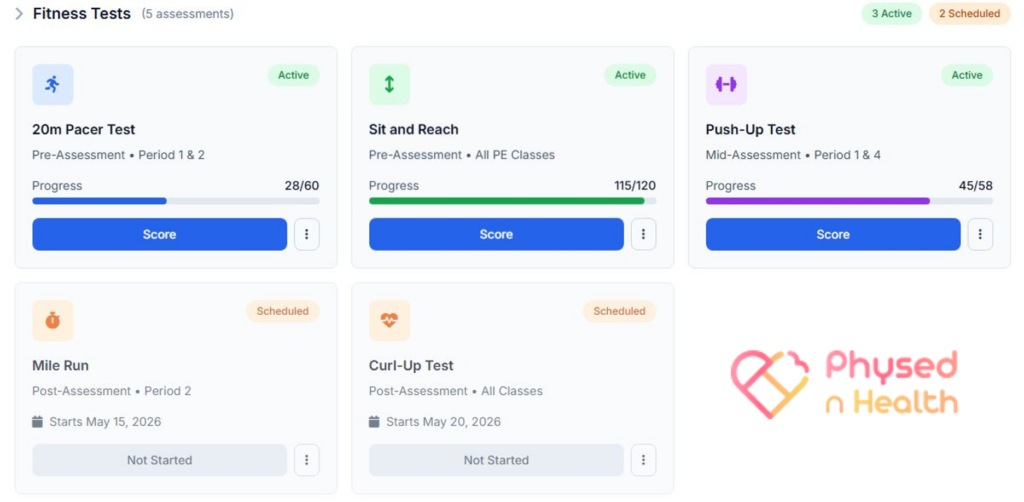
It’s November. Parent-teacher conferences are around the corner. Your principal just asked about “student growth data.” And you realize… you never did formal pre-tests in September. Sound familiar? Take a deep breath. You’re not alone, and more importantly, it’s not too late. The Truth About Mid-Year Assessment “Failures” Between setting up classes, learning 150 new names, surviving back-to-school night, managing equipment, and just getting through each day… those formal fitness assessments you planned for September got pushed to “next week.” Then September became October. October flew into November. And now you’re staring down spring post-tests with no baseline data. Here’s what we want you to know: This happens to hundreds of PE teachers every single year. You’re not disorganized. You’re not a bad teacher. You’re a human being trying to do one of the most demanding jobs in education with limited time and resources. Why Starting Mid-Year Actually Works Let’s talk about the good news: Starting your assessment system in November (or even January) can still give you meaningful, impressive student growth data by May. Here’s why: 1. You’ll Still Have 6-7 Months of Data If you establish baseline assessments this month, you’ll track student progress from November through May or June. That’s more than half the school year—plenty of time to show real growth. 2. Longer Baseline-to-Post Test Windows = More Growth Students need time to improve. A 6-month window between assessments shows more dramatic improvements than a shorter window. Your “late start” might actually give you more impressive data. 3. You Can Focus on What Matters Instead of trying to assess everything in September while you’re still learning names, you can now be strategic. Pick 2-3 key assessments that matter most for your program and do them well. Your 4-Step Mid-Year Rescue Plan Step 1: Pick Your Assessments (Today) Step 2: Set Up Your System (This Week) Choose your tracking method – simple spreadsheet or assessment software like PhysednHealth. Step 3: Run Baseline Tests (Next Two Weeks) Block out 1-2 class periods and get it done. Call them “baseline assessments” instead of “pre-tests.” Step 4: Track Progress Through Spring Set calendar reminders for February/March check-in and April/May post-tests. What to Say to Parents (and Admin) For Parent Conferences: “I’ve established baseline fitness assessments for [student name] in November. Over the next 6 months, we’ll track their progress in cardiovascular endurance, strength, and flexibility.” For Admin: “I’m implementing a comprehensive assessment system that tracks student growth from November through May. This gives us 6-7 months of data showing real improvement.” Real Teachers Who Made It Work Sarah T., Middle School PE: “I signed up in November thinking it was too late. By May I had 6 months of solid data and my admin was blown away.” Marcus J., Elementary PE: “Parent conferences were in two weeks and I had ZERO data. I set up over the weekend and had progress reports by Monday. Total game-changer.” Lisa K., High School PE: “I started tracking in January. Still had enough data by May to show real student progress. My principal actually complimented my data quality!” Common Mid-Year Assessment Mistakes ❌ Mistake #1: Trying to assess everything✅ The Fix: Pick 2-3 key assessments and do them well ❌ Mistake #2: Making it too complicated✅ The Fix: Use simple, reliable tests you can repeat consistently ❌ Mistake #3: Collecting data then forgetting about it✅ The Fix: Set calendar reminders NOW for spring post-tests ❌ Mistake #4: Waiting for “perfect” conditions✅ The Fix: Done is better than perfect. Start this week. What You’ll Accomplish by Starting Today ✅ Establish baseline data✅ Track 6-7 months of progress✅ Generate professional reports✅ Show meaningful comparisons✅ Reduce spring stress✅ Build confidence with solid data✅ Justify your program with evidence The Cost of Waiting vs. Starting Now If You Wait Until Spring:❌ No baseline data❌ Rushed, stressful testing❌ Manual spreadsheets at 10 PM❌ Same scramble next year If You Start This Week:✅ Solid baseline by Thanksgiving✅ 6-7 months of tracked progress✅ Organized, calm spring testing✅ Impressive data ready in 90 seconds Your Action Plan for This Week Monday/Tuesday: Pick assessments, choose tracking method, set it up (30 minutes)Wednesday/Thursday: Run baseline tests with classesFriday: Review data, set spring reminders, celebrate! Tools That Make This Work Free Option: Simple Google Sheet with student names, baseline scores, post-test scores, and improvement calculations. Paid Option: PhysednHealth – automated data entry, calculations, reports, and comparisons.Cost: $29 for entire school yearTime saved: 10-20 hours The Bottom Line You didn’t fail. You got busy being a teacher.You’re not too late. You have 6-7 months for meaningful growth data.This is fixable. Hundreds of teachers rescue their data mid-year successfully. Start Your Mid-Year Rescue Today Free Trial: https://app.physednhealth.com/Teacherpanel/Teacherpanel/freeTrial Questions?📧 awesome@physednhealth.com📞 202-579-9172 Don’t wait until May to panic. Start your rescue today. Share this post with PE teachers who need to hear “it’s not too late.” #PhysEd #PETeacher #PhysicalEducation #TeacherTips
Teach AI Policy Tracker: A Game-Changer for K-12 Education
In an era where artificial intelligence (AI) is reshaping learning environments, schools need robust and proactive policy frameworks. The TeachAI Policy Tracker offers K-12 leaders a centralized, curated platform to monitor, evaluate, and implement AI-guidance in real-time. If you’re involved in school leadership, technology integration, compliance, or instructional design, here’s how this resource can power your planning. What is the Policy Tracker? The TeachAI Policy Tracker is part of TeachAI’s “AI in Education” initiative and provides a comprehensive, up-to-date library of policy and guidance documents. On the tracker you’ll find guidance from individual U.S. states and from countries around the world. TeachAISome of the key features include: Why K-12 Schools Should Care 1. Stay Ahead of Policy TrendsWith education technology evolving rapidly, being proactive rather than reactive matters. Using the Policy Tracker gives your district insight into what peers and other jurisdictions are doing.2. Benchmark Your Own PoliciesRather than starting from scratch, you can review existing state or national models and adapt them — saving time and elevating quality.3. Support Educators, Students & FamiliesThe resources include downloadable materials for staff, parents, and students – helping build shared understanding and buy-in. Known to include “AI Guidance for Schools Toolkit” with seven guiding principles. TeachAI4. Facilitate Ethical, Responsible AI UseMany states emphasize ethics, transparency, student data protection and teacher professional development in their guidance. Being aware of these helps your policies align with industry-aware best practices. How to Use the Policy Tracker Effectively in Your School or District Step 1: Set a team or lead responsible for AI policy review (could be technology director, curriculum lead, or compliance officer).Step 2: Visit the tracker regularly and select relevant states/countries whose guidance you want to study (for example if your state is similar in demographics or technology adoption).Step 3: Compare your current policy (or if you don’t yet have one) against exemplar templates found in the tracker. Pull key points such as: purpose, scope, definitions of “AI tool”, usage guidelines, teacher/student roles.Step 4: Adapt or draft a policy using the templates and best-practices from the library. Customize for your context (grade levels, existing tech infrastructure, student demographics).Step 5: Communicate the policy and supporting materials (parent/student guides, training modules) with your stakeholders. Use clarity and transparency to foster trust.Step 6: Review the policy annually (or when big tech shifts happen) and revisit the tracker to see new or evolving guidance. Key Features Worth Highlighting The TeachAI Policy Tracker is a high-value resource for educators and policy makers wanting to craft, refine or benchmark AI policy for K-12 schools. A proactive approach to AI policy not only ensures alignment with best practices but builds trust, consistency and clarity for students, educators and families alike. If your district is at the beginning of its AI policy journey — or looking to refresh an existing one — I highly recommend exploring the Policy Tracker, selecting relevant models, and beginning your structured policy-development process today. PhysednHealth is a leading physical education and student wellness technology platform designed to help schools modernize PE with smart, standards-based tools. Our easy-to-use physical education software empowers teachers to track student progress, set SMART fitness goals, and promote mental and physical well-being. Trusted by educators worldwide, PhysednHealth brings data-driven insights, AI-powered assessments, and personalized learning to PE programs—helping students build lifelong healthy habits. Discover PhysednHealth innovative approaches to promote health and engagement in physical education. Contact us at awesome@physednhealth.com.
What Makes an Effective Physical Education (PE) Teacher
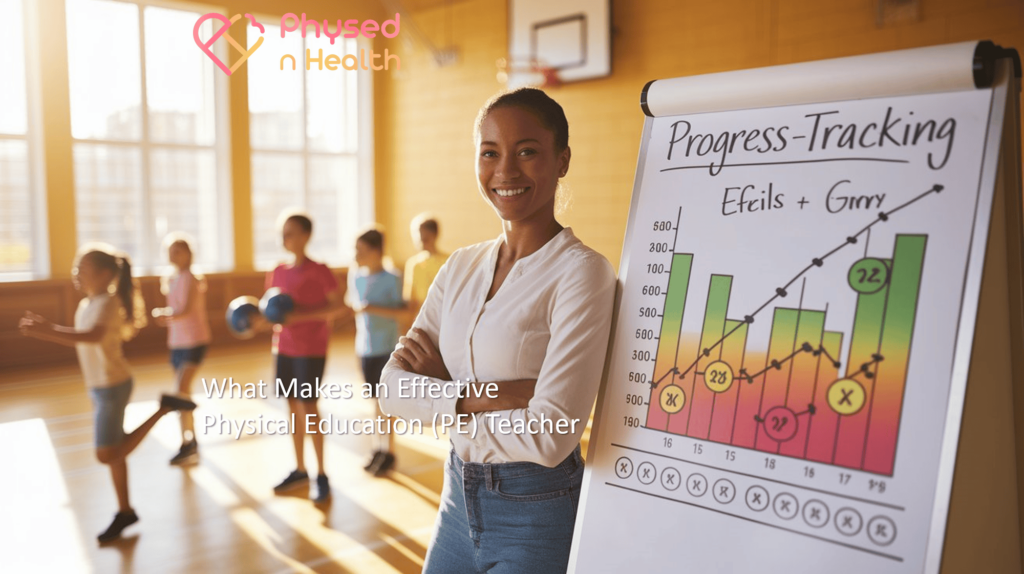
What separates a good PE teacher from a great one? It’s not just the ability to throw a perfect spiral or organize pickleball tournaments. An effective PE teacher goes beyond the basics—combining passion, planning, adaptability, and tech-savviness to make every class count. In this guide, we’ll explore the top traits and physical education strategies that define success, from qualifications to student engagement, inclusive pedagogy, and more. 1. Essential Qualifications of an Effective PE Teacher Every effective PE teacher starts with the right foundation. That means a degree in physical education, kinesiology, or a related field, along with proper teacher certification. These credentials ensure they understand how to teach physical skills, fitness, health, and motor development kutestkids.com. But education doesn’t stop at graduation. Continued professional development is a mark of commitment. Great PE teachers stay current on trends in fitness, sports science, and pedagogy. They may also pursue special certifications, like adapted physical education, to better serve diverse student needs. Key PE teacher skills include: 2. How Effective PE Teachers Engage Students A standout trait of an effective PE teacher is the ability to connect with and motivate students. Whether it’s elementary kids or high schoolers, engagement is key. Teachers who radiate enthusiasm and lead by example naturally draw students in teachsport.co. . Tips to Engage Students: Students feel more connected when their voice is heard. Giving options—like choosing between basketball drills or dance fitness—boosts participation edutopia.org. Example: If a student isn’t into sports, an effective PE teacher might introduce yoga or personal fitness tracking to help them discover their niche in movement. This individual-focused approach builds trust and confidence. 3. Efficient Use of Time in PE Class Maximizing movement time is another key strength of an effective PE teacher. With limited class time, every minute matters bpb-us-w2.wpmucdn.com. Time-Management Best Practices: By being organized and consistent, effective PE teachers minimize downtime and increase active learning. That leads to better fitness outcomes and classroom behavior. Bonus Tip: Use visual cues, music, or countdowns to keep classes flowing smoothly. Keywords included: effective PE teacher, time management in PE, PE teacher skills 4. Inclusive and Adaptable Pedagogy A truly effective PE teacher creates a space where every student belongs. That means planning lessons for different skill levels, body types, abilities, and learning styles. Inclusive PE Teaching Strategies: For instance, a basketball drill can be adapted with larger hoops, lighter balls, or seated versions for students with mobility needs. This type of inclusive PE teaching ensures no student is left behind. Teachers can also represent a range of games—like boccia, adaptive yoga, or international dance forms—to celebrate diversity. 5. Using Technology in PE to Enhance Learning Modern PE isn’t just balls and cones—it’s tablets, trackers, and virtual tools. A tech-savvy, effective PE teacher uses technology in PE to boost motivation and personalize learning. Examples of Tech in PE: Imagine a middle school class using wearable devices to track their heart rates during relay races. Students can then review their data and set personal goals. This approach makes fitness personal, fun, and measurable. Pro Tip: Display real-time data or use gamification to keep students motivated. The key is to use tech to support movement, not replace it. What Defines an Effective PE Teacher? An effective PE teacher is more than just a coach—they’re a motivator, a mentor, a planner, and an innovator. They blend: By embracing these core qualities, PE teachers create meaningful movement experiences that build skills, confidence, and a love of lifelong fitness. Whether you’re a new teacher aiming to grow or an administrator looking to support your staff, understanding the qualities of a good PE teacher is key to building a thriving physical education program. PhysednHealth is a leading physical education and student wellness technology platform designed to help schools modernize PE with smart, standards-based tools. Our easy-to-use physical education software empowers teachers to track student progress, set SMART fitness goals, and promote mental and physical well-being. Trusted by educators worldwide, PhysednHealth brings data-driven insights, AI-powered assessments, and personalized learning to PE programs—helping students build lifelong healthy habits. Discover PhysednHealth innovative approaches to promote health and engagement in physical education. Contact us at awesome@physednhealth.com.