
Why PE Teachers Should Communicate More with Parents: Building Essential Partnerships for Student Success
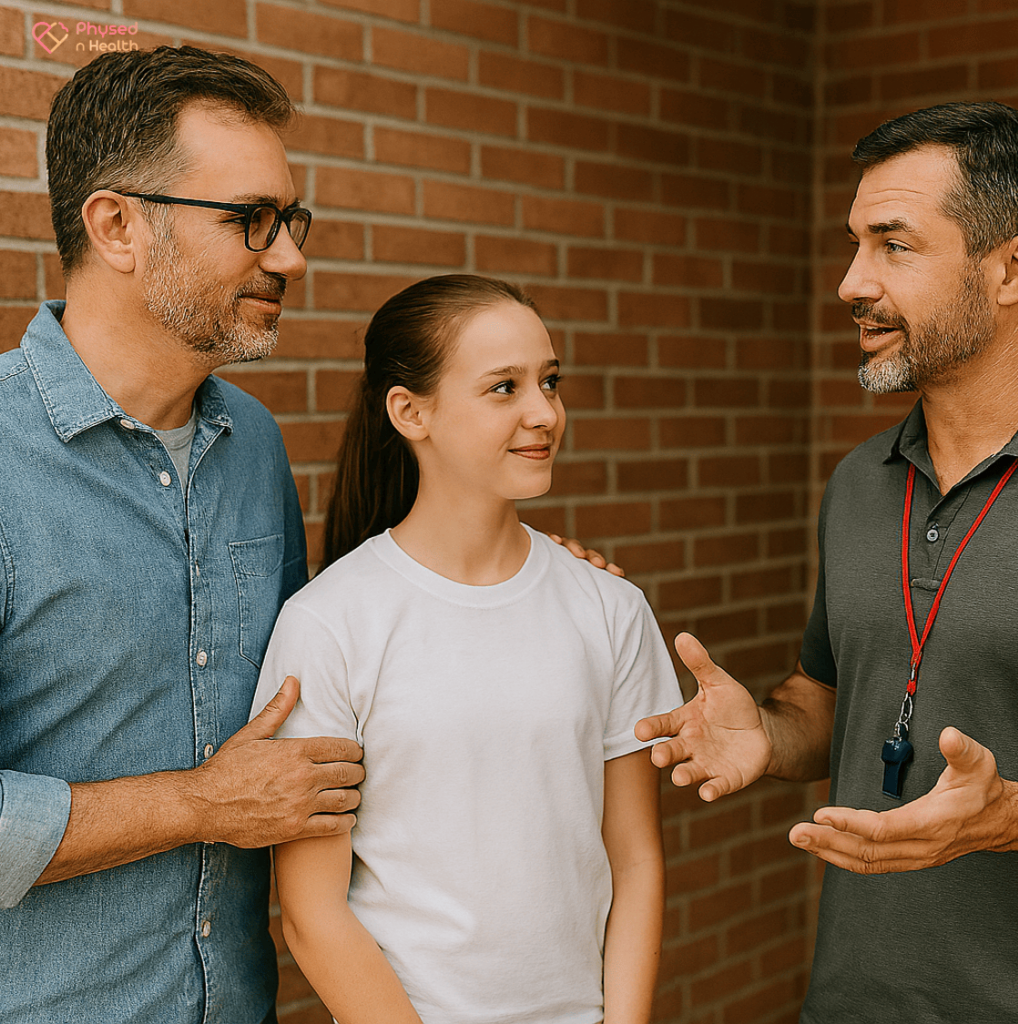
Parents should know their child’s physical education teacher just as well as they know their math or language arts teacher. Physical education is a vital academic subject that promotes physical, mental, and social development, yet many parents remain disconnected from their child’s PE experience. This disconnect undermines the potential benefits of quality physical education programming and creates barriers to student success. The Importance of Parent-PE Teacher Communication Physical education encompasses far more than traditional sports and fitness activities. Modern PE programs focus on developing physically literate individuals who possess the knowledge, skills, and motivation to maintain active lifestyles throughout their lives. PE classes teach motor skills, social responsibility, teamwork, fair play, and physical fitness while improving mental health, cognitive function, and academic performance1 2 3. Strong parent-teacher communication creates a supportive network that enhances student learning and development. When parents are engaged in their child’s PE experience, students show improved participation, better skill development, and increased motivation to be physically active both in school and at home. Research indicates that parental encouragement significantly impacts children’s physical activity levels, with the probability of engaging in physical activity increasing by 156% when parents encourage sports participation 4 5 6. Why Many Parents Don’t Know Their PE Teachers Several barriers contribute to the disconnect between parents and PE teachers: 1. Marginalization of Physical Education PE teachers often experience professional marginalization, with their subject being viewed as less academic than core subjects. This perception leads to reduced parent engagement, as families may not prioritize PE in the same way they do math or reading. Parents may refer to PE as “gym class” rather than recognizing it as an academic subject taught by certified educators7 8 9. 2. Limited Communication Opportunities Traditional school communication structures often favor core academic subjects. Parent-teacher conferences may allocate minimal time to PE discussions, and progress reports frequently lack detailed information about PE learning objectives and student achievement. PE teachers typically have larger class sizes and see hundreds of students per week, making individual parent communication more challenging. 3. Parental Assumptions and Past Experiences Many parents base their understanding of PE on their own school experiences, which may not reflect modern, research-based physical education practices. Negative childhood experiences with PE can create lasting impressions that influence how parents view their child’s physical education. 4. Professional Fears and Constraints PE teachers face unique challenges regarding physical contact with students and potential liability concerns. These fears can create barriers to building relationships with families, as teachers may become overly cautious about interactions both with students and parents. Benefits of Strong PE Teacher-Parent Communication Research demonstrates multiple benefits when PE teachers and parents maintain regular communication: Enhanced Student Performance Students whose parents are engaged in their PE experience show improved skill development, increased participation, and better attitudes toward physical activity. When parents understand PE goals and reinforce learning at home, students are more likely to transfer skills from school to recreational settings. Improved Program Advocacy Parents who understand the value and goals of quality PE programming become advocates for maintaining and expanding physical education resources. This advocacy is crucial as schools face budget pressures and curriculum demands that may threaten PE programs. Better Home-School Connection Communication helps parents understand how to support their child’s physical development at home. Parents learn about fundamental movement skills, fitness concepts, and age-appropriate activities that complement school learning. Increased Family Physical Activity When parents understand PE concepts and goals, they are more likely to engage in physical activities with their children, creating positive family health habits. Effective Communication Strategies for PE Teachers 1. Proactive Introduction and Program Overview PE teachers should introduce themselves and their programs at the beginning of each school year through multiple channels: 2. Regular Progress Communication Maintain consistent communication about student progress through: 3. Educational Outreach Help parents understand modern PE through: 4. Individual Student Conferences Schedule regular opportunities for one-on-one communication: Communication Templates for PE Teachers Beginning of Year Introduction Letter Template Dear [School Name] Families,I am excited to introduce myself as your child’s Physical Education teacher for the [school year]. My name is [Name], and I have been teaching PE for [years] because I believe every child deserves to develop the skills, knowledge, and confidence to lead a physically active lifestyle.**Our PE Program Goals:**- Develop fundamental movement skills and motor competency- Foster positive attitudes toward physical activity and fitness- Teach social skills including teamwork, cooperation, and sportsmanship- Promote health-related fitness concepts and personal wellness**How You Can Support Your Child:**- Encourage participation in all activities, regardless of skill level- Emphasize effort and improvement over winning- Ask your child about what we’re learning in PE class- Provide appropriate PE clothing and footwear- Support home physical activity and family fitness time**Communication:**I welcome your questions and input throughout the year. You can reach me at [email] or [phone]. I will send home monthly newsletters highlighting our units of study and suggesting activities you can do as a family.I look forward to working with you to help your child develop a lifelong love of physical activity!Sincerely,[PE Teacher Name] Monthly Newsletter Template [Month] PE Newsletter – [Teacher Name]**This Month in PE:**We are focusing on [skill/unit] where students are learning [specific objectives]. Students have been working on [specific skills] and showing great progress in [areas of improvement].**Spotlight on Learning:**[Highlight specific learning objectives and how they connect to lifelong fitness]**Home Connection:**Try these activities at home to reinforce our PE learning:- [Activity 1 with brief description]- [Activity 2 with brief description]- [Activity 3 with brief description]**Student Success Stories:**[Brief positive highlights about student effort, improvement, or achievement]**Upcoming Events:**[List any PE-related events, assessments, or special activities]**Questions for Family Discussion:**- What did you learn in PE this week?- How did you challenge yourself during activities?- What movement skills do you want to practice at home?Contact me with questions: [contact information] Individual Progress Communication Template Dear [Parent/Guardian Name],I wanted to reach out to share some positive feedback about [Student Name]’s progress in Physical Education.**Areas of Strength:**[Specific examples of student success, effort, or improvement]**Learning Goals:**We are currently working on
Why Physical Education Teachers Should Be Active on LinkedIn
Physical education teachers, often viewed as isolated within the broader educational community, can significantly benefit from establishing a strong presence on LinkedIn. As the world’s largest professional networking platform, LinkedIn offers unique opportunities for PE teachers to combat professional marginalization, expand their influence, and advance their careers in ways previously unavailable to educators in their field. The Professional Benefits of LinkedIn for PE Teachers Breaking Through Professional Isolation Physical education has historically faced marginalization within school systems, with PE teachers often feeling disconnected from the broader educational community. LinkedIn provides a powerful solution to this challenge by creating virtual connectivity and opportunities for professional engagement that transcend geographical boundaries. Through the platform, PE teachers can access diverse perspectives from educators with varied experiences across multiple districts and roles, gaining insights that can genuinely lead to professional growth1 2 3. Career Advancement and Visibility LinkedIn serves as a digital resume that can significantly boost career prospects for PE teachers. The platform’s algorithm presents candidates to recruiters, and having a well-optimized profile increases visibility in search results. PE teachers can showcase their expertise beyond traditional classroom management, highlighting skills in curriculum design, technology integration, and student wellness that are highly valued in today’s educational landscape4. Research indicates that teachers with extensive networks are more likely to pursue advanced career paths. For PE teachers, this networking can open doors to leadership roles, administrative positions, and opportunities in educational technology companies that specifically value their unique skill set5. Access to Professional Development and Resources LinkedIn offers PE teachers access to professional development opportunities that may not be available through traditional channels. The platform hosts educational resources, industry insights, and connections with thought leaders in physical education and wellness. Teachers can join specialized LinkedIn groups focused on physical education, participate in discussions about best practices, and access courses that support continuing education requirements. Elevating the Profession’s Reputation By maintaining a strong LinkedIn presence, PE teachers contribute to elevating the overall reputation of their profession. As professionals in other industries encounter thoughtful and insightful content from physical educators, respect for the field grows organically. This collective professional presence helps combat stereotypes and demonstrates the sophisticated skill set that effective PE instruction requires. Strategic Approaches for PE Teachers on LinkedIn Profile Optimization Fundamentals Professional Photography and BrandingYour profile should begin with a current, professional headshot that reflects your engaging personality while maintaining professional standards. Choose a banner image that showcases your commitment to physical education and wellness, potentially featuring your gymnasium, students in action, or graphics related to health and fitness. Compelling Headlines and SummariesMove beyond generic descriptions like “PE Teacher at XYZ School.” Instead, craft headlines that highlight your specialization and impact, such as “Physical Education Specialist | Promoting Student Wellness Through Innovative Movement Programs”. Your summary should tell your professional story, emphasizing transferable skills like leadership, program development, and technology integration that apply beyond the gymnasium. Skills and EndorsementsFocus on skills relevant to both education and broader professional contexts: curriculum development, student assessment, program management, technology integration, health and wellness coaching, and leadership development. These skills demonstrate the breadth of capabilities that PE teachers possess. Content Strategy for Maximum Impact Share Educational InnovationDocument and share innovative approaches you use in your PE classes. This might include technology integration, adaptive physical education techniques, or creative approaches to student assessment. Such content positions you as a thought leader and demonstrates the sophisticated pedagogy involved in effective physical education. Student Success StoriesShare anonymous success stories that highlight your impact on student health, confidence, and engagement. These narratives demonstrate the measurable outcomes of quality physical education and can resonate with administrators and policymakers who may not fully understand the value of PE programs. Professional Development InsightsRegularly share insights from conferences, workshops, or professional reading. Comment on trends in physical education, wellness research, or educational technology. This positions you as an informed professional who stays current with developments in your field. Cross-Curricular ConnectionsHighlight how your PE programs support academic learning in other subjects, whether through biomechanics connections to physics, nutrition education supporting health science, or team-building activities that enhance social-emotional learning. Building Meaningful Professional Networks Strategic Connection BuildingConnect with fellow PE teachers, but also reach beyond your immediate field. Build connections with school administrators, health and wellness professionals, educational technology specialists, and curriculum directors. Aim for quality connections that can provide diverse perspectives and opportunities. Engage with Educational OrganizationsFollow and engage with organizations like SHAPE America, your state’s physical education association, and educational technology companies that serve PE teachers. Comment thoughtfully on their content and share their resources when relevant to your network. Cross-Industry NetworkingConnect with professionals in related fields such as sports medicine, fitness technology, youth sports organizations, and corporate wellness programs. These connections can provide insights into career opportunities outside traditional education while enriching your perspective on physical education’s broader applications. Leveraging LinkedIn for Professional Growth Job Search and Career TransitionsUse LinkedIn’s job search features to identify opportunities in education administration, curriculum development, educational technology, or corporate wellness. Many schools and educational organizations now use LinkedIn for recruitment, making an optimized profile essential for career advancement. Thought Leadership DevelopmentWrite articles about trends in physical education, share research insights, or discuss policy issues affecting PE programs. This establishes you as a knowledgeable voice in the field and can lead to speaking opportunities, consulting roles, or invitations to contribute to educational publications. Collaborative OpportunitiesUse LinkedIn to identify potential collaborators for research projects, grant applications, or professional development initiatives. The platform’s global reach allows you to connect with PE educators worldwide, potentially leading to innovative collaborative projects. Content Calendar and Engagement Strategies Consistent Posting Schedule Maintain a regular posting schedule of 2-3 times per week to stay visible in your network’s feeds. Mix different content types including text posts, images of student activities (with appropriate permissions), infographics about health and fitness, and shared articles with your professional commentary. Visual Content Integration Incorporate images, videos, and infographics into your posts, as visual content receives significantly higher engagement rates. Document innovative equipment use,
Assessment in K-12 Physical Education: A Comprehensive Framework for Student Growth
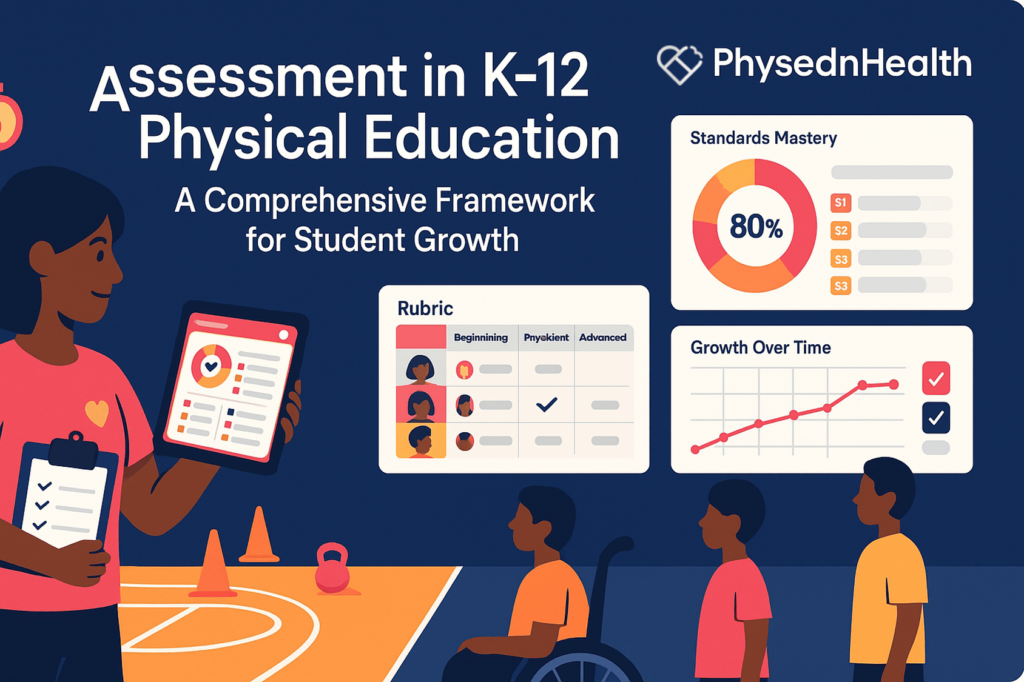
Physical education assessment has evolved far beyond simple fitness tests and participation grades. Today’s PE programs require systematic, standards-based assessment practices that track student growth, inform instruction, and demonstrate program effectiveness. This article explores why assessment is essential in K-12 physical education, how to implement effective assessment strategies, and how technology platforms like PhysednHealth can streamline the entire process. Why Assessment is Necessary in Physical Education Assessment in physical education serves multiple critical purposes that extend far beyond traditional grading. Assessment provides accountability for standards-based learning and is a key component of the education process in all subject areas. Physical education deserves the same rigorous approach to evaluation as core academic subjects. Personalized Learning and Instruction: Assessment enables teachers to identify individual student learning needs and tailor instruction accordingly. By tracking progress, educators can recognize unique strengths, weaknesses, and learning styles, allowing for differentiated instruction that helps all students succeed. Measuring Learning Outcomes: Systematic assessment allows educators to evaluate whether educational goals are being met and assess the effectiveness of curriculum and teaching methods. This data-driven approach ensures that PE programs deliver meaningful learning experiences rather than just physical activity. Identifying Learning Gaps: Regular assessment helps teachers identify areas where students struggle, enabling prompt intervention with additional support or modified strategies. This proactive approach prevents students from falling behind and ensures continuous progress. Motivation and Goal Setting: Assessment provides students with concrete feedback on their progress, which can boost motivation and confidence. When students can see measurable improvement, they develop a sense of ownership in their learning and are more likely to set and achieve personal goals. Communication with Stakeholders: Effective assessment facilitates communication with parents, administrators, and other stakeholders by providing clear evidence of student learning and program effectiveness. This transparency is crucial for maintaining support for PE programs and securing necessary resources. Assessment Frequency: A Balanced Approach The frequency of assessment in physical education should align with instructional goals and practical constraints. Research suggests a balanced approach that includes continuous formative assessment throughout instruction, with more formal summative assessments at strategic intervals. Daily Formative Assessment: Teachers should conduct ongoing formative assessments during every lesson to monitor student progress and adjust instruction in real-time. This might include observational checklists, quick skill checks, or brief verbal assessments. Weekly Progress Monitoring: More structured assessments should occur weekly to track progress on specific skills or fitness components. These might include skill demonstrations, fitness measurements, or cognitive assessments. Unit-Based Summative Assessment: At the end of each instructional unit (typically every 3-4 weeks), comprehensive summative assessments should evaluate student achievement of unit objectives. These assessments provide closure to learning sequences and inform planning for subsequent units. Quarterly/Semester Benchmarks: Major assessment periods should align with school reporting cycles, typically quarterly or by semester. These assessments provide data for report cards and allow for comprehensive evaluation of student growth over extended periods. Annual Assessment: Year-end assessments provide the most comprehensive view of student learning and are essential for evaluating program effectiveness and planning for the following year. What to Assess: The Three Domains of Learning Quality physical education assessment must address all three domains of learning to provide a complete picture of student development. The teacher addresses student learning objectives in the lesson through the cognitive, psychomotor and affective domains. Psychomotor Domain The psychomotor domain focuses on physical skills and movement competence. Assessment should evaluate: Cognitive Domain The cognitive domain encompasses knowledge and understanding of movement concepts. Areas to assess include: Affective Domain The affective domain addresses attitudes, values, and social skills. Assessment should include: Connecting Assessment to Student Learning and SGOs Assessment must directly connect to student learning objectives and contribute to measurable growth over time. Student Growth Objectives (SGOs) are academic goals for students that a teacher sets with their principal or designated supervisor at the beginning of the year. Developing Effective SGOs in Physical Education SGOs in physical education should be specific, measurable goals that PE teachers set to assess student progress in physical skills, fitness levels, and overall well-being. Effective SGOs include: Baseline Data Collection: Use pre-assessments to establish starting points for all students. This might include fitness tests, skill assessments, or knowledge evaluations that provide a clear picture of where students begin their learning journey. SMART Goal Framework: SGOs should follow the SMART criteria – Specific, Measurable, Achievable, Relevant, and Time-bound. For example: “By the end of the semester, 80% of students will improve their mile run times by 15%”. Differentiated Targets: Goals should be differentiated based on student ability levels and starting points. This ensures that all students can experience success and growth, regardless of their initial skill level. Multiple Measures: Use various assessment methods to gather comprehensive data on student progress. This might include performance assessments, self-evaluations, peer assessments, and knowledge tests. Tracking SGOs: Systematic Data Collection Effective SGO tracking requires systematic data collection and analysis throughout the instructional period. High-quality SGOs use multiple measures to determine the starting point of the students and are differentiated to be ambitious and achievable for all of the students included. Key Components of SGO Tracking Baseline Assessment: Establish clear starting points for all students through comprehensive pre-assessment. This data serves as the foundation for measuring growth and setting realistic targets. Progress Monitoring: Conduct regular interim assessments to track progress toward SGO targets. This allows for instructional adjustments and early intervention when students are not making expected progress. Data Documentation: Maintain detailed records of student performance using spreadsheets, digital platforms, or assessment management systems. Consistent documentation enables accurate analysis and reporting. Growth Analysis: Compare post-assessment data to baseline measurements to determine actual growth achieved. This analysis forms the basis for SGO scoring and evaluation. The PhysednHealth Process: Streamlining Assessment and SGO Management The PhysednHealth platform provides a comprehensive solution for managing the entire assessment and SGO process in physical education. The system follows a logical sequence that automates many of the time-consuming aspects of assessment while maintaining educational integrity. Step 1: Create a Class and Add Students The process begins with setting up digital classrooms and importing student
AI in Education Paradox: Debating Advanced Technology While Students Lack Basic Internet Access
The American education system finds itself embroiled in an increasingly intense debate about whether to allow artificial intelligence tools in K-12 classrooms. State departments of education are crafting elaborate policies, teachers are attending professional development sessions on “responsible AI use”, and districts are investing in AI platforms like MagicSchool AI. Meanwhile, a fundamental irony persists: millions of students across the country still lack access to the most basic requirement for digital learning—reliable internet connectivity1 2 3. This disconnect between the sophisticated AI policy discussions happening in education boardrooms and the digital reality facing students highlights a profound misalignment of priorities. As policymakers debate the nuances of generative AI ethics and academic integrity, approximately 16.9 million children remain “logged out” from instruction because their families lack home internet access. The debate over AI in schools, while generating considerable attention and resources, becomes largely academic when applied to the millions of students who cannot reliably connect to the internet in the first place 4. The Scope of the AI Debate The artificial intelligence conversation in K-12 education has exploded since ChatGPT’s public release in late 2022. At least 26 states have now issued official AI guidance or policies for schools, with topics ranging from ethical considerations to implementation strategies. The debate initially centered around concerns about academic dishonesty and plagiarism, but has evolved into more nuanced discussions about how AI can enhance teaching and learning. Recent federal initiatives have elevated the conversation further. President Trump’s April 2025 Executive Order on “Advancing Artificial Intelligence Education for American Youth” mandated AI integration across all grade levels, with Education Secretary Linda McMahon prioritizing AI incorporation in discretionary grant programs. The order asserts that “AI in kindergarten through 12th grade is essential” for cultivating an “AI-ready workforce”5. Survey data reveals the complexity of educator attitudes toward AI. According to Pew Research, 25% of public K-12 teachers say AI tools do more harm than good in education, while only 6% believe they do more good than harm. Despite these mixed feelings, approximately 60% of teachers now acknowledge incorporating AI into lesson planning, parent communication, and grading processes. The urgency around AI education has led to significant policy development. States like North Carolina have created comprehensive frameworks emphasizing that “all schools and districts ensure all staff and students are AI literate”, while others like West Virginia require parental permission for students under 18 to use AI tools. This patchwork of policies reflects both the perceived importance of AI literacy and the uncertainty about how to implement it safely and effectively7. The Persistent Digital Divide While education leaders focus on advanced AI policies, the fundamental infrastructure for digital learning remains inadequate for millions of students. The statistics paint a stark picture of educational inequality that makes sophisticated AI discussions seem premature: Home Internet Access Challenges: The Homework Gap:The Federal Communications Commission reports that nearly 17 million children lack home internet access, creating what educators call the “homework gap.” This digital divide disproportionately affects marginalized communities, with one out of three Black, Latino, and American Indian/Alaska Native households lacking adequate connectivity. Research shows that 70% of teachers now assign homework requiring internet access, yet millions of students cannot complete these assignments at home. Many resort to using smartphones for schoolwork—approximately 4% of students can only access the internet through a smartphone—which creates additional challenges since educational software often functions poorly on smaller screens. Rural Connectivity Crisis:Rural students face particularly acute challenges. Nationally, 13.4% of rural households lack the minimum necessary broadband connection for streaming educational videos or virtual classrooms. In some rural Michigan schools, one-third of students still lack high-speed broadband internet at home, and these students demonstrate lower classroom grades, standardized test scores, and educational aspirations compared to their better-connected peers. Device Access Disparities Beyond internet connectivity, device access represents another layer of the digital divide: The Irony of Priorities The juxtaposition of these realities creates a striking irony. Education systems are investing substantial resources in AI guidance, training, and tools while basic digital infrastructure remains inadequate for millions of students. This misalignment becomes particularly apparent when examining specific examples: Resource Allocation Paradox:While districts spend money on AI platforms and teacher training for “responsible AI use”, only 45% of public schools are still offering home internet access to students as of 2022, down from 70% in 2021. The decline occurred as federal COVID relief funding expired, highlighting how temporary solutions failed to address systemic connectivity issues. Policy vs. Reality:States are crafting sophisticated AI policies that assume universal digital access. For instance, North Carolina’s guidance encourages “infusing AI literacy in all curriculum areas”, but this recommendation becomes meaningless for students who cannot reliably access digital content at home. Similarly, discussions about AI-generated homework assistance are irrelevant when students lack basic tools to submit assignments online. Training Disconnect:The emphasis on professional development for AI tools contrasts sharply with the more fundamental need for training teachers to serve students without basic technology access. While 68% of teachers surveyed didn’t receive training on AI tools, even fewer receive guidance on accommodating students in the homework gap. The Smartphone Dependency Problem Many students caught in the digital divide rely on smartphones as their primary internet access point, creating additional educational challenges that make AI debates even more disconnected from reality. Research indicates that students who depend solely on smartphones for homework face significant academic disadvantages: Academic Performance Impact:Studies show that students without home internet access or who rely solely on mobile plans spend more time on homework, have lower grade point averages, and weaker digital skills. The gap in digital skills between these students and those with reliable broadband “is equivalent to the gap in digital skills between 8th and 11th grade students”. Smartphone-Based Learning Limitations:When students complete assignments on phones, the results are often problematic. Educators report issues with “huge font, wide margins, bizarre formatting” in work obviously completed on mobile devices. More concerning, research from Rutgers University found that students who rely on smartphones to look up homework answers score significantly lower on exams—as much as half to a full letter grade lower—because they rapidly forget both questions and
Bridging the Literacy and Math Crisis Through Movement and Writing in PE
The 2024 National Assessment of Educational Progress (NAEP) results, released this week, reveal a troubling reality: high school students’ reading and math scores have hit historic lows, with nearly 45% of seniors scoring below basic in mathematics and one-third falling below basic in reading. This represents the lowest performance in over two decades, with the lowest-performing students recording scores 25 points lower than their peers from 1992. While educators across disciplines scramble for solutions, physical education teachers are uniquely positioned to address this crisis through innovative approaches that combine movement with academic skill development1. The Scientific Foundation: Movement Enhances Cognitive Function Research consistently demonstrates that physical activity directly impacts cognitive performance and academic achievement. Exercise triggers the release of Brain-Derived Neurotrophic Factor (BDNF), often called “Miracle-Gro for the brain,” which promotes neuronal growth and synaptic plasticity. This neurobiological response creates optimal conditions for learning by enhancing attention, memory retention, and executive function2. Studies show that even brief periods of physical activity can produce significant academic benefits. Research published in the Journal of School Health found that children demonstrated up to 20% improvement in attention following just 20 minutes of moderate physical activity, with effects lasting up to 45 minutes. Similarly, cross-sectional research indicates that children who are more physically active and aerobically fit show improved brain function, better cognitive performance, and higher academic achievement compared to less active peers3. The neurological mechanisms underlying these benefits are well-established. Physical activity increases levels of key neurotransmitters including dopamine (enhancing attention and motivation), norepinephrine (strengthening attention and information processing), and serotonin (improving mood and impulse control). These chemical changes create an optimal brain state for learning and skill acquisition. PE Teachers as Academic Partners: The Writing Connection Physical education teachers can directly address reading comprehension and math deficiencies through structured writing activities integrated into PE curricula. Research demonstrates that writing in physical education serves multiple educational purposes: it reinforces reading and writing skills taught in traditional classrooms, provides opportunities for reflection and self-assessment, and helps students articulate their thoughts and experiences4. PE Homework and Journaling Activities The implementation of PE homework assignments that require written reflection has shown promising results in promoting both physical activity and literacy skills. Studies of PE homework interventions found that academic assignments, including reading materials and writing reports on health and fitness topics, led to significant improvements in knowledge acquisition. Students who completed these assignments not only demonstrated increased understanding of physical activity concepts but also showed improvements in their ability to express ideas clearly through writing5. Fitness journaling represents a particularly effective approach for developing writing skills while reinforcing health education concepts. When students maintain activity logs and reflect on their experiences through writing, they engage in meaningful literacy practices that strengthen their ability to organize thoughts, use descriptive language, and analyze cause-and-effect relationships. These skills directly transfer to improved reading comprehension and mathematical problem-solving abilities. Structured Reflection and Fitness Planning Written fitness plans require students to engage in complex cognitive processes that mirror those needed for academic success. Creating a fitness plan involves goal setting, sequencing, time management, and evaluation – all executive function skills that research shows are enhanced by physical activity and directly support academic performance. When students write about their fitness goals, track their progress, and reflect on their experiences, they develop metacognitive skills essential for academic success6. The process of writing reflections on physical activities helps students develop self-expression skills that are fundamental to reading comprehension. As noted by education researchers, “writing is an excellent way for both teacher and students to evaluate progress” and provides opportunities for students to “explore and express their own thoughts”. This self-expression practice builds the cognitive flexibility and analytical thinking skills that underpin both literacy and mathematical reasoning. Cross-Curricular Integration: PE as Academic Enhancement Mathematics Through Movement Research specifically examining the integration of physical activity with mathematics instruction shows consistent positive effects on student performance. A systematic review of 29 intervention studies found that 45% demonstrated positive effects of school-based physical activity on mathematics performance, with meta-analysis revealing an overall small but significant positive effect. The integration of movement with mathematical concepts enhances learning through multiple mechanisms: Spatial-temporal processing: Movement activities develop spatial awareness and sequential thinking skills that are fundamental to mathematical reasoning. When students engage in activities that require counting, measuring, and geometric thinking while moving, they develop stronger neural pathways that support mathematical cognition. Memory and processing speed: Physical activity interventions that incorporate mathematical content have been shown to improve both working memory and processing speed – cognitive functions that research identifies as key markers of mathematical ability. Students who participate in math-integrated PE activities demonstrate improved numerical processing and problem-solving capabilities. Cross-lateral movement benefits: Activities that cross the body’s midline strengthen connections between brain hemispheres, improving coordination between analytical and creative thinking processes essential for mathematical problem-solving. Literacy Development Through Physical Activity The connection between movement and literacy development is equally robust. Studies demonstrate that integrating physical activity with reading and language arts instruction produces significant improvements in comprehension and vocabulary acquisition. When students engage in movement-based literacy activities, they activate multiple sensory pathways that enhance memory encoding and retrieval. Movement-enhanced vocabulary instruction, where students connect words to physical actions, has been shown to improve both comprehension and retention compared to traditional seated instruction. Additionally, activities that combine reading with physical challenges help students develop the sustained attention and focus necessary for processing longer texts – a skill that research indicates has declined significantly among current students. Technology Integration: Platforms Like PhysednHealth Modern educational technology platforms specifically designed for physical education, such as PhysednHealth, provide comprehensive tools for implementing these evidence-based approaches. These platforms enable PE teachers to: Research on educational technology integration shows that platforms combining movement tracking with academic skill development produce measurable improvements in student engagement, learning outcomes, and program effectiveness. Implementation Strategies for PE Teachers Daily Integration Approaches Movement breaks with academic content: Incorporate 5-10 minute movement activities that reinforce classroom learning, such as math fact relays or vocabulary action
Navigating the SEL Controversy: A Guide for Physical Education Teachers
The politicization of Social Emotional Learning (SEL) has created significant challenges for educators across the United States, with Physical Education teachers finding themselves at the center of a complex political landscape. While SEL skills are naturally embedded in PE classes through teamwork, conflict resolution, and character development, the growing political controversy surrounding the term has forced many educators to adapt their approaches to maintain effective programming while avoiding political pitfalls. The Political Storm Surrounding SEL The controversy over SEL in schools has intensified dramatically since 2021, with conservative critics conflating social-emotional learning with critical race theory and claiming it serves as a “Trojan horse” for progressive indoctrination. This politicization has led to legislative action in multiple states, with at least eight states introducing bills to ban or limit SEL programs. The backlash stems largely from misunderstandings about what SEL actually entails, with critics expressing concerns that it interferes with parenting, promotes politically liberal agendas, and detracts from academic focus12. The opposition gained momentum after conservative media outlets, including Fox News, extensively covered the topic in 2021, with the channel referencing critical race theory over 1,000 times in a three-and-a-half-month period while falsely framing SEL as a covert indoctrination program. This media attention created widespread confusion and resistance, even though SEL fundamentally teaches life skills that the vast majority of parents want their children to learn when described specifically rather than using education jargon3. Florida’s Response: From SEL to Life Skills Florida has emerged as the epicenter of anti-SEL efforts, with Governor Ron DeSantis’s administration taking aggressive action against social-emotional learning programs. The state’s Stop WOKE Act, signed in 2022, prohibited schools and businesses from teaching certain concepts related to race, gender, and social privilege. While SEL itself was not explicitly banned, the Florida Department of Education has systematically targeted SEL curricula, warning school districts that programs from companies like Edgenuity and Imagine Learning violated state law4. In response to this pressure, Florida school districts have quietly rebranded their SEL programs. The School District of Palm Beach County removed the phrase “social-emotional learning” from its website and materials, replacing it with “skills for learning and life”. Similarly, other districts throughout the state have adopted alternative terminology such as “character education,” “life skills,” and “responsible behaviors and values” to describe the same essential competencies5. The Florida Department of Education’s own physical education standards reflect this shift, emphasizing “responsible behaviors and values” rather than SEL terminology while still addressing the same core competencies including cooperation, respect, goal-setting, and decision-making. This rebranding allows educators to continue teaching essential social-emotional skills while avoiding political controversy6. The PE Advantage in SEL Implementation Physical Education teachers are uniquely positioned to implement SEL effectively because social-emotional learning is naturally embedded in PE activities. The national physical education standards explicitly include Standard 4, which states that “the physically literate individual exhibits responsible personal and social behavior that respects self and others”. This standard directly aligns with CASEL’s five core SEL competencies: self-awareness, self-management, responsible decision-making, relationship skills, and social awareness7. PE classes provide authentic opportunities for students to develop these skills through both explicit and implicit instruction. Explicit SEL activities might include mindfulness exercises, breathing techniques, or targeted lessons on emotional regulation. Implicit SEL development occurs naturally through team sports, collaborative activities, conflict resolution during games, and learning to cope with both success and failure in athletic endeavors. Research demonstrates the effectiveness of SEL integration in physical education, with studies showing significant improvements in teamwork, self-awareness, emotional regulation, and social skills among elementary school students who participated in SEL-enhanced PE programs. These improvements occurred even with relatively brief interventions, highlighting the natural compatibility between physical education and social-emotional development. Strategic Navigation of Political Challenges PE teachers can employ several strategies to maintain effective SEL programming while minimizing political backlash: Terminology Matters Research from the Thomas Fordham Institute reveals that while parents overwhelmingly support teaching SEL skills, they strongly dislike the term “social-emotional learning” itself. The preferred terminology across political parties is “life skills”. PE teachers should consider using alternative phrases such as: Focus on Specifics Rather Than Jargon Parents respond positively when educators describe specific skills and activities rather than using abstract educational terminology. Instead of saying “we’re implementing SEL,” teachers can explain “we’re teaching students how to work together respectfully, manage frustration when they don’t win, and make good decisions during competitive activities.” Emphasize Traditional Values Frame SEL skills in terms of traditional character traits that have broad political appeal, such as responsibility, respect, perseverance, and good sportsmanship. These values align with both progressive and conservative perspectives while describing the same competencies addressed in SEL programming. Leverage PE’s Natural Integration Emphasize that social-emotional skills have always been part of quality physical education. PE teachers can point out that teaching teamwork, fair play, and conflict resolution are fundamental aspects of sports and physical activity that predate the SEL movement by decades. Communicate Proactively with Parents Be transparent about classroom activities and goals without using controversial terminology. Provide specific examples of how activities develop character and life skills, and explain how these skills support both academic success and personal development. State-Level Rebranding Trends Florida is not alone in rebranding SEL to avoid political controversy. Several states have adopted alternative terminology while maintaining the substance of social-emotional programming: Idaho distanced itself from SEL terminology while maintaining support for “students’ mental and behavioral wellbeing”. The state explicitly stated it was not abandoning SEL concepts but rather using different language to avoid controversy. Missouri scaled back proposed SEL standards and redefined them as optional, non-binding frameworks after receiving nearly 2,000 public comments expressing confusion and concerns. Kansas successfully implemented social, emotional, and character development (SECD) standards by framing them around character education and civic responsibility rather than using SEL terminology. Ohio refers to SEL as “life skills curriculum” in its official documentation, emphasizing how these skills prepare students for workplace success and responsible citizenship. Maintaining Substance While Adapting Language The key for PE teachers is maintaining the integrity of social-emotional skill development while adapting to political
Why Parents Are Leaving Their Children’s Behavior Management to Teachers: Strategies for Reclaiming Responsibility
The Growing Crisis in Classroom Discipline A concerning trend has emerged in modern education: parents increasingly expect teachers to handle their children’s behavior management while stepping back from their disciplinary responsibilities at home. According to recent data, more than 70% of educators report that students are misbehaving more now than ever, with teachers citing worsening student behavior as a primary driver of burnout. This shift represents a fundamental breakdown in the traditional partnership between home and school, leaving educators overwhelmed and students without the consistent boundaries they desperately need. The impact extends far beyond classroom disruption. Disrespectful and ill-disciplined children take up all the teacher’s time and negatively impact learning for all the other kids, creating an environment where academic growth suffers across the board. When parents fail to establish discipline at home, teachers are left managing behaviors they’re neither equipped nor positioned to address effectively, leading to a cycle of frustration that benefits no one. Root Causes of Parental Abdication The Collapse of Traditional Authority Structure Multiple factors have contributed to parents increasingly leaving behavior management to schools. The collapse of parental authority reflects the collapse of ‘ancient impulse controls’ and the shift ‘from a society in which Super Ego values (the values of self-restraint) were ascendant, to one in which more and more recognition was being given to the values of the id (the values of self-indulgence)’. This cultural shift has created a generation of parents who struggle to set and maintain boundaries with their children. Modern parents often ‘find it easier to achieve conformity by the use of bribery than by facing the emotional turmoil of suppressing the child’s demands’. This approach undermines children’s ability to develop self-restraint and self-discipline, creating problems that manifest in the classroom where bribery is neither practical nor appropriate. Time Constraints and Modern Life Pressures Contemporary family dynamics contribute significantly to this problem. Often both parents are working, or a single parent is trying to cope on their own, and parents sometimes have to work two jobs or more to make ends meet. The result is that parents are often tired, frayed around the edges, with lots of repressed anger, and they don’t have the patience to take a deeper look at what’s going on with their kids. These time-pressed parents frequently view teachers as convenient disciplinarians, failing to recognize that it tells me that the parents don’t care when they consistently avoid addressing behavioral issues at home. This creates a dangerous precedent where children learn that different standards apply in different settings, undermining the consistency necessary for effective behavior management. Fear-Based Parenting and Overindulgence Many divorced and separated parents become so fearful of the possibility that their children will reject them that they choose not to engage in any conversations that might jeopardize these relationships. This fear-based approach extends to intact families, where parents worry that discipline will damage their relationship with their children. The result is children who listen to tales from their friends of being grounded, yelled at, or maybe spanked. They may think, “These things don’t happen to me. I must not do anything wrong.” They may also think, “Mom (or Dad) doesn’t even care”. This lack of boundaries creates confusion and insecurity in children who actually crave structure and limits. The Classroom Consequences Teacher Burnout and Stress The burden of managing undisciplined students takes a severe toll on educators. Behavioral issues in class can also lead to teacher burnout over time. Teachers with particularly challenging students are more likely to feel they aren’t making a difference and become more cynical about their role in the classroom. Studies show that the prevalence of burnout ranged from 25.12% to 74%, stress ranged from 8.3% to 87.1%, anxiety ranged from 38% to 41.2% and depression ranged from 4% to 77% among teachers. More misbehavior means more paperwork and more time meeting with administrators, speaking with parents, and wondering whether your response was correct or incorrect or if today will be better or worse than yesterday. This creates a cycle where effective teaching becomes secondary to behavior management, ultimately shortchanging all students’ educational experiences. Disrupted Learning Environment When parents fail to establish discipline at home, the entire classroom suffers. This behavior not only disrupts the classroom environment but also negatively impacts their peers who are trying to learn. The ripple effects include: Warning Signs of Inadequate Home Discipline Parents should watch for these indicators that their child needs more consistent discipline: Behavioral Red Flags Children who have little or no discipline are left to fend for themselves, which may result in injuries and a lack of boundaries. Specific warning signs include: Academic and Social Indicators Teachers often observe these patterns in children lacking home discipline: Strategies for Parents to Reclaim Control Establishing Clear Boundaries and Expectations The most powerful tool for effective discipline is attention—to reinforce good behaviors and discourage others. Parents must shift from reactive to proactive discipline by: Setting Clear, Consistent Rules: Have clear and consistent rules your children can follow. Be sure to explain these rules in age-appropriate terms they can understand. Rules should be: Following Through with Consequences: Calmly and firmly explain the consequences if they don’t behave. The key is consistency – Apply consequences as soon as possible and Do not enter into arguments with the child during the correction process. Positive Discipline Techniques Research consistently shows that positive discipline strategies are more effective than punitive approaches. Psychological and physical aggression were associated with higher child aggression and distraction, while verbal reasoning was associated with lower odds of aggression and higher odds of prosocial peer relations. Effective positive strategies include: Building Responsibility at Home One of the best ways to teach kids responsibility is to empower them to have an active role at home. This includes: Age-Appropriate Chores and Duties: Teaching Self-Management Skills: Time-Out and Structured Consequences Time-out is one of the most effective disciplinary techniques available to parents of young children, aged two years through primary school years. For effective implementation: Strengthening the Parent-Teacher Partnership Collaborative Behavior Management Parent-teacher collaboration is an important part of a student’s education. When the family of a
How PE Teachers Can Curb the Kindergarten Tantrum Crisis
Recent reports across the country indicate a dramatic surge in kindergarten tantrums and emotional dysregulation, with educators describing an unprecedented increase in crying, yelling, shutting down, and explosive behaviors among five and six-year-olds. Teachers report that students show significantly more difficulty with social-emotional skills including following directions, sharing, and taking turns compared to just five years ago. While post-pandemic effects continue to influence these behaviors, this crisis demands immediate, collaborative action from the entire school community. Physical education teachers, with their unique expertise in movement-based interventions and behavior management, are positioned to be key partners in developing comprehensive solutions1 2. Understanding the Root Causes Kindergarteners today face multiple challenges that contribute to their emotional dysregulation. The shift toward more academic-focused kindergarten programs has moved away from self-directed play, asking 4–6-year-olds to sit quietly for extended periods when they’re not developmentally ready. Additionally, many incoming students lack exposure to structured group settings, having missed crucial preschool socialization experiences. Research shows that family instability, including household changes and disrupted routines, significantly contributes to kindergarten behavior problems. These factors create a perfect storm where children enter school without the emotional regulation skills needed for classroom success3. The Power of Movement-Based Interventions Physical activity serves as a powerful tool for managing student behavior and supporting emotional regulation. Research demonstrates that movement-based interventions can significantly improve executive function, attention, and behavioral control in young children. Cognitively engaging physical activities, such as games that require following complex instructions or adapting movements, show the largest effect sizes for improving kindergarten behavior. Movement breaks help interrupt negative behavioral patterns, provide sensory regulation opportunities, and support the development of self-control skills that are essential for classroom success 4. Collaborative Strategies Between PE and Classroom Teachers 1. Integrated Sensory Break Programming PE teachers can work with classroom educators to design structured sensory break schedules throughout the school day. These breaks should be brief (3-5 minutes) and incorporate activities that provide specific sensory input to help students reset and refocus. Effective sensory breaks include5: Movement-Based Activities: Transition Activities: PE teachers can train classroom staff on implementing these activities and provide ongoing support to ensure consistency across all learning environments. 2. Collaborative Behavior Management Systems PE teachers can contribute to school-wide behavior management by aligning their gymnasium expectations with classroom norms. This involves developing consistent language, procedures, and consequences that support the broader school behavior plan. Key collaborative elements include7: Shared Expectations Framework: Communication Systems: 3. Interdisciplinary Teaching Models Research supports collaborative teaching approaches that integrate physical education with academic content. PE teachers can partner with classroom educators using several effective models: Station Teaching Model: Team Teaching Approach: 4. Emotion Regulation Through Movement PE teachers can collaborate with classroom educators to implement movement-based emotional regulation strategies. These approaches help kindergarteners develop self-awareness and coping skills through physical activity: Emotional Regulation Activities: Calm-Down Movement Protocols: 5. Professional Development and Training Successful collaboration requires ongoing professional development for both PE and classroom teachers. Joint training sessions can focus on: Shared Learning Opportunities: Cross-Training Programs: Implementation Timeline and Assessment Phase 1: Foundation Building (Weeks 1-4) Phase 2: Program Launch (Weeks 5-12) Phase 3: Expansion and Refinement (Weeks 13-24) Measuring Success Effective collaboration between PE and classroom teachers should result in measurable improvements in several key areas: Behavioral Outcomes: Academic Benefits: Social-Emotional Growth: Creating Sustainable Systems Long-term success requires building sustainable systems that extend beyond individual teacher efforts. Schools should consider: Administrative Support: Family and Community Engagement: Continuous Improvement: Addressing Implementation Challenges While collaboration between PE and classroom teachers offers significant benefits, schools must address potential obstacles: Time and Scheduling Constraints: Different Teaching Philosophies: Resource Limitations: The kindergarten tantrum crisis requires immediate, comprehensive action that leverages the unique strengths of all educators. By partnering PE teachers with classroom educators, schools can create powerful, movement-based interventions that address the root causes of emotional dysregulation while building students’ long-term success skills. This collaborative approach not only supports struggling kindergarteners but also creates a more positive, effective learning environment for all students. The time for action is now – our youngest learners depend on educators working together to provide the support, structure, and movement opportunities they need to thrive. Looking to fundraise? Visit WellPledge to start your campaign today! Learn more at PhysednHealth. Contact us at awesome@physednhealth.com PhysednHealth is a leading physical education and student wellness technology platform designed to help schools modernize PE with smart, standards-based tools. Our easy-to-use physical education software empowers teachers to track student progress, set SMART fitness goals, and promote mental and physical well-being. Trusted by educators worldwide, PhysednHealth brings data-driven insights, AI-powered assessments, and personalized learning to PE programs—helping students build lifelong healthy habits.
Beyond the Latest Trend: Why Physical Education Should Prioritize Lifetime Skills Over Social Media-Driven Activities
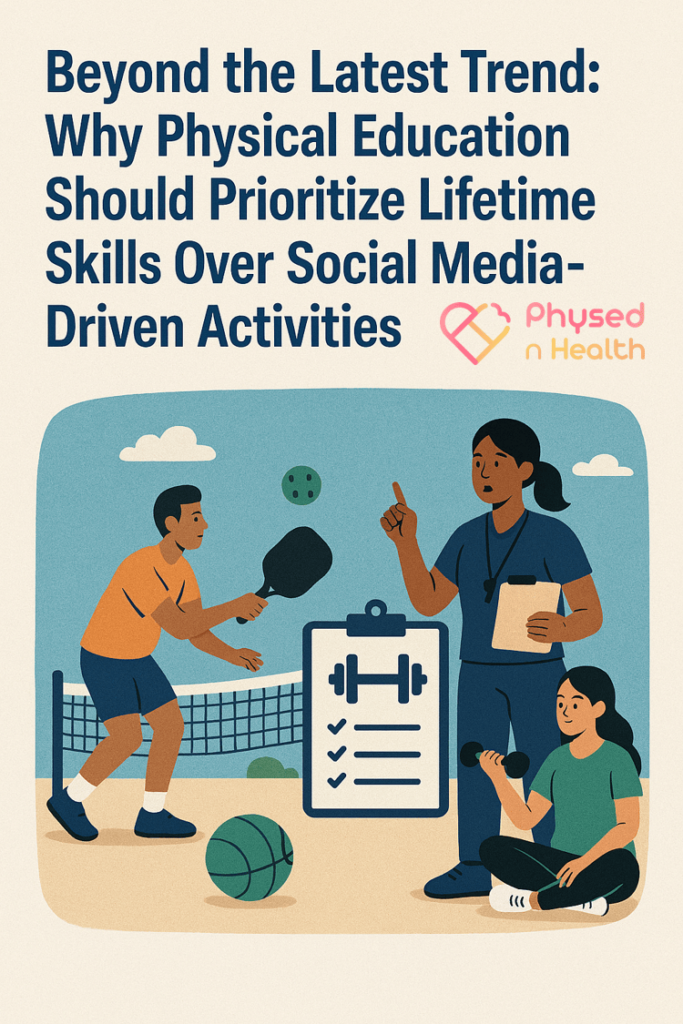
While it may seem fashionable for physical education teachers to incorporate the latest social media-driven sports and activities into their curriculum, research consistently demonstrates that PE programs should prioritize teaching accessible, lifetime fitness skills that students can realistically pursue beyond school grounds. This approach not only ensures equitable access for all students but also promotes long-term physical activity habits that extend well into adulthood. The Accessibility Challenge of Trendy Sports Physical education faces a fundamental challenge when adopting popular sports like pickleball, which has gained significant social media attention and popularity among adults. While pickleball is increasingly promoted as an inclusive sport, significant accessibility barriers remain. Many communities lack proper facilities, with courts often requiring specialized surfaces, equipment, and maintenance that may not be available to all students after graduation.(greenfly) Research reveals that community access to sports facilities remains highly inequitable. Students from disadvantaged backgrounds already face substantial barriers to physical activity participation, including limited access to recreational facilities, financial constraints, and poor transport links. Teaching sports that require specific courts, equipment, or club memberships can inadvertently widen these gaps rather than bridge them. (pmc.ncbi.nlm.nih) The Science Behind Lifetime Fitness Activities Extensive research supports prioritizing lifetime fitness activities over trendy sports. A comprehensive study examining physical education’s long-term impact found that students who participated in daily PE programs remained more physically active even four years after the program ended. Most importantly, the study revealed that intensive participation in general physical activity during school years was more predictive of adult activity levels than participation in specific sports. (eurapa.biomedcentral) The lifetime fitness approach focuses on activities that can be performed throughout one’s entire life, such as: Research demonstrates that these activities provide superior long-term benefits because they can be adapted to any fitness level, require minimal equipment, and remain accessible regardless of socioeconomic status or community resources.(plt4m) Student Engagement Through Variety, Not Trends The concern that teaching fundamental fitness skills becomes boring is valid, but research offers evidence-based solutions. A comprehensive study on student motivation in physical education found that perceived variety-support significantly enhances student engagement. However, this variety doesn’t need to come from trending activities but rather from diverse teaching methods, equipment usage, and modified approaches to fundamental movements. (frontiersin) Effective engagement strategies include: The Evidence for Long-Term Impact Multiple longitudinal studies demonstrate the superiority of lifetime fitness education over sport-specific training. Research tracking students across decades shows that individuals who learned fundamental movement patterns and fitness principles during school years maintained higher activity levels throughout adulthood. (frontiersin) Conversely, studies reveal that most people discontinue the sports they played in childhood, with only 25% of adults continuing sports they participated in as children. This stark statistic underscores why PE should prioritize transferable skills over specific sport competencies. (plt4m) A landmark meta-analysis examining after-school physical activity programs found that interventions focusing on general physical activity skills provided more sustainable long-term benefits than sport-specific programs. The study concluded that programs emphasizing fundamental movement skills, cardiovascular fitness, and strength training produced participants who remained active across various life transitions. (niost) Addressing Community Access Inequities Physical education serves a crucial equity function by providing all students, regardless of background, with essential fitness knowledge and skills. When PE teachers choose activities based on social media popularity rather than accessibility, they may inadvertently disadvantage students from lower socioeconomic backgrounds. (pmc.ncbi.nlm.nih) Research consistently shows that students from disadvantaged communities face multiple barriers to sports participation, including: By focusing on bodyweight exercises, basic cardiovascular activities, and fundamental movement patterns, PE teachers ensure that every student can continue their fitness journey regardless of their post-graduation circumstances. Creating Sustainable Excitement Through Progressive Mastery Rather than relying on trendy activities to maintain student interest, research supports a progressive mastery approach that builds long-term engagement. This method involves: 1. Foundational Skill Building: Starting with basic movement patterns and gradually increasing complexity (rwu) 2. Personal Goal Setting: Helping students establish and track individual fitness objectives (pmc.ncbi.nlm.nih) 3. Autonomy Support: Allowing students to choose how they apply fundamental principles to their personal interests (ebsco) 4. Competence Development: Ensuring students master core skills before progressing to advanced variations Studies show that students who develop intrinsic motivation through competence and autonomy are significantly more likely to maintain physical activity habits throughout their lives. (rwu) The Role of Physical Literacy The concept of physical literacy – the motivation, confidence, physical competence, knowledge, and understanding to value and engage in a physically active lifestyle – provides the theoretical foundation for prioritizing lifetime skills. Research demonstrates that physical literacy development during childhood and adolescence is the strongest predictor of lifelong physical activity. (eurapa.biomedcentral) Trendy sports, while potentially engaging in the short term, often fail to develop comprehensive physical literacy. They may emphasize sport-specific skills that have limited transfer to other activities or life situations. In contrast, lifetime fitness activities develop fundamental movement patterns, cardiovascular endurance, muscular strength, and flexibility – components that transfer to any physical activity a person might choose to pursue. (finalsite) Practical Implementation Strategies PE teachers can maintain student engagement while prioritizing lifetime skills through several evidence-based strategies: Circuit Training Variety: Design different circuit stations using basic equipment to teach cardiovascular fitness, strength training, and flexibility in engaging formats (pmc.ncbi.nlm.nih) Progressive Challenges: Create tiered challenges that allow students of all fitness levels to experience success and growth (rwu) Real-World Applications: Connect fitness principles to activities students might encounter outside school, such as hiking, recreational sports, or occupational demands (plt4m) Peer Teaching: Allow students to demonstrate and teach exercises to classmates, building both competence and social connection (rwu) Technology Integration: Use fitness apps, heart rate monitors, or simple tracking tools to help students monitor their progress and understand fitness principles (pmc.ncbi.nlm.nih) Conclusion While incorporating trending activities may seem like an effective way to engage students, the scientific evidence strongly supports prioritizing accessible lifetime fitness skills in physical education. This approach ensures equitable access for all students, promotes long-term physical activity habits, and provides the foundational physical literacy necessary for lifelong wellness. The goal of physical education should
The Case for PE Teachers as Leaders in Addressing the Teenage Mental Health Crisis
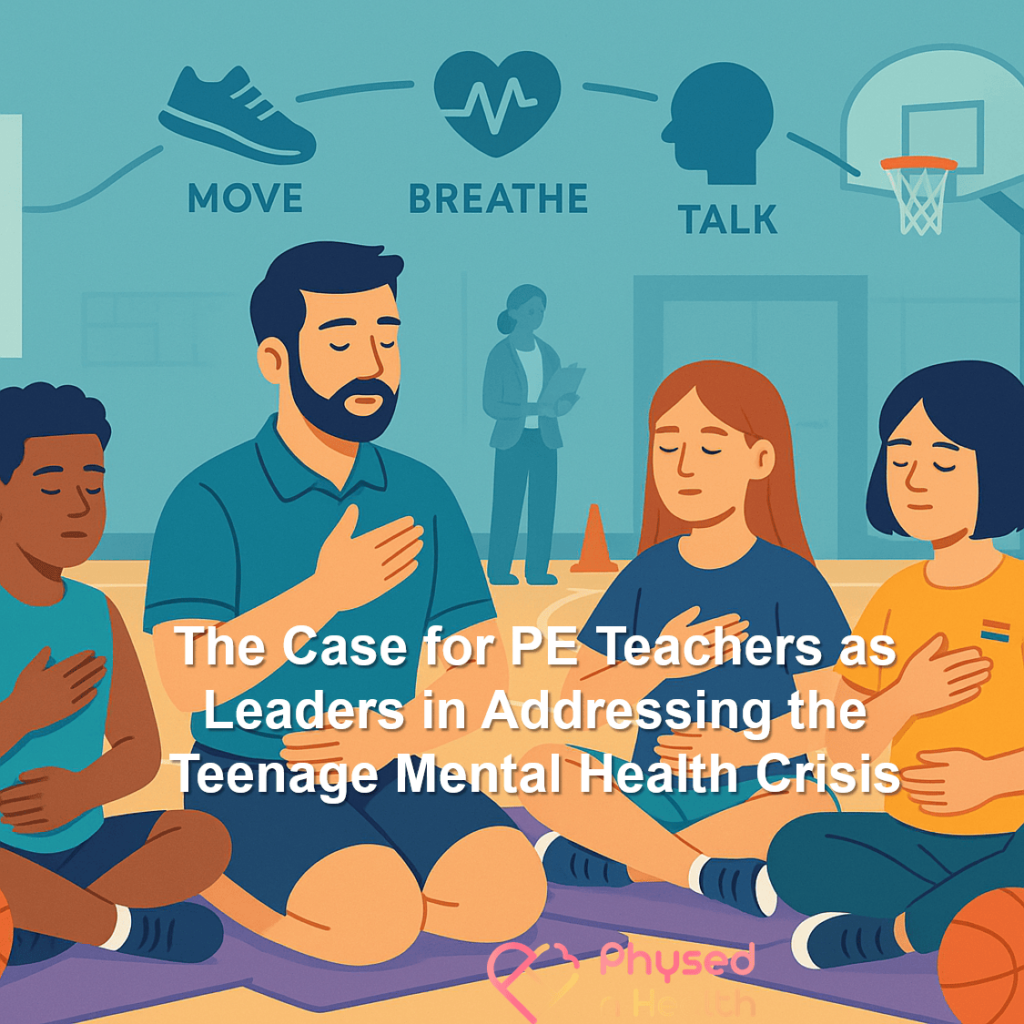
The teenage mental health crisis has reached epidemic proportions, with 40% of high schoolers reporting persistent feelings of sadness or hopelessness and 20% seriously considering suicide in the past year. As mental health diagnoses among children and adolescents continue to rise, schools find themselves on the front lines of this crisis, with teachers increasingly expected to serve as first responders. While this responsibility has traditionally fallen on school counselors and mental health professionals, there is compelling evidence that physical education teachers are uniquely positioned to take a leadership role in addressing student mental health needs. The Scope of the Crisis Recent statistics paint a sobering picture of youth mental health. Nearly 1 in 3 youth ages 12-17 had a mental, emotional, developmental or behavioral problem in 2022-2023, with 18% experiencing major depressive episodes and 31.9% suffering from anxiety disorders. The situation is particularly dire for specific populations, with Native American teen suicide rates nearly 3.5 times higher than the national average and 14% of LGBTQ teenagers attempting suicide in 20221. Perhaps most concerning is that only 51% of youth with mental health conditions receive treatment in a given year, while youth mental health hospitalizations increased by 124% from 2016 to 2022. This treatment gap highlights the critical need for proactive, school-based approaches that can identify and support students before they reach crisis levels2. The Unique Position of PE Teachers Physical education teachers possess several characteristics that make them exceptionally well-suited to lead mental health initiatives in schools. Research consistently demonstrates that PE teachers usually have exceptional relationships with their young people, enabling children to open up about their mental health in a calm and supportive environment. Unlike traditional classroom teachers who may interact with students primarily in academic contexts, PE teachers see students in more dynamic, collaborative settings that naturally reveal social-emotional challenges. Natural Leadership Qualities Physical education teachers are uniquely suited for leadership roles, given the nature of their position and their knack for interpersonal dynamics. They typically work well with large groups of students, know everyone in the school community, have a vested interest in school culture, and are trusted and well-regarded for their efforts. These qualities position them as natural connectors within the school ecosystem3. The Mind-Body Connection The relationship between physical activity and mental health is well-established and profound. Studies show that exercise can be as effective as medication in improving teen mental health and happiness levels. Physical activity raises the level of natural chemicals in the brain that affect emotional regulation and mood, while regular participation in physical activity can significantly improve the emotional state of adolescents, reduce symptoms of anxiety and depression, and enhance self-esteem. Recent research from Taiwan analyzing nearly 2 million participants found that superior performance in cardiovascular activities, strength, and muscular endurance is associated with a reduced risk of depression, anxiety, and ADHD. The study revealed a dose-dependent relationship, meaning the more physically fit a child or adolescent is, the less susceptible they may be to mental health disorders. Evidence-Based Strategies and Systems School-Based Mental Health Interventions Research supports the effectiveness of comprehensive, whole-school approaches to mental health. School-based mental health interventions may reduce anxiety, increase resilience, improve well-being and increase positive mental health in children and adolescents. A systematic review found significant beneficial effects on resilience (effect size = 0.748), positive mental health (effect size = 0.405), well-being (effect size = 0.877), and anxiety reduction (effect size = 0.347). The Whole-School Approach Framework The most effective mental health programs adopt a whole-school approach that mobilizes the various resources of the entire school community – including the voices and active engagement of students, staff, parents and professionals – in a collaborative effort to promote mental health and well-being. This approach operates across multiple tiers: Tier I (Universal Support): Focuses on creating safe, healthy environments where all students feel seen, heard, and empowered. This includes professional development for all staff, student-led initiatives, family engagement, and climate building activities. Tier II (Targeted Support): Provides personalized intervention for some identified students through individualized behavioral and emotional support, data-driven identification processes, and evidence-based instruction to strengthen coping skills. Tier III (Intensive Support): Offers intensive interventions for individual students through crisis management, re-entry coordination, and referral to community-based services. Social-Emotional Learning Integration Physical education provides an ideal setting for social-emotional learning (SEL). SEL in physical education encourages activity while helping students build SEL skills, deepening the experience students have engaging in physical fitness and sports. Research shows that SEL interventions in PE classes result in significant improvements across all evaluated skills, indicating positive impact on personal and interpersonal social development. The five core SEL competencies – self-awareness, self-management, social awareness, relationship skills, and responsible decision-making – align naturally with physical education standards. Standard 4 of the Shape America National Standards states that “the physically literate individual exhibits responsible personal and social behavior that respects self and others”, directly connecting physical education to social-emotional development. PE Teacher Leadership in Action Building Mental Fitness Programs Innovative PE departments are developing comprehensive mental fitness programs. One example is the 9 Step Building Mental Fitness Roadmap, which provides PE teachers with proven methods to transform student and staff wellbeing across the whole school alongside differentiated exercise programs designed to meet individual student needs. Cross-Curricular Integration PE teachers can extend their influence by integrating physical activity into daily routines, incorporating movement into regular classes through stretch breaks, movement games, or standing discussions. These small interventions help reduce fatigue, re-energize students, and improve focus during academic lessons. Adventure-Based Learning Adventure-based learning programs that combine physical challenges with emotional skill-building have shown particular promise. These programs help students develop problem-solving skills, teamwork, communication, and resilience while engaging in physically challenging activities. Communication and Collaboration Strategies Who PE Teachers Need to Communicate With Effective PE teacher leadership in mental health requires strategic communication with multiple stakeholders: 1. School Administration and LeadershipPE teachers must work closely with principals, assistant principals, and senior leadership to ensure mental health initiatives are integrated into school improvement plans and receive adequate administrative support. 2. School Counselors and Mental Health ProfessionalsCollaboration between school counselors and PE teachers is essential but often underutilized. PE teachers should establish regular communication