
How PE Teachers Shape Student Nutrition
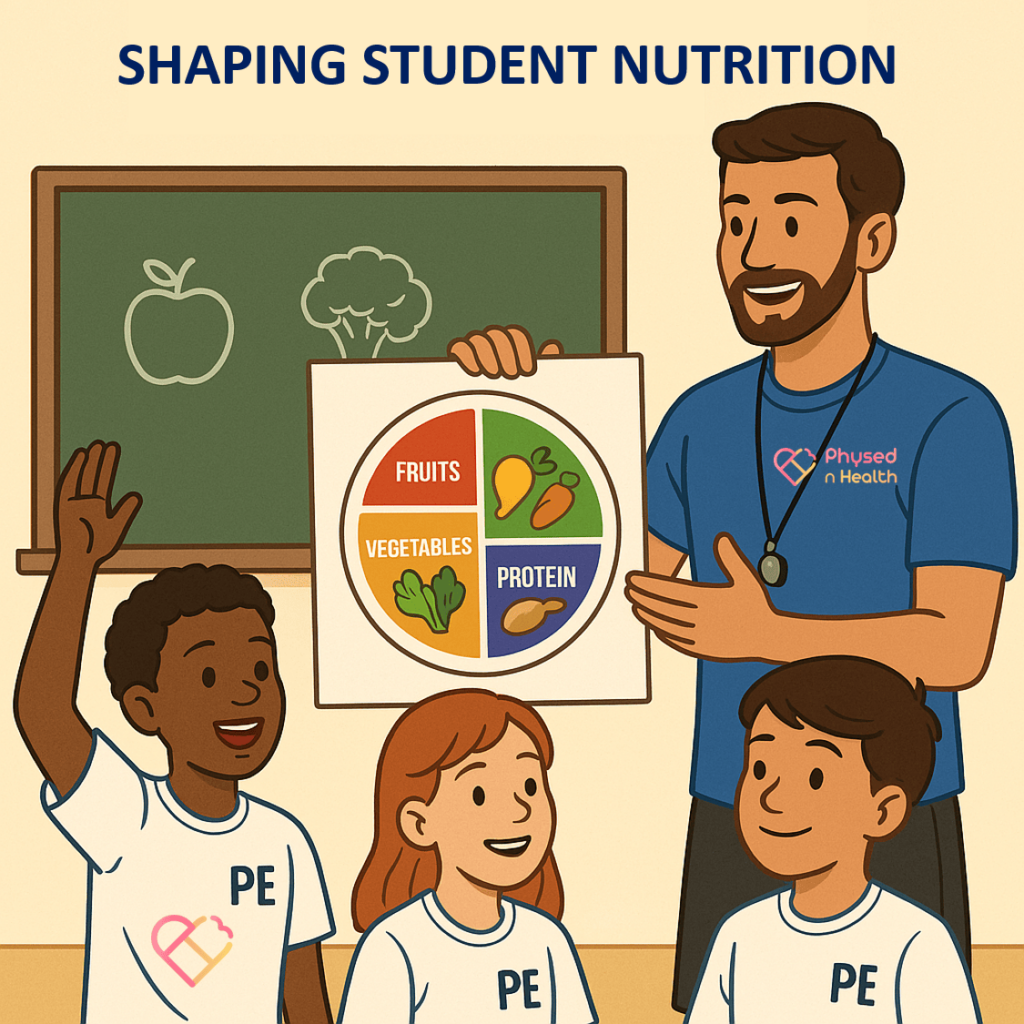
Physical Education (PE) teachers are more than fitness instructors—they are frontline advocates for student health and nutrition. Their influence extends beyond sports, helping students develop lifelong healthy eating habits. Key Responsibilities of PE Teachers in Nutrition: The Lasting Impact on Students: Challenges PE Teachers Face: Call to Action: Schools and administrators must empower PE teachers with the tools and training to successfully integrate nutrition into their programs. By supporting their role, we ensure healthier futures for students everywhere. #EducationMatters #StudentHealth #NutritionForKids #PETeachers #HealthyHabits Looking to fundraise? Visit WellPledge to start your campaign today! Learn more at PhysednHealth. Contact us at awesome@physednhealth.com PhysednHealth is a leading physical education and student wellness technology platform designed to help schools modernize PE with smart, standards-based tools. Our easy-to-use physical education software empowers teachers to track student progress, set SMART fitness goals, and promote mental and physical well-being. Trusted by educators worldwide, PhysednHealth brings data-driven insights, AI-powered assessments, and personalized learning to PE programs—helping students build lifelong healthy habits.
PE teachers: You hold the key to ending teacher turnover

The Silent Crisis in Our Schools Did you know 23% of teachers leave their schools every year1? Amid this retention crisis, research reveals a game-changing solution: PE teacher collaboration isn’t just nice-to-have—it’s a retention lifeline. Teachers in collaborative environments show 87.5% retention rates vs. 67.2% for isolated peers. Physical educators, often sidelined in gyms, hold untapped power to unite departments, slash turnover, and reignite school culture. Why Collaboration = Retention “Isolation is the dream killer.” – Barbara Sher Teaching is among the most isolating professions. For PE teachers, this isolation intensifies: But collaborative schools flip the script. At Mesa Public Schools, teachers in teams were 9% more likely to stay long-term. Why? Collaboration builds2:✅ Collective efficacy (“We succeed together”)✅ Professional growth (Shared problem-solving)✅ Emotional support (Reduced stress) 3 Battle-Tested Strategies for PE Collaboration (With Real Classroom Examples) 🔗 1. Cross-Curricular “Movement Integration” PE + Math/Literacy Fusion: 🤝 2. Co-Teaching Partnerships Case Study: Lincoln Elementary 💡 3. Wellness Ambassador Program Action Plan: “When PE teachers lead wellness, they become indispensable.” – Dr. Linda Carson, SHAPE America Overcoming Roadblocks: Practical Fixes Challenge Solution Resource Save No planning time “Collaboration Blocks”: Swap 1 staff meeting/month for cross-department planning 5+ hours monthly Resistance Start small: Pilot 1 integrated lesson with open-minded teacher Low-risk buy-in Assessment fears Joint rubrics (e.g., grade teamwork in PE + science labs) Unified grading Pro Tip: Use “Lunch & Learn” sessions to demo quick movement breaks—teachers adopt what they experience! Measuring Impact: Beyond Retention Collaborative schools report: Your Next Move: Build a Bridge Today “PE teachers aren’t just coaches—they’re culture architects.” Schools that leverage PE teacher collaboration don’t just retain staff—they build resilient, joyful communities where students and teachers thrive. The gym walls? Tear them down. Cross‑Curricular PE × Classroom Collaboration Cards Ready‑to‑Print, Grab‑and‑Go EditionPrint on card stock • Laminate for longevity • Two cards per letter/A4 page 🔢 Card 1 — MATH TAG Integration: Mathematics + Locomotor SkillsGrade Band / Time: Gr 2‑5 | 5‑7 minLearning Target: SWBAT solve single‑step division facts while maintaining moderate jogging pace. Equipment Set‑Up & Positioning Player Positions & Direction: Students are evenly dispersed inside a 25 × 25 ft square, all facing the centre. Movement is a continuous counter‑clockwise jog around the perimeter—taggers travel in the same direction to eliminate head‑on contact. Wheelchair users follow a taped outer loop in the same direction. Quick Sketch How to Play Adaptations & Low‑Tech Options Safety / Inclusion Non‑contact, moderate speed, clear boundaries. Remind: “Wave, don’t whack.” Debrief & Assessment Thumb‑meter: 👍 = knew facts faster; ➖ = same; 👎 = slower.Ask: “Did moving help you remember?” 🌎 Card 2 — CONTINENT CONNECT Integration: Geography + Cooperative StrategyGrade Band / Time: Gr 3‑6 | 8‑10 minLearning Target: SWBAT match countries to correct continent with 90 % accuracy. Equipment Set‑Up & Positioning Player Positions & Direction: Place the six continent mats in a wide circle (approx. 30 ft diameter). Use floor arrows or tape to mark a single clockwise traffic lane connecting all mats. Teams of four line up behind their home continent base to start. Quick Sketch How to Play Adaptations & Low‑Tech Options Safety / Inclusion Seated scooters, one‑way lanes, helmets optional per district. “No collisions—feet are brakes!” Debrief & Assessment Group points out one surprising country‑continent fact. Quick exit quiz: teacher holds up flag, class points continent. 📖 Card 3 — STORY CIRCUIT Integration: Literacy + Balance / CoordinationGrade Band / Time: Gr 2‑4 | 7‑9 minLearning Target: SWBAT contribute a grammatically correct sentence while maintaining balance for 30 s. Equipment Set‑Up & Positioning Player Positions & Direction: Arrange balance stations in a circle with 5‑6 ft between each. Each student begins standing on or next to one station. Rotation always moves clockwise to the next open station when the timer buzzes. Quick Sketch How to Play Adaptations & Low‑Tech Options Safety / Inclusion Low‑height equipment, spotters optional. Emphasize “soft knees”. Debrief & Assessment Ask: “Which balance tool felt easiest? Hardest?” Quick vote on favourite story twist. 🔬 Card 4 — ECO‑RESCUE RELAY Integration: Environmental Science + TeamworkGrade Band / Time: Gr 4‑7 | 10‑12 minLearning Target: SWBAT sort items into recycling vs. compost with 100 % accuracy while cooperating. Equipment Set‑Up & Positioning Player Positions & Direction: Place polluted hoops in the centre of the space. Mark a start line 10 ft behind each hoop for teams to queue single‑file. Bins sit 20 ft beyond the hoops. All movement follows a straight out‑and‑back lane: start line → hoop → bin → return along outer edge back to queue. Quick Sketch How to Play Adaptations & Low‑Tech Options Safety / Inclusion Traffic flows one direction; no running with tools; bins steadied by partner. Debrief & Assessment Circle share: one action to reduce waste at home. Quick teacher tally of correct sorts. 🧠 Card 5 — EMOTION SCULPTOR Integration: SEL (Emotional Intelligence) + Expressive MovementGrade Band / Time: Gr 1‑4 | 5‑6 minLearning Target: SWBAT identify an emotion & demonstrate a coping strategy through body pose. Equipment Set‑Up & Positioning Player Positions & Direction: Students begin spread evenly around the perimeter of the activity space, facing the centre. During free‑movement segments they travel = clockwise walking or swaying, keeping at least an arm’s‑length bubble between peers. Wheelchairs follow the same path. Quick Sketch How to Play Adaptations & Low‑Tech Options Safety / Inclusion Zero‑contact, low‑arousal movement. Remind “freeze means statue—no bumping.” Personal space bubble = arm length. Debrief & Assessment Exit ticket: draw or write one coping pose they plan to try this week. Teacher observes partner discussions for correct emotion/strategy naming. Looking to fundraise? Visit WellPledge to start your campaign today! See how PhysednHealth can serve as a digital platform to connect with parents. Contact us at awesome@physednhealth.com! PhysednHealth is a leading physical education and student wellness technology platform designed to help schools modernize PE with smart, standards-based tools. Our easy-to-use physical education software empowers teachers to track student progress, set SMART fitness goals, and promote mental and physical well-being. Trusted by educators worldwide, PhysednHealth brings data-driven insights, AI-powered assessments, and personalized learning to PE programs—helping students build lifelong healthy habits.
Exercise and Mental Health in the Classroom – A Teacher’s Guide
“The hum in Ms. Davis’s classroom wasn’t the productive buzz of engaged learning. It was the restless energy of students struggling to focus, their shoulders slumped, their gazes drifting. Ms. Davis, like many dedicated educators, felt the weight of her students’ challenges. Is this familiar in your classroom? You’re more than an educator; you’re a vital support for your students’ holistic growth. And right now, student well-being demands our attention more than ever. But imagine having a powerful, research-backed tool to combat distraction, reduce stress, and cultivate a more positive learning environment. That tool is exercise, and this guide is your roadmap to integrating exercise and mental health in the classroom. We’ll explore the science connecting movement and well-being, equip you with practical classroom strategies, and even offer a quiz to check your understanding. Let’s transform your classroom into a space where students thrive, both academically and emotionally.” The Science of Sweat: The Power of Exercise for Mental Health in the Classroom “We know physical activity benefits the body, but its effects on the mind are equally profound, especially within the classroom setting. Here’s why integrating exercise and mental health in the classroom is so important: A Tidbit You Probably Didn’t Know: Here’s a fact about exercise and mental health in the classroom that might surprise you: Research indicates that even brief “micro-bouts” of exercise (think 30-60 seconds of activity) can significantly enhance focus and decrease disruptive behavior. It’s about consistent integration, not just occasional fitness sessions! Real Stories, Real Impact: Exercise and Mental Health in Action “I was hesitant,” shares Mr. Chen, a middle school science teacher. “But after incorporating short exercise and mental health breaks into my lessons, the change was remarkable. Students were more engaged, less restless, and our classroom became a more positive space. One student shared that these breaks helped him manage test anxiety.” Ms. Lee, an elementary school educator, recounts a powerful experience: “I had a student who was very shy and struggled socially. Through dance activities, she found a way to express herself and connect with her peers. Her confidence soared. It was a beautiful example of exercise and mental health working together.” Empathy at the Core: Supporting Well-being Through Exercise and Mental Health in the Classroom “We recognize the demands on educators: full schedules, diverse learners, and the constant need to do more. It’s easy for student well-being to become secondary. That’s why these strategies for exercise and mental health in the classroom are designed for seamless integration. It’s about enhancing your teaching, not adding to your burden. Small, consistent actions can profoundly impact a student’s life.” Actionable Strategies: Integrating Exercise and Mental Health in Your Classroom Ready to prioritize exercise and mental health in the classroom? Here are effective strategies: Join the 7-Day Classroom Movement Challenge: Prioritize Exercise and Mental Health! Want to experience the benefits of exercise and mental health in the classroom firsthand? Join our 7-Day Challenge! Download our free guide with daily activities and a progress tracker. Share your journey using #MoveForMentalHealth and inspire others! Test Your Knowledge: Exercise & Mental Health in the Classroom Quiz How much do you know about the connection between physical activity and mental wellbeing? Take this quick quiz to find out and discover strategies you can apply in your classroom! The Quiz 1. Regular physical activity has been shown to reduce symptoms of: 2. How much moderate physical activity is recommended for children and adolescents each day? 3. Which of these is NOT a proven mental health benefit of regular exercise? 4. Brief “movement breaks” during class time have been shown to: 5. Which type of physical activity has been specifically linked to reduced anxiety in students? 6. What percentage of brain-derived neurotrophic factor (BDNF), which supports brain health, increases after exercise? 7. How quickly can exercise begin to have a positive effect on mood? 8. Incorporating physical activity into your teaching can help students with: Answer Key How Did You Score? 7-8 correct: Amazing job! You’re well-informed about the exercise-mental health connection and likely already implementing movement in your classroom. 5-6 correct: Good knowledge base! You understand the basics but might benefit from learning more specific strategies. 3-4 correct: You’re on your way! Consider exploring more resources about integrating physical activity into your teaching practice. 0-2 correct: There’s room to grow! The good news is that even small changes to incorporate movement can make a big difference for your students. Champion Exercise and Mental Health in Your Classroom “You have the power to transform your students’ lives. By prioritizing movement and well-being, you can create a classroom where every student thrives. Begin today. Start small, stay consistent, and celebrate progress. Together, let’s make exercise and mental health a cornerstone of every classroom! Share this guide, join the 7-Day Challenge, and tell us in the comments how you’re integrating exercise and mental health in your classroom!“ Lesson Plan: Movement and Mood Boosters Subject: Health/Physical Education (Adaptable for other subjects) Grade Level: 3-5 (Adaptable for younger or older students) Objective: Students will understand the connection between physical activity and mental well-being, participate in various movement activities, and reflect on their personal experiences. Materials: Procedure: Introduction (10 minutes): Movement Activities (25 minutes): Warm-up (5 minutes): Activity 1: “Mood-Boosting Moves” (10 minutes): Activity 2: “Mindful Movement” (10 minutes): Reflection and Discussion (15 minutes): Wrap-up (5 minutes): Inclusivity Considerations: Standards Alignment (SHAPE America, 2024): Assessment Rubric: Criteria 4 – Excellent 3 – Good 2 – Developing 1 – Needs Improvement Participation Fully engaged in all activities with enthusiasm. Actively participates but with some hesitation. Participates but needs reminders. Limited participation despite encouragement. Movement Skills Demonstrates strong motor skills and follows directions well. Uses appropriate movements with minor errors. Needs support to complete movements correctly. Struggles with movement and needs frequent guidance. Social Interaction Encourages peers, communicates positively, and works well with others. Generally positive and cooperative. Occasionally disengaged or off-task. Does not interact positively or is disruptive. Reflection Thoughtfully explains the connection between movement and
Maximizing Summer Break: Strategic Prep for PE Teachers in the Digital Age
As the 2024-2025 school year concludes, physical education teachers have a valuable opportunity to reflect, recharge, and strategically prepare for the upcoming academic year. The summer break provides the perfect window to enhance teaching methodologies, refine curriculum planning, and explore emerging technologies that are transforming physical education. This comprehensive guide outlines how PE teachers can effectively utilize their time off to create innovative, engaging, and standards-aligned programs for the 2025-2026 school year, with special attention to incorporating cutting-edge technology trends. Professional Development Opportunities Summer Institutes and Specialized Workshops The summer months offer numerous professional development opportunities specifically designed for physical education professionals. The SHAPE America Summer Institute stands out as a premier event, offering brand new professional development based on the latest National Physical Education Standards and National Health Education Standards2. This institute features presentations from leading experts covering essential topics such as implementing new standards, creating teachable progressions, and developing student-centered approaches to physical education2. Attending these specialized workshops allows PE teachers to network with colleagues, gain fresh perspectives, and develop new strategies for their classrooms. Participants will “walk away with lessons, ideas, and student engagement strategies – all based on these new standards,” making it a worthwhile investment in professional growth2. The summer institute represents a unique opportunity to advance your career while staying current with evolving educational approaches. Curriculum Planning and Design The summer break provides an ideal time to develop a comprehensive curriculum plan for the upcoming year. Rather than rushing through this critical process, PE teachers can dedicate focused time to thoughtful planning. Some experts suggest that with proper strategies, you can effectively “Plan a Whole Year of PE in 15 minutes” by taking a big-picture approach to curriculum mapping1. A well-structured PE curriculum should include a clear framework covering key areas such as fundamental movement skills, sports and games, and health and fitness education4. The summer term planning process should emphasize building a progressive curriculum that develops coordination, body awareness, teamwork, and communication skills throughout the year4. This period is also ideal for designing curriculum elements that take advantage of seasonal opportunities, particularly outdoor activities that will be feasible during the fall semester. Assessment Strategies Development Comprehensive Evaluation Approaches Summer provides PE teachers with time to develop or refine assessment tools that comprehensively evaluate student learning across all domains. Appropriate assessment in physical education should cover “all three domains of learning (psychomotor, cognitive and affective)” using a variety of techniques3. By dedicating time during the break to creating robust assessment tools, teachers can better track student progress and provide targeted instruction in the coming year. Effective assessment tools should measure student learning, align with content standards, include clear scoring criteria, be authentic, age-appropriate, and manageable3. During the summer, PE teachers can develop a toolkit of assessment strategies including: Standards Alignment and Progression Planning With the recent updates to national physical education standards, the summer break provides a critical opportunity to realign curriculum and assessment practices. Teachers should dedicate time to unpacking the “new SHAPE America National Physical Education Standards” and understanding the associated learning indicators and progressions2. This process ensures that instruction and assessment are cohesively aligned with current best practices and national expectations. PE teachers can use the summer to map out learning progressions that build skills systematically throughout the school year. By carefully planning this sequence in advance, teachers can create a more coherent and effective learning experience for students that demonstrates clear growth and development across the academic year. Embracing Educational Technology Trends Virtual and Augmented Reality in Physical Education One of the most transformative technology trends for PE in 2025 is the increasing integration of immersive technologies. According to industry reports, “By 2025, spending on advanced technology in education is expected to hit $12.6 billion, up from $1.8 billion in 2018,” with augmented reality (AR), virtual reality (VR), and mixed reality (MR) playing significant roles in this expansion5. These technologies offer revolutionary possibilities for physical education: Case studies demonstrate the effectiveness of these approaches. A middle school in California implemented a VR program with “Beat Saber and a dance-based VR app” resulting in “80% of the students reported higher motivation to participate in PE” and significantly increased in-class engagement6. Similar implementations in Singapore and the UK showed improvements in upper-body strength, hand-eye coordination, and increased participation among students with special needs6. Summer break provides the perfect opportunity for PE teachers to research these technologies, identify potential applications for their specific student populations, and develop implementation plans for the upcoming school year. Teachers can explore available options, evaluate costs and technical requirements, and develop lesson plans that meaningfully integrate these technologies into their existing curriculum. Digital Fitness Tracking and Assessment Tools Beyond immersive technologies, PE teachers should explore digital tools that can enhance assessment, motivation, and engagement. Applications that allow students to track physical activity, set personalized goals, and monitor progress can transform how students interact with physical education content7. These tools can make fitness more accessible and engaging by incorporating elements of gamification and social interaction. During the summer, PE teachers can: Communication and Collaboration Platforms Technology can also enhance communication between PE teachers, students, and parents. Tools like Remind “allow teachers to send information via text, images, & voice to students and parents through any kind of device” which can be particularly valuable for sharing information about upcoming units, special events, or celebrating student achievements7. The summer break is an ideal time to set up these communication systems, create content calendars, and develop strategies for effectively engaging with the school community throughout the coming year. Establishing these channels before the school year begins ensures seamless communication from day one. Implementation Planning and Resource Development Technology Integration Framework Successful implementation of technology in PE requires thoughtful planning. During the summer, teachers should develop a comprehensive framework for technology integration that includes: Developing this framework during the summer allows teachers to approach the new school year with confidence and clarity about how technology will enhance, rather than distract from, core physical education goals. Budgeting and Resource Allocation Modern technology
Why PE Teachers Are Now Your Child’s Therapists (And Failing)
The Hidden Burden on PE Teachers: More Than Just Dodgeball Transform your response to life’s challenges in just 10 minutes a day! Think back to your school days. Gym class probably meant running laps, playing dodgeball, or awkwardly attempting push-ups while the teacher blew a whistle. But what if I told you that today’s PE teachers are doing far more than just coaching sports? They’re now on the frontlines of your child’s emotional and social development—often without the training, resources, or support they need to succeed. And schools are quietly dumping this responsibility on them. Why Physical Education is the Perfect (and Most Overlooked) Place for SEL Social-emotional learning (SEL) has exploded in education, with schools scrambling to teach kids self-awareness, empathy, and resilience. But while classroom teachers struggle to fit SEL into math and reading, PE is a natural fit. Here’s why: Yet, despite this perfect alignment, PE teachers are being set up to fail. The Shocking Reality: Schools Expect SEL Magic Without Support Imagine being told: “Oh, by the way, you’re now responsible for fixing kids’ emotional trauma—good luck!” That’s essentially what’s happening. One teacher put it bluntly: “SEL is essentially therapy, and to do therapy, you need to be trained like a therapist.” Another added: “Our students come from poverty-stricken, broken homes. Throwing an SEL goal at us without support is a joke.” How PE Teachers Can Successfully Integrate SEL (When Given the Right Tools) The good news? It’s possible—if done right. Research shows that structured SEL in PE actually works when teachers have: 1. Explicit SEL Lessons (Not Just Hoping It Happens) 2. The TPSR Model: A Game-Changer for SEL in PE The Teaching Personal and Social Responsibility (TPSR) framework structures SEL into PE: Studies show this reduces conflicts and improves behavior. 3. Schools Must Step Up (Or SEL Will Keep Failing) How can PE teachers measure the impact of SEL on student development To effectively measure the impact of SEL in physical education, PE teachers can employ a combination of quantitative and qualitative assessment methods, supported by recent research findings: Quantitative Measurement Tools Qualitative Assessment Methods Mixed-Method Approaches Combine quantitative and qualitative data for a holistic view: Implementation Considerations By integrating these strategies, PE teachers can systematically evaluate SEL’s impact while reinforcing the skills through intentional practice and reflection. The Bottom Line: SEL Belongs in PE—But Not Like This Physical education is the most underrated SEL powerhouse in schools. But if we keep expecting PE teachers to work miracles without support, we’re setting them—and our kids—up for failure. It’s time to stop pretending. Either give PE teachers the tools they need—or stop acting surprised when SEL programs flop. What do you think? Should SEL be a bigger focus in PE? Or are we asking too much of gym teachers? Comment below! Looking to fundraise? Visit WellPledge to start your campaign today! Learn more at PhysednHealth. Contact us at awesome@physednhealth.com PhysednHealth is a leading physical education and student wellness technology platform designed to help schools modernize PE with smart, standards-based tools. Our easy-to-use physical education software empowers teachers to track student progress, set SMART fitness goals, and promote mental and physical well-being. Trusted by educators worldwide, PhysednHealth brings data-driven insights, AI-powered assessments, and personalized learning to PE programs—helping students build lifelong healthy habits.
Preparing Students for an Active Summer: A Guide for PE Teachers
As the school year winds down, PE teachers have a unique opportunity to set students up for summer success. Research consistently shows that regular physical activity during summer break is crucial for maintaining physical development, mental well-being, and preparedness for the upcoming academic year. This guide provides comprehensive strategies for physical education teachers to help students transition from structured school environments to maintaining healthy physical activity levels throughout the summer months, ensuring they return ready for the new school year. Understanding the Summer Physical Activity Challenge The concept of “summer slide” extends beyond academic learning to physical fitness and activity levels. During summer months, many students experience a significant decrease in structured physical activity, which can lead to a regression in physical skills, fitness levels, and healthy habits. This is particularly concerning for students from lower socioeconomic backgrounds, who often have fewer opportunities for organized summer activities and may face additional barriers to staying active5. Without the routine of physical education classes and recess, children may spend more time in sedentary activities, potentially undoing progress made throughout the school year. Research indicates that maintaining consistent physical activity is essential for children’s overall development. The CDC recommends that children ages 6-17 need at least 60 minutes of moderate-to-vigorous physical activity every day2. This activity should incorporate three essential components: aerobic exercise, muscle-strengthening activities, and bone-strengthening activities, with each type serving different developmental purposes2. These recommendations remain unchanged during summer months, yet without school structure, many children struggle to meet these guidelines. Physical education teachers play a vital role in bridging this gap by equipping students with the knowledge, skills, and motivation to remain active during summer break. By implementing targeted strategies in the final weeks of school, PE teachers can significantly impact students’ summer activity levels and their readiness to resume physical education in the fall. End-of-Year Curriculum Planning The final weeks of the school year present a critical window for PE teachers to prepare students for summer physical activity. A well-structured curriculum during this period should focus not just on maintaining current activities but on developing skills and knowledge that students can apply independently over the summer months. Creating a clear, structured framework for these final lessons is essential7. Rather than introducing entirely new concepts, consider revisiting and reinforcing fundamental movement skills that form the foundation of physical literacy78. These fundamental skills-running, jumping, throwing, catching-are the building blocks for all physical activities and will serve students well regardless of which summer activities they pursue8. By ensuring students have mastered these basics, you provide them with the tools to participate confidently in a wide range of summer activities. End-of-year lessons should also emphasize physical literacy concepts that extend beyond specific sports or activities. Physical literacy involves developing both the skills and confidence to participate in many different physical activities8. When students understand that everyone can develop fundamental movement skills-not just “superstar athletes”-they’re more likely to maintain an active lifestyle throughout the summer months8. This inclusive approach helps all students, regardless of natural athletic ability, see themselves as capable of staying active during the break. Consider devoting several lessons to having students explore and practice activities that can be easily continued at home with minimal equipment. This might include bodyweight exercises, yoga poses, or simple games that can be played in limited space. By practicing these activities under guidance, students will feel more confident performing them independently during summer. Teaching Summer Activity Planning Skills Empowering students to plan their own physical activity is perhaps the most valuable skill PE teachers can impart before summer break. Teaching students to set realistic activity goals and track their progress gives them ownership of their physical development and increases the likelihood they’ll stay active. Start by discussing the CDC’s recommendation of 60 minutes of daily physical activity and help students brainstorm how to divide this time among different types of activities12. For example, students might spend 30 minutes riding bikes (aerobic), 15 minutes climbing trees or playground equipment (muscle-strengthening), and 15 minutes playing jump rope or basketball (bone-strengthening)2. Emphasize that these 60 minutes can be accumulated throughout the day rather than all at once, making the goal more achievable3. Guide students in creating personalized summer activity calendars or journals where they can plan and record their physical activities. These tools serve dual purposes: they help students internalize the habit of regular physical activity and provide a valuable reference for the beginning of the next school year. Consider having students set specific summer goals, such as learning a new skill, trying a new sport, or achieving a personal fitness milestone1. Teaching students to identify activities they genuinely enjoy is crucial for summer engagement. Use class discussions or surveys to help students reflect on which physical activities they find most enjoyable. Emphasize that summer is an excellent time to try new activities that might not be part of the school PE curriculum1. When students associate physical activity with fun rather than obligation, they’re much more likely to remain active throughout the summer. Strategies for Encouraging Indoor and Outdoor Activities Providing students with a diverse repertoire of both indoor and outdoor activities ensures they can stay active regardless of weather conditions, space limitations, or access to facilities. This flexibility is essential for maintaining consistent activity levels throughout the summer months. For outdoor activities, encourage students to take advantage of summer’s favorable conditions. Walking, cycling, playground activities, and swimming are excellent moderate-intensity aerobic activities that most children enjoy3. Sports like football, tennis, and basketball offer both aerobic benefits and opportunities for social interaction3. Nature exploration activities can make physical activity more engaging while fostering appreciation for the outdoors-suggest activities like hiking local trails, beach play, or neighborhood scavenger hunts1. Indoor activities are equally important, especially during extreme heat or inclement weather. Teach students games that encourage movement and can be played in limited space1. Activities like dancing, indoor obstacle courses, or modified versions of sports can provide substantial physical benefits while being adaptable to home environments1. For muscle-strengthening, demonstrate exercises like modified push-ups, sit-ups, and resistance band activities that require minimal equipment and space3.
AI and Fitness: Preparing K-12 Schools for Dual Education Mandates
Embracing the Next Era of K–12 Education As the U.S. educational system confronts two sweeping mandates—President Trump’s 2025 executive order on Advancing Artificial Intelligence Education and the revival of the Presidential Youth Fitness Program—K–12 schools are at a pivotal crossroads. Together, these initiatives demand not only technological literacy but also a renewed commitment to student health and wellness. This guide outlines the critical implications for physical education (PE) teachers and school administrators and provides a roadmap to align curriculum, technology, and health standards in meaningful and sustainable ways. 1. Understanding the AI Executive Order in K–12 Schools What the Executive Order Means President Trump’s 2025 order marks a definitive move toward AI literacy for all students, tasking the Department of Education and a newly formed White House Task Force with spearheading the effort. The vision is clear: American students must be prepared for a world shaped by artificial intelligence—both as users and as future innovators. Key Initiatives for Educators: 2. The Return of the Presidential Youth Fitness Program Historical Context and New Direction The Presidential Youth Fitness Program (PYFP) has evolved from measuring athletic prowess to promoting health-related fitness. The latest iteration, aligned with the Take Back Your Health initiative, is expected to: 3. AI Integration in Physical Education: Challenges and Opportunities Key Professional Development Areas for PE Teachers: Curriculum Ideas: 4. Implementing the Revived Youth Fitness Program What PE Teachers Should Prepare For: Engaging Students and Parents: 5. AI Meets Fitness: Powerful Synergies AI-Enhanced Assessment: Personalized Fitness Programs: 6. Leadership Guidance for School Administrators Strategic Steps: Infrastructure & Policy: 7. Actionable Tips for PE Teachers Shaping a New Vision for K–12 Physical Education The convergence of AI and Youth Fitness in K–12 Schools is not a passing trend—it’s a transformational shift in how we prepare students for the future. By embracing these dual mandates, educators can redefine physical education for the digital age—combining data-driven insights with the irreplaceable value of movement, health, and human connection. Whether you’re a teacher, administrator, or policymaker, now is the time to align your strategy with the future of education—where technology empowers health, and every student becomes an active participant in their own well-being. Looking to fundraise? Visit WellPledge to start your campaign today! Contact us at PhysednHealth for more information. Or email us at awesome@physednhealth.com PhysednHealth is a leading physical education and student wellness technology platform designed to help schools modernize PE with smart, standards-based tools. Our easy-to-use physical education software empowers teachers to track student progress, set SMART fitness goals, and promote mental and physical well-being. Trusted by educators worldwide, PhysednHealth brings data-driven insights, AI-powered assessments, and personalized learning to PE programs—helping students build lifelong healthy habits.
Fundraising vs. Grants for Schools: Harnessing Community Support for Educational Success
School funding has become increasingly challenging in today’s educational landscape, with educators constantly seeking resources to enhance learning experiences for their students. While grants provide substantial financial support, community-based fundraising often delivers faster results with less administrative burden. This comprehensive analysis reveals that successful schools typically employ a balanced approach, with community fundraising offering immediate financial injections while building stronger stakeholder relationships. When schools effectively engage parents, local businesses, and community members through strategic fundraising initiatives, they not only secure needed resources but also foster a culture of collective investment in educational outcomes. Understanding the School Funding Landscape: Grants vs. Fundraising Educational institutions have traditionally relied on a mix of funding sources to support their programs and initiatives. To determine the most effective approach, it’s essential to understand the fundamental differences between grants and community-based fundraising. The Grant Application Process: Benefits and Challenges School grants provide significant financial support from government agencies, foundations, and other organizations. They often fund specific programs, infrastructure improvements, or educational initiatives that align with the grantor’s mission. The benefits of pursuing grants include substantial financial support, enhanced school credibility, and expanded opportunities for students1. However, the grant application process presents several challenges. The process is typically lengthy and complex, requiring specialized knowledge and significant time investment. Federal and state grants, while offering substantial funding, involve competitive application processes with rigorous requirements1. Additionally, grant applications often take months before decisions are made, and there’s no guarantee of approval despite the extensive effort involved. Community-Based Fundraising: A More Accessible Alternative In contrast to grants, community-based fundraising offers a more accessible funding approach with several distinct advantages. Fundraising activities can be implemented quickly, often with minimal planning compared to grant applications. This approach allows schools to respond rapidly to immediate needs rather than waiting through lengthy grant review processes. Community fundraising also fosters stronger relationships between schools and their stakeholders. When parents, local businesses, and community members contribute directly to school initiatives, they develop a greater sense of investment in educational outcomes. As noted in fundraising research, “Parent involvement fosters a sense of ownership and investment in the school’s success, which leads to sustained support over time”2. The Power of Parent Engagement in School Fundraising Parents represent one of the most valuable resources for school fundraising initiatives, bringing enthusiasm, networks, and skills that can significantly boost results. Understanding Parent Motivation Parents are naturally invested in their children’s education and will readily support initiatives they believe enhance learning opportunities. Unlike grants that must align with external priorities, parent-driven fundraising directly addresses the needs parents see as most valuable for their children’s educational experience. When properly engaged, parents become powerful advocates for school fundraising. They can leverage their professional networks, social circles, and community connections to expand the reach of fundraising initiatives2. Their involvement brings authenticity and personal investment to campaigns, making them more compelling to potential donors. Strategies for Effective Parent Involvement To maximize parent participation, schools should implement several key strategies: Leveraging Local Community Resources and Business Partnerships Beyond parent involvement, schools can tap into significant funding opportunities through local community engagement and business partnerships. Community Sponsorship Models Local communities often embrace opportunities to support educational institutions through sponsorship arrangements. These partnerships can range from one-time event sponsorships to ongoing program support. The “Dine Out For Kids®” initiative demonstrates how community businesses can contribute a portion of their sales to support local schools5. Sponsorship opportunities are particularly attractive to local businesses because they provide: Effective Business Engagement Strategies To successfully engage local businesses in school fundraising: Innovative Fundraising Strategies for Immediate Results While grants often require months of waiting, creative fundraising initiatives can generate funds quickly with minimal investment. Event-Based Fundraising Strategically planned events can generate significant funding while building community engagement. Effective school fundraising events include: Digital Fundraising Approaches Technology has transformed fundraising possibilities, offering low-cost alternatives to traditional methods: Securing Principal and PTO Support for Fundraising Success Effective fundraising requires alignment between teachers, administrators, and parent organizations to ensure coordinated efforts and maximum impact. The Role of Principals in Fundraising Initiatives Principals serve as critical bridges between educational needs and fundraising activities. Their endorsement lends credibility and institutional support to fundraising efforts, while their insight helps target initiatives toward the most pressing school needs. When approaching principals about fundraising initiatives, it’s important to: While principals should have input on fundraising activities that impact the school, the final decisions on PTO fundraising allocations should remain with the parent organization’s board4. Many PTOs establish a designated budget for principals to address emerging needs, but with appropriate oversight and request processes4. Effective PTO Collaboration Parent-Teacher Organizations represent powerful allies in school fundraising efforts. To maximize this partnership: Implementing Low-Cost, High-Yield Fundraising Campaigns When resources are limited, schools can implement several fundraising strategies that require minimal investment while generating significant returns. Resource-Efficient Fundraising Models Several fundraising approaches deliver substantial returns with minimal upfront costs: Maximizing Return on Fundraising Investment To ensure the highest possible return on fundraising efforts: Conclusion While grants provide valuable funding opportunities for schools, community-based fundraising offers distinct advantages in speed, accessibility, and relationship-building potential. By effectively engaging parents, local businesses, and community members, schools can create sustainable funding streams that respond quickly to educational needs while fostering a collective investment in student success. The most successful school funding approaches typically incorporate both strategies—pursuing grants for larger, long-term initiatives while implementing community fundraising for immediate needs and ongoing support. Through thoughtful planning, strategic stakeholder engagement, and innovative approaches, schools can create robust funding ecosystems that enhance educational opportunities and outcomes for all students. Teachers play a pivotal role in this process by identifying specific classroom needs, engaging directly with parents, and contributing authentic perspectives that make fundraising appeals more compelling. By partnering effectively with principals and PTOs while leveraging community resources, educators can secure the financial support necessary to create enriched learning environments without waiting for the uncertain outcomes of grant applications. Looking to fundraise? Visit WellPledge to start your campaign today! Contact us at PhysednHealth for more information. Or email us at awesome@physednhealth.com
What Makes an Effective PE Teacher: A Student’s Perspective
Transform your response to life’s challenges in just 10 minutes a day! Physical Education (PE) teachers play a crucial role in shaping students’ attitudes toward physical activity and their overall educational experience. Recent research indicates that 76.2% of students report feeling “seen” by their PE teachers, while 7.8% do not feel recognized, highlighting the significant impact teacher-student relationships have in this unique classroom environment1. Effective PE teachers create environments where students feel valued, supported, and motivated to participate regardless of athletic ability. This extends beyond simply teaching physical skills to building relationships, fostering inclusivity, and developing students’ confidence. The most successful PE teachers balance high expectations with empathy, recognizing that each student brings different abilities, challenges, and interests to the gymnasium floor. The Importance of Being “Seen” in Physical Education For students, few things matter more than feeling recognized and validated by their teachers. In the PE context, being “seen” encompasses several critical factors that significantly impact students’ experiences and engagement levels. Research has identified five key elements that contribute to students feeling acknowledged: receiving feedback from the teacher, experiencing teacher care, having good dialogue, participating in evaluation and goal setting, and having opportunities to display their skills1. These factors collectively form the foundation of effective student-teacher relationships in physical education. When students feel their teacher genuinely notices them, they report greater enjoyment and participation in class activities. The concept of being “seen” relates directly to students’ sense of belonging and support from their teachers—fundamental psychological needs that must be met for students to thrive academically and socially1. Nearly three-quarters of students report experiencing this positive recognition, but the fact that some students still feel invisible suggests room for improvement in PE teaching practices. The quality of teacher-student relationships significantly influences learning outcomes, with research demonstrating that students have stronger beliefs in their abilities and higher competence levels when experiencing emotional support from their teachers1. This highlights how critical these interpersonal connections are, particularly in a subject where vulnerability and physical performance are constantly on display before peers. The Qualities Students Appreciate in PE Teachers From a student perspective, certain teacher qualities consistently emerge as highly valued. Athletic ability ranks high among these traits, as students appreciate teachers who can effectively demonstrate proper form and technique2. This modeling provides visual learning opportunities and builds teacher credibility when students can observe their instructor successfully performing the activities they’re being asked to complete. Beyond physical capabilities, students value teachers who display genuine enthusiasm for both their subject and working with young people. Effective PE teachers bring energy and passion to their lessons, making physical activity appealing even to reluctant participants2. This enthusiasm proves contagious, often transforming students’ attitudes toward exercise and physical challenges. Communication skills rank among the most appreciated teacher qualities. Students value clear instructions, constructive feedback, and the ability to explain complex movements in accessible ways2. Effective PE teachers excel at both verbal guidance during activities and written communication that outlines expectations and provides resources for improvement. Perhaps most importantly, students deeply value teachers who demonstrate caring behaviors. This means showing interest in students as individuals, adapting activities to meet diverse needs, and creating emotionally safe environments1. Teachers who take time to learn about students’ interests, challenges, and goals outside of class build stronger connections that translate to higher engagement during PE. Common Student Complaints About PE Teachers Despite best intentions, PE teachers sometimes employ approaches that alienate or discourage students. Understanding these common complaints provides valuable insight into practices that should be avoided or modified to improve student experiences. One of the most frequent grievances involves teachers who adopt an overly aggressive, “drill sergeant” approach to instruction. A student testimony reveals the damaging impact of this teaching style: “She yells and pushes everyone around like a drill sergeant… she yelled at me and pushed me, even though I attempted to explain my disability again”3. This authoritarian approach creates anxiety, resentment, and often leads to student disengagement rather than motivation. Students also express frustration with PE teachers who fail to accommodate individual differences, particularly for those with disabilities or physical limitations. The experience of receiving lower grades due to physical limitations beyond their control—”I don’t run as quickly as my peers, my gait appears unusual, I struggle with balance”—represents a deeply discouraging pattern that undermines confidence and self-efficacy3. When teachers prioritize standardized performance over individual growth, students with diverse abilities feel marginalized. Public embarrassment represents another serious concern. Students report feeling humiliated when teachers call attention to their struggles in front of peers, creating lasting negative associations with physical activity3. This practice violates the trust essential to effective teaching relationships and can trigger anxiety or even meltdowns in sensitive students, as exemplified by the student who experienced overwhelming stress when publicly criticized for shifting weight to accommodate their disability3. Many students also express dissatisfaction with PE programs that emphasize competition over skill development and personal improvement. When teachers focus exclusively on performance outcomes rather than effort and progress, students who aren’t naturally athletic often disengage, missing opportunities to develop lifelong fitness habits and physical confidence. Strategies for Building Connection With Students Effective PE teachers employ specific strategies to forge meaningful connections with their students, creating environments where all learners feel valued and motivated to participate. These approaches transform traditional physical education from mere exercise into educational experiences that develop the whole student. Developing good dialogue represents a cornerstone strategy. Students highly value teachers who listen actively, communicate clearly, and remain approachable1. This involves creating opportunities for two-way communication, soliciting student input on activities, and responding thoughtfully to questions and concerns. As research indicates, “good communication with the teacher” consistently appears as a characteristic of positive student experiences1. Providing meaningful, constructive feedback represents another essential connection-building approach. Effective PE teachers offer specific guidance that highlights strengths while providing clear direction for improvement1. This feedback should be individualized and delivered privately when possible, focusing on effort and progress rather than comparison with peers. Creating opportunities for students to display their unique abilities significantly enhances connection. Research shows that when teachers structure activities that allow
The Case for Homework in Physical Education: Benefits, Strategies, and Parental Engagement

Transform your response to life’s challenges in just 10 minutes a day! Physical education (PE) has traditionally focused on in-class activities with limited extension of learning beyond the gymnasium walls. However, research suggests that intelligently designed homework assignments can significantly enhance the educational experience, extend physical activity time, and reinforce important concepts learned during class. This paper examines the compelling reasons for PE teachers to incorporate homework into their curriculum, exploring the benefits across multiple learning domains, effective implementation strategies, and methods to secure crucial parental support for these efforts. Benefits of Homework in Physical Education Physical education homework offers multifaceted advantages that extend well beyond simply completing assignments. These benefits span academic knowledge acquisition, increased physical activity levels, and the development of lifelong wellness habits. Understanding these advantages provides a foundation for PE teachers to justify and effectively implement homework programs. Knowledge Acquisition and Cognitive Development Homework in physical education serves as an effective tool for reinforcing health and fitness concepts taught during class time. Well-designed assignments help students make connections between classroom learning and real-world applications, creating deeper understanding of important concepts1. Research has demonstrated that using homework to help students acquire knowledge is equal if not superior to lecture-only methods, which is particularly valuable given the limited instructional time available in most PE programs1. For example, a study involving high school students in a weight training unit found that students who completed homework performed equally well on written tests as those who received lecture-only instruction, suggesting that homework can effectively replace some classroom lecture time1. The cognitive benefits of PE homework extend beyond simple content knowledge. By engaging with physical education concepts outside of class, students develop critical thinking skills as they analyze and apply fitness principles to their own lives1. This intellectual engagement with physical activity concepts helps students understand the “why” behind the exercises and activities they perform, which can increase motivation and commitment to regular physical activity1. Additionally, homework provides opportunities for students to research and explore health and fitness topics of personal interest, potentially sparking lifelong curiosity about wellness and physical development1. Increased Physical Activity Time One of the most significant benefits of physical education homework is the potential to increase students’ overall physical activity levels. Given the limited class time allocated to physical education in most schools, homework provides a crucial opportunity to extend activity beyond school hours1. Several studies have demonstrated that active homework interventions resulted in measurable increases in physical activity among elementary school students1. For instance, fifth and sixth graders in New Zealand logged more pedometer steps after participating in a school-based intervention that included physical activity logs as homework1. Active homework assignments appear to offer particular benefits for certain student populations. Research has shown that girls and students who were obese seemed to benefit more from active homework interventions than boys and students of normal weight1. This finding suggests that PE homework may serve as an important equity tool, providing additional support for populations that traditionally engage in less physical activity1. By encouraging activity in comfortable, private settings, homework can help overcome barriers to participation that some students experience in the more public class environment1. Development of Lifelong Wellness Habits Physical education homework plays a vital role in helping students develop the skills and habits necessary for maintaining physically active lifestyles throughout adulthood. By practicing physical activities independently at home, students learn to take responsibility for their own health and wellness beyond the structured school environment1. This self-directed practice helps students internalize the importance of regular physical activity and builds confidence in their ability to engage in fitness activities without direct supervision. The habit-forming nature of regularly scheduled homework can establish routines that persist beyond the academic year. Students who successfully incorporate physical activity into their home lives during the school year are more likely to maintain these habits during summer breaks and after graduation1. Furthermore, homework that involves family members can help establish a home culture that values and prioritizes physical activity, potentially influencing the behaviors of siblings and parents as well. This ripple effect extends the impact of physical education beyond the individual student to positively influence the health behaviors of the broader community. Effective Strategies for Implementing PE Homework Implementing homework in physical education requires thoughtful planning and strategic approaches to ensure maximum effectiveness and student engagement. The right strategies can transform homework from a dreaded chore to a meaningful learning opportunity that students willingly embrace. PE teachers must consider various approaches to assignment design, delivery, and assessment. Designing Meaningful Assignments Physical education homework must be purposeful and clearly connected to learning objectives to be effective. Assignments should reinforce concepts learned in class while extending learning in meaningful ways that connect to students’ lives outside of school. For example, homework might ask students to track their daily physical activity, apply a fitness concept with family members, or research how professional athletes incorporate specific training principles. These real-world applications help students see the relevance of what they’re learning in PE class. Creating assignments that offer choice is another important strategy for increasing student engagement. When students can select from a menu of activities based on their interests, resources, and abilities, they’re more likely to complete the work with enthusiasm. Differentiating homework based on student needs and abilities ensures that assignments are appropriately challenging for all students, regardless of their current fitness level or physical capabilities. Additionally, assignments should be diverse in nature, cycling between different types of tasks such as physical practice, written reflection, research, and creative projects to maintain student interest and address various learning styles. Practical Implementation Considerations Successful implementation of PE homework requires attention to practical details that make completion more feasible for students. Setting clear time expectations for homework completion helps students plan accordingly and prevents assignments from becoming overly burdensome2. Most effective PE homework assignments are relatively brief, focused tasks that can be completed in 15-30 minutes, recognizing that students have other academic responsibilities and extracurricular commitments1. Providing all necessary tools and resources for completing assignments is also essential, whether that means sending home equipment, creating instructional