
Measuring Success in PE: Beyond Traditional Grading Systems
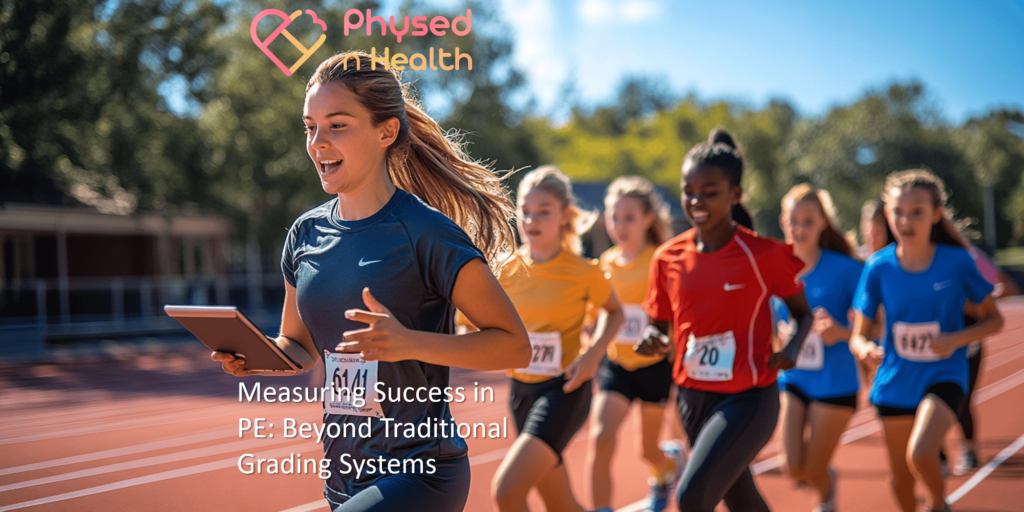
In the evolving landscape of physical education, measuring success in PE has become a critical topic for educators and administrators alike. Traditional grading systems often fall short in capturing the true essence of student progress and engagement in physical education. This blog explores innovative approaches to measuring success in PE that go beyond conventional methods, helping educators create a more holistic and effective assessment framework. The Challenge of Measuring Success in PE Measuring success in PE has long been a challenge for educators. Traditional grading systems often focus on performance-based metrics or standardized tests, which may not accurately reflect a student’s overall growth, effort, or engagement in physical activities. As we move towards more comprehensive and inclusive PE programs, it’s crucial to develop assessment methods that align with these goals. The Limitations of Traditional Grading in PE Traditional grading systems in PE often: Innovative Approaches to Measuring Success in PE To address these challenges, educators are exploring new ways of measuring success in PE that provide a more comprehensive view of student achievement and engagement. 1. Personalized Goal Setting and Tracking One effective approach to measuring success in PE is through personalized goal setting. This method allows students to set their own fitness and skill-based objectives, with progress tracked over time. Tools like PhysednHealth enable students to set Specific, Measurable, Achievable, Relevant, and Time-bound (SMART) goals, fostering accountability and a sense of accomplishment. 2. Holistic Assessment Frameworks Implementing a holistic assessment framework that considers multiple aspects of physical education can provide a more accurate picture of student success. This might include: 3. Technology-Enhanced Tracking and Analysis Leveraging technology in measuring success in PE can offer valuable insights and data-driven assessments. PhysednHealth‘s platform, for instance, allows for continuous monitoring of student progress, providing detailed analytics on various aspects of physical activity, sleep patterns, and even emotional well-being. The PhysednHealth Approach: A Case Study in Measuring Success PhysednHealth has revolutionized the way we approach measuring success in PE. Their comprehensive platform offers tools and strategies that not only track progress but also demonstrate the tangible benefits of PE programs. Impressive Results According to the 2024 Report, students using PhysednHealth consistently outperform national averages: Beyond Physical Metrics What sets PhysednHealth apart in measuring success in PE is its focus on holistic well-being. The platform tracks not just physical activity but also sleep patterns, screen time, and even positive emotions. In 2024, an impressive 98.2% of students reported positive emotions, highlighting the program’s impact on mental health and overall well-being. Implementing New Assessment Strategies To effectively measure success in PE beyond traditional grading systems, consider the following strategies: A New Era in Measuring Success in PE As we move beyond traditional grading systems, measuring success in PE becomes a more nuanced and comprehensive process. By adopting innovative assessment methods and leveraging technology like PhysednHealth, educators can create a more engaging, inclusive, and effective PE environment that truly captures student growth and achievement. Looking to fundraise? Visit WellPledge to start your campaign today! By embracing these new approaches to measuring success in PE, we can ensure that physical education remains a valuable and impactful part of every student’s educational journey, fostering lifelong healthy habits and positive attitudes towards physical activity. Need more information? Go to PhysednHealth or contact us at awesome@physednhealth.com. PhysednHealth is a leading physical education and student wellness technology platform designed to help schools modernize PE with smart, standards-based tools. Our easy-to-use physical education software empowers teachers to track student progress, set SMART fitness goals, and promote mental and physical well-being. Trusted by educators worldwide, PhysednHealth brings data-driven insights, AI-powered assessments, and personalized learning to PE programs—helping students build lifelong healthy habits.
The Physical Education Paradox: Why Schools Cut PE Despite Scientific Evidence of Academic Benefits
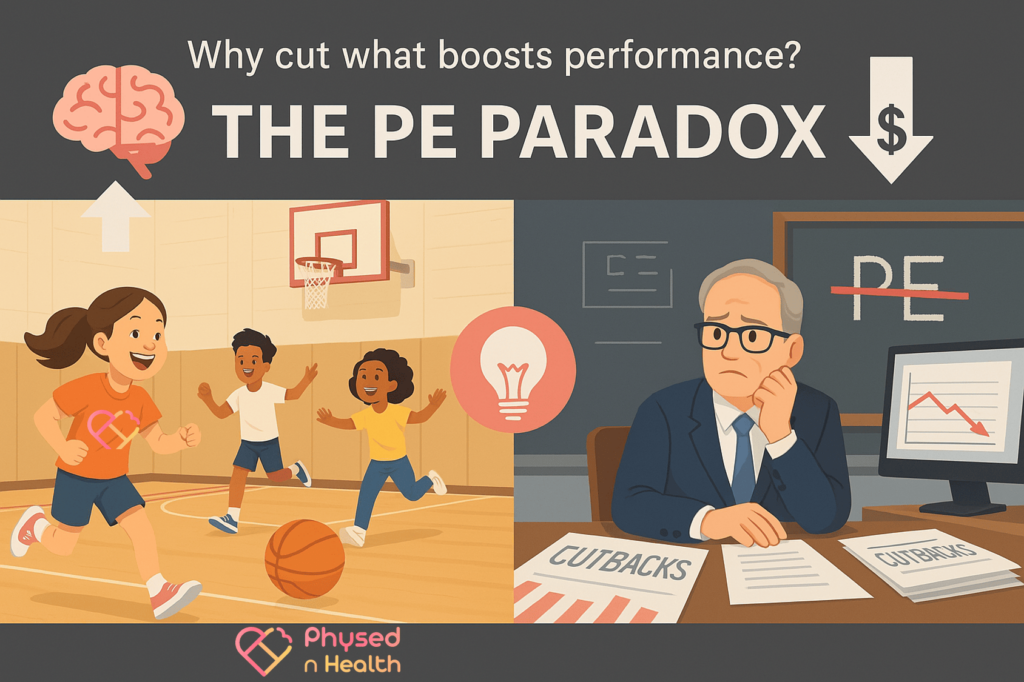
The decline of physical education (PE) in American schools presents a perplexing contradiction: as scientific evidence increasingly demonstrates the positive impact of physical activity on academic performance, schools continue to reduce or eliminate PE programs. This blog post examines why schools are cutting physical education despite the compelling research supporting its benefits, and explores the disconnect between scientific evidence and educational policy decisions. The Alarming Decline of Physical Education in American Schools Physical education programs have experienced a steady and concerning decline across American schools, particularly at the high school level. According to the 2022 US Report Card on Physical Activity For Children and Youth, only 26% of high school-aged students attend PE classes five days a week, while 52% attend just one day per week1. The percentage of schools requiring PE courses decreases dramatically from 97% in 6th grade to a mere 43% in 12th grade1. This downward trend continues throughout the high school experience, with PE enrollment declining steadily from 68.8% of 9th grade students attending at least one day per week to only 41.4% of 12th grade students1. By the time students reach ages 16-18, they receive an average of just 34 minutes of PE per week5. Perhaps most concerning is that only six states in the entire country require physical education for students across every grade level. The disparity in access to physical education is particularly pronounced in underserved communities, where budget cuts often hit hardest. This creates a significant educational and health equity issue, as children from low and middle-income households already face higher obesity rates compared to their peers from higher-income families4. Why Schools Are Cutting Physical Education: Unpacking the Motivations Several key factors drive the decisions to reduce or eliminate physical education programs: Budget Constraints Financial pressures on school districts have forced difficult choices about resource allocation. When facing limited budgets, administrators often view PE as a non-essential subject that can be reduced to preserve funding for core academic areas14. As one administrator noted in a research study, “Because of budget cuts, kids are only able to attend [PE] once a week or once every six-day cycle, depending on the school district”6. Academic Pressure and Standardized Testing The intense focus on academic achievement, particularly in subjects measured by standardized tests, has created an environment where PE is viewed as secondary to the school’s academic mission3. A survey by the Youth Sport Trust found that 38% of teachers reported that core subjects like English and Math had been given more time at the expense of PE5. One in three teachers cited exam pressures as the reason behind the decline in PE time5. Policy Pressures No Child Left Behind (NCLB) has significantly contributed to the devaluation of physical education by linking federal funding to schools’ adequate yearly progress in reading and mathematics3. According to the Center on Education Policy, since NCLB passed in 2002, 62% of elementary schools and 20% of middle schools have significantly increased instructional time for reading/language arts and math, with 44% of school districts cutting time in areas including physical education3. Administrative Constraints School administrators often recognize the value of physical education but feel constrained by policies beyond their control6. They face pressure to improve academic metrics while lacking the authority or resources to maintain robust PE programs. As one administrator stated, “To me, I think [PE] is very important… it is part of the whole child, and the whole education process. Because of budget cuts, kids are only able to attend it once a week”6. The Science Is Clear: Physical Activity Enhances Academic Performance The irony of cutting PE to improve academic outcomes is that research consistently shows physical activity either has no negative impact on academic performance or actually improves it. A comprehensive systematic review published in 2023 found that physical activity levels of 90 minutes or more per week were associated with improved academic performance2. The intensity of physical activity also matters: moderate to vigorous physical activity showed positive effects on academic indicators in 57.1% of studies that measured this relationship2. Even more compelling, 100% of studies examining high-intensity physical activity reported positive effects on at least one academic performance indicator2. The optimal duration appears to be 30-60 minutes per session, providing schools with practical guidelines for implementing effective PE programs2. Contrary to the assumption that PE takes away valuable academic time, studies demonstrate that increasing physical education instructional time does not harm academic performance and often enhances it3. One Australian study of 350 fifth-graders across seven schools increased PE time by 210 minutes per week for some students. After 14 weeks, there were no significant differences in math or reading skills between those who received additional PE and those who maintained the standard schedule3. This directly contradicts the assumption that cutting PE time will improve academic outcomes. The Administrator’s Dilemma: Valuing PE While Facing Reality School administrators often find themselves in a difficult position when it comes to physical education. Research indicates that many administrators personally value PE but struggle to prioritize it within institutional constraints6. A mixed-methods study examining administrators’ perceptions of physical education teacher evaluations revealed that administrators believe in the importance of PE. One administrator stated, “To me, I think it is very important. One, it is a state standard, and it is part of the whole child, and the whole education process”6. However, these same administrators acknowledged significant limitations in their ability to properly evaluate and support PE programs. Many felt they weren’t adequately trained in PE teacher evaluation and lacked knowledge about current curricular models and instructional strategies used within their schools6. This knowledge gap makes it difficult for administrators to advocate effectively for PE programs when faced with budget cuts or policy pressures. Additionally, many administrators operate under the principle that “good teaching is good teaching,” failing to recognize the unique aspects of physical education that require specialized knowledge and evaluation approaches6. This generalist perspective may inadvertently undermine the perceived value of PE as a distinct and essential subject area. Beyond Academics: The Broader Implications of Cutting PE The reduction of physical education programs
Comprehensive Fundraising Strategy for Schools
Fundraising strategy for schools often involves a mix of immediate and long-term needs. Whether you’re raising money for classroom supplies or a subscription-based software like PhysednHealth, combining both types of fundraising can ensure your school has the resources it needs now and in the future. This guide outlines how to approach both non-subscription and subscription-based fundraising, ensuring that your school thrives in the short and long term. Step 1: Define Your Fundraising strategy for schools Goals Non-Subscription Fundraising Subscription-Based Fundraising Step 2: Combine Fundraising for Non-Subscription and Subscription Needs 1. Set Clear Priorities 2. Bundle Your Fundraising strategy for schools Step 3: Fundraising Methods for Both Needs Non-Subscription Fundraising Subscription-Based Fundraising Step 4: Engage Parents, PTO, and the Community 1. Communicate Your Needs Clearly 2. Use the PTO as a Resource 3. Host Information Sessions Step 5: Tracking and Acknowledging Donations 1. Track Progress 2. Thank Donors Sample Fundraising Strategy for Schools Request for Both Non-Subscription and Subscription Needs Subject: Help Us Fund New Equipment and a 3-Year Subscription for PhysednHealth! Dear [Parent/Guardian], We are excited to launch a fundraising campaign that supports our students in two important ways: by funding new equipment and securing a 3-year subscription to PhysednHealth, a top-tier physical education platform. How You Can Help: Thank you for helping make our school a place where every student can thrive! Sincerely,[Your Name][Your Title][School Name] How WellPledge Can Handle Both Non-Subscription and Subscription-Based Fundraising 1. Set Up Multiple Campaigns or Donation Types 2. Flexible Donation Options 3. Track Progress in Real-Time 4. Promote Campaigns Simultaneously 5. Acknowledge and Show Impact Fundraising Strategy for Schools Campaign Template This fundraising template is designed to help you organize your campaign, whether it’s for classroom supplies, events, software subscriptions, or any other school needs. The template includes key sections such as fundraising title, slogan, description, school name, sponsor’s name, and a checklist for your campaign tasks. Customize the fields below with your own information to make it fit your needs. 1. Fundraising Title: 2. Slogan: 3. Fundraising Description: Campaign Overview:We are excited to launch this fundraising campaign to support the educational needs and well-being of our students. Your generous donations will help us fund [Describe the overall need, such as classroom supplies, sports equipment, or access to essential software like PhysednHealth]. These funds will directly benefit our students and provide them with the tools they need to succeed now and in the future. How You Can Help: Goal Amount:Our total fundraising goal is $[Enter Goal Amount]. Your support is vital to helping us reach our target and make a lasting impact on our students’ education and well-being. Thank you for your continued support in making our school a better place for our students! 4. School Name: 5. Sponsor’s Name: 6. Donation Options: Donate today via our fundraising page on WellPledge: [Link to donation page] 7. Event Information: 8. Contact Information: 9. Fundraising Campaign Checklist: Task Responsible Person Due Date Status Define fundraising goal [Enter Name] [Date] [ ] Create fundraising page on WellPledge [Enter Name] [Date] [ ] Write campaign description [Enter Name] [Date] [ ] Develop event plan (if applicable) [Enter Name] [Date] [ ] Promote fundraising campaign (social media, email) [Enter Name] [Date] [ ] Reach out to sponsors for support [Enter Name] [Date] [ ] Send reminder to donors [Enter Name] [Date] [ ] Acknowledge and thank donors [Enter Name] [Date] [ ] Track fundraising progress and milestones [Enter Name] [Date] [ ] This template is designed to streamline your school’s fundraising campaign. By filling in the sections above and following the checklist, you can keep your campaign organized, track progress, and ensure successful fundraising. Whether you’re raising funds for immediate needs like classroom supplies or long-term software subscriptions, this template will help you create a comprehensive and effective fundraising strategy. Final Thoughts Using platforms like WellPledge makes it easier to manage both types of campaigns, track progress, and engage your community in supporting your school. For more tips on fundraising and engaging with your community, explore resources like WellPledge Contact us at awesome@physednhealth.com for more information. Looking to fundraise? Visit WellPledge to start your campaign today! Contact us at PhysednHealth for more information. Or email us at awesome@physednhealth.com PhysednHealth is a leading physical education and student wellness technology platform designed to help schools modernize PE with smart, standards-based tools. Our easy-to-use physical education software empowers teachers to track student progress, set SMART fitness goals, and promote mental and physical well-being. Trusted by educators worldwide, PhysednHealth brings data-driven insights, AI-powered assessments, and personalized learning to PE programs—helping students build lifelong healthy habits.
AI Prompts for Physical Education: A Comprehensive Guide Part 1
AI prompts for physical education are revolutionizing how PE teachers plan, adapt, and deliver their lessons. This comprehensive guide provides you with ready-to-use prompts aligned with SHAPE America standards, helping you create engaging activities, differentiated assessments, and inclusive programs. Whether you’re new to AI or looking to enhance your existing practice, these classroom-tested prompts can be easily customized for your specific teaching needs. Table of Contents Lesson Planning AI Prompts Unit Planning Create a [sport/activity] unit plan for [grade level] that:- Aligns with SHAPE America Standards [list specific standards]- Spans [number] weeks with [number] lessons per week- Includes progression from fundamental skills to game play- Incorporates assessment strategies- Uses available equipment: [list equipment]- Accommodates [number] students in [space description]- Integrates social-emotional learning objectives Individual Lesson Design Design a [duration] minute [activity] lesson for [grade] that:- Targets [specific skill/standard]- Includes warmup, skill development, and cooldown- Uses station-based learning with [number] stations- Incorporates peer feedback opportunities- Provides differentiation for varied skill levels- Maximizes participation with [equipment] for [number] students Warmup Activities Create age-appropriate warmup activities that:- Take [duration] minutes- Target muscle groups used in [main activity]- Include both dynamic stretching and cardiovascular elements- Can be done in [space constraints]- Are engaging for [grade level] students- Include modifications for different fitness levels Assessment and Rubrics Skill Assessment Design a standards-based assessment rubric for [skill] that:- Aligns with [specific standard]- Includes 4 performance levels- Lists observable behaviors for each level- Incorporates both technique and application- Provides specific feedback language- Includes student self-assessment component Fitness Testing Create a fitness testing protocol that:- Measures [specific components] of fitness- Aligns with FitnessGram standards- Includes data collection sheets- Provides benchmark scores by age/gender- Lists required equipment and setup- Includes testing stations rotation schedule Progress Monitoring Develop a progress monitoring system for [unit/skill] that:- Tracks individual student progress- Uses both quantitative and qualitative measures- Includes regular check-in points- Provides student feedback templates- Aligns with learning objectives- Documents modifications used Differentiation and Inclusion Adaptive Equipment Suggest adaptations for [activity] for students who:- Use mobility devices- Have visual impairments- Have coordination challenges- Need modified equipmentInclude:- Equipment modifications- Rule adjustments- Success criteria changes- Safety considerations Skill Progressions Create a differentiated skill progression for [skill] with:- 3 difficulty levels- Clear success criteria for each level- Specific teaching cues- Common error corrections- Challenge progressions- Support regressions Modified Games Modify [sport/game] for inclusive participation by:- Adjusting rules for different ability levels- Suggesting equipment modifications- Creating alternative roles- Maintaining game objectives- Ensuring equal participation- Preserving competitive elements safely Skill Development Sport-Specific Skills Create a skill development sequence for [sport skill] including:- Key teaching points- Common errors and corrections- Progressive practice activities- Partner/group drills- Game-like applications- Assessment checkpoints Fundamental Movement Design activities to develop [movement skill] that:- Target age-appropriate outcomes- Use available equipment: [list]- Include individual and partner work- Provide success opportunities- Build toward complex skills- Include assessment criteria Tactical Understanding Create game scenarios for teaching [tactical concept] in [sport] that:- Progress from simple to complex- Include decision-making elements- Use modified game formats- Incorporate strategy discussions- Assess understanding- Apply to game situations Safety and Management Class Organization Design a class management system for [activity] that:- Organizes [number] students in [space]- Maximizes activity time- Ensures safe transitions- Includes equipment distribution- Manages behavioral expectations- Provides emergency procedures Safety Protocols Create safety guidelines for [activity/unit] including:- Equipment inspection checklist- Space setup requirements- Student behavior expectations- Emergency procedures- First aid considerations- Incident reporting process Behavior Management Develop behavior management strategies that:- Align with school policies- Promote positive participation- Address common PE challenges- Include progressive interventions- Maintain activity flow- Support inclusive participation Parent Communication Progress Reports Create a PE progress report template that:- Describes skill development- Reports fitness progress- Notes participation patterns- Suggests home practice- Includes next unit preview- Maintains positive tone Unit Information Design a parent information sheet for [unit] including:- Unit objectives and timeline- Skills being developed- Assessment methods- Required equipment/attire- Home practice suggestions- Safety considerations Event Communication Create communication for [PE event] that includes:- Event description and purpose- Date, time, location details- Required equipment/clothing- Permission slip template- Volunteer opportunities- Safety protocols Documentation Lesson Records Create a lesson documentation template that tracks:- Standards addressed- Modifications made- Student progress notes- Equipment used- Safety incidents- Next lesson adjustments Student Data Design a student data tracking system for:- Skill assessments- Fitness test results- Participation records- Behavior notes- Modification needs- Progress trends Program Evaluation Develop a PE program evaluation tool that measures:- Standards alignment- Student engagement- Skill development- Fitness progress- Inclusion effectiveness- Resource utilization Tips for Using These AI Prompts for Physical Education Educational Standards & Guidelines: Remember: These prompts are starting points. Modify them based on your specific needs, context, and student population. Looking to fundraise? Visit WellPledge to start your campaign today! Contact us at PhysednHealth for more information. Or email us at awesome@physednhealth.com PhysednHealth is a leading physical education and student wellness technology platform designed to help schools modernize PE with smart, standards-based tools. Our easy-to-use physical education software empowers teachers to track student progress, set SMART fitness goals, and promote mental and physical well-being. Trusted by educators worldwide, PhysednHealth brings data-driven insights, AI-powered assessments, and personalized learning to PE programs—helping students build lifelong healthy habits.
The Shocking Link Between Journaling and Student Well-Being

Journaling isn’t just about recording thoughts—it’s a powerful tool for improving student well-being. Research reveals the shocking link between journaling and student well-being, showing that daily journaling can enhance mental health, reduce stress, and improve academic performance. By encouraging students to reflect on their emotions, track their goals, and express themselves freely, journaling fosters resilience and self-awareness. In this article, we explore the shocking connection between journaling and student well-being, along with practical strategies for educators to implement this habit effectively. Research shows that regular journaling can lead to a 5% reduction in mental health symptoms, with particularly strong benefits for anxiety (9%) and PTSD (6%). When incorporated into physical education (PE) programs, journaling helps students track progress, set meaningful goals, and develop self-awareness about their physical well-being. The Science Behind The Link Between Journaling and Student Well-Being Journaling serves as an evidence-based tool for managing mental health conditions. A meta-analysis found that journaling interventions led to a statistically significant 5% reduction in mental health symptoms compared to control groups. The benefits were especially notable for: Key Factors That Enhance Journaling’s Effectiveness As philosopher John Dewey noted, “We do not learn from experience, we learn from reflecting on experience.” Journaling provides a structured way to process emotions, leading to greater self-awareness and emotional resilience. How The Link Between Journaling and Student Well-Being Supports Physical Education Journaling in physical education classes offers multiple academic, emotional, and physical benefits (link). Studies show that when students journal about their physical activity, they: A study on elementary school PE programs found that journaling helped students (link): Journaling and Student Well-Being in Goal Setting & Progress Tracking One particularly inspiring example involved an Olympic runner sharing her journals with students, demonstrating how journaling helped her stay motivated and reach her athletic goals. Seeing a real-world example made students more engaged and inspired to use journaling in their own lives. Practical Strategies for Teachers to Implement Journaling Journaling Techniques for Students Teachers can introduce various journaling techniques to suit different learning styles: Tips for Effective Classroom Implementation The Power of The Shocking Link Between Journaling and Student Well-Being Journaling is a simple yet powerful practice that fosters mental clarity, goal achievement, and self-awareness in students. Research confirms that regular journaling can significantly reduce anxiety and PTSD symptoms, making it a valuable addition to physical education programs. For teachers looking to implement journaling in PE, the key is to start small, respect student privacy, and provide varied journaling methods to suit different learning styles. By fostering this habit early, educators empower students with lifelong tools for mental resilience and physical well-being. Take Action Today! Are you ready to integrate journaling into your physical education program? Start with these simple strategies today and help students develop lifelong habits that support both their mental and physical health! See how PhysednHealth can serve as a digital platform for activities log, setting SMART goals, reflection, and gratitude journaling. Contact us at awesome@physednhealth.com! PhysednHealth is a leading physical education and student wellness technology platform designed to help schools modernize PE with smart, standards-based tools. Our easy-to-use physical education software empowers teachers to track student progress, set SMART fitness goals, and promote mental and physical well-being. Trusted by educators worldwide, PhysednHealth brings data-driven insights, AI-powered assessments, and personalized learning to PE programs—helping students build lifelong healthy habits.
The Digital Dilemma: Overcoming Tech Resistance in PE
Physical Education (PE) teachers face multiple obstacles when integrating technology into their classrooms, despite the increasing digitalization in education. While technology has become commonplace in most academic subjects, its adoption in physical education has lagged behind. This paper examines the key barriers that contribute to tech Resistance in PE and proposes evidence-based strategies to overcome these challenges. The findings reveal that resource limitations, time constraints, knowledge gaps, and contextual factors all play significant roles in technology resistance, with varied impacts across teacher demographics. Understanding Tech Resistance in PE Physical education presents a unique educational environment where technology integration may seem counterintuitive to the primary goal of maximizing physical activity. Research has identified several categories of barriers that contribute to PE teachers’ hesitancy to adopt technological tools in their instruction. Resource and Infrastructure Constraints Among the most significant obstacles facing PE teachers are resource limitations. Budget constraints, insufficient equipment, and inadequate infrastructure create substantial barriers to technology implementation. Studies indicate that class size, budget limitations, and lack of resources are consistently reported as primary barriers experienced by PE teachers4. The physical environment of PE instruction—often taking place in gymnasiums, fields, or multipurpose spaces—presents unique challenges for technology integration compared to traditional classroom settings1. These spaces frequently lack the necessary technological infrastructure, such as reliable internet connectivity, which further impedes adoption4. Additionally, the financial investment required for technology acquisition and maintenance places a considerable burden on PE departments that often already operate with limited budgets. When schools must prioritize spending, technology for PE classes may not receive the same consideration as technology for core academic subjects. Time-Related Barriers Time constraints represent another major obstacle to technology integration in PE. Teachers frequently report that implementing technology involves a significant investment in time for learning, practice, planning, and integration into teaching curricula1. Approximately 61.5% of PE teachers agree or strongly agree that integrating Information and Communication Technology (ICT) into their teaching process requires substantial time investment and training1. The concern about technology reducing actual physical activity time is particularly relevant in PE, where maximizing movement is a primary objective. Teachers worry that time spent setting up, troubleshooting, or using technology might detract from the limited time students have for physical activity1. This concern is legitimate given that PE classes often have restricted time allocations within school schedules, making every minute of activity valuable. Knowledge and Confidence Gaps Many PE teachers identify knowledge and confidence deficits as significant barriers to technology adoption. Approximately 51.5% of teachers report not knowing how to integrate ICT into physical activity practice1. This lack of mastery and experience using technology in the educational context creates hesitation and resistance1. Teacher confidence plays a crucial role in technology adoption. Research indicates that a lack of confidence in using ICT is a substantial barrier1. This confidence gap may stem from limited exposure to educational technology during teacher preparation programs or insufficient professional development opportunities specifically tailored to PE contexts. Technical Challenges and Management Concerns Nearly half (48.2%) of PE teachers perceive technical problems and the delays they cause as obstacles to integrating technology1. These technical difficulties can be particularly disruptive in PE settings, where class time is already limited and maintaining student engagement in physical activity is paramount. The context of PE instruction—characterized by large class sizes, open spaces, and dynamic movement—creates management challenges when incorporating technology. Teachers express concern about their ability to effectively supervise students and manage behavior while simultaneously operating technological devices1. The physical nature of PE activities requires careful consideration of how technology can be integrated without compromising safety or supervision. Impact of Teacher Demographics on Technology Resistance Age and years of teaching experience significantly influence the types of barriers perceived by PE teachers. Research indicates that these demographic factors affect which obstacles are more prominently experienced4. While the specific barriers (class size, budget, and resource limitations) remain consistent across age groups, their perceived importance varies1. More experienced teachers often express greater concerns about the time investment required for technology integration, possibly reflecting established teaching routines and methodologies. Younger teachers, while potentially more comfortable with technology in general, may face different barriers related to classroom management or pedagogical integration14. This demographic influence highlights the importance of tailored approaches to technology integration that consider teachers’ varied experiences, comfort levels, and specific contexts. One-size-fits-all approaches to technology adoption are unlikely to address the diverse barriers experienced across the PE teaching population. Attitudinal and Belief Barriers Beyond practical obstacles, teacher attitudes and beliefs significantly influence technology adoption. Some PE teachers express resistance to changing established methodologies (38%), while others report a general lack of interest in ICT (29.4%)1. These attitudinal barriers may stem from uncertainty about the benefits of technology in PE or skepticism regarding its value in a subject focused on physical movement. Teachers’ expectations regarding technology’s impact on student learning also influence adoption rates. Research indicates that some PE teachers maintain low expectations about how ICT might improve student learning outcomes1. This perception creates a motivational barrier that must be addressed alongside practical constraints. Benefits of Technology in Physical Education Despite resistance, technology integration offers substantial benefits that can enhance PE instruction when implemented thoughtfully. Understanding these benefits is essential for overcoming resistance and motivating adoption. Enhanced Instructional Capabilities Technology provides tools that can significantly improve instructional delivery in PE. Digital demonstrations, video analysis, and immediate feedback mechanisms can help students visualize proper technique and understand complex movement patterns2. These tools serve as aids to—not replacements for—effective teaching, allowing educators to provide more precise and personalized instruction. Technology can facilitate differentiated instruction by providing options for students at various skill levels or with different learning preferences. This capability is particularly valuable in inclusive PE settings where accommodating diverse needs is essential. Student Engagement and Motivation Today’s students are digital natives who respond positively to technological integration across subjects, including PE. Technology can increase student engagement by presenting physical activity in formats that resonate with their digital experiences2. Wearable fitness devices, interactive games, and mobile applications can transform traditional activities into more engaging experiences. Technology can also motivate students by providing immediate feedback
Cultural Relevance in PE: Engaging Diverse Students
In today’s diverse schools, cultural relevance in PE is more important than ever. When physical education activities reflect students’ own cultures and experiences, kids feel recognized and valued. This inclusive approach can dramatically increase participation and enthusiasm. As Edutopia notes, teachers engage students by honoring their cultures, experiences, and backgrounds edutopia.org. In other words, students are more excited to move and learn when gym class connects with who they are. Beyond skills and fitness, PE can celebrate diversity – making every child, from any background, feel like they belong on the team. Why Cultural Relevance Matters in PE Embracing cultural relevance isn’t just a nice extra – it’s central to a high-quality PE program. Research in culturally responsive teaching shows that using students’ culture as a vehicle for learning leads to deeper engagement files.eric.ed.gov. In PE, this means choosing games, sports, and activities that reflect the diverse identities of your students, rather than a one-size-fits-all curriculum. It’s also supported by national standards: PE teachers can foster respect and cultural understanding in line with SHAPE America’s standards emphasizing respectful behavior and valuing others blog.shapeamerica.org. By incorporating students’ cultural backgrounds into PE, we affirm their identities and send a powerful message: everyone is welcome and appreciated in class. Culturally relevant PE also helps develop students’ social and global skills. Today’s students will collaborate with peers from many cultures, and PE is a perfect place to practice mutual respect. For example, a simple discussion about where a game originated can spark curiosity about different countries and traditions. Ultimately, cultural relevance in PE matters because it makes learning meaningful. When activities resonate with students’ lives, they are more likely to participate, try their best, and form positive associations with physical activity that last a lifetime. As one inclusive PE expert put it, an inclusive class boosts students’ confidence and lowers anxiety, which improves participation and performance capnpetespowerpe.com. In short, cultural relevance creates a richer, more engaging PE experience for all. Strategies to Incorporate Cultural Relevance in PE Bringing cultural relevance into your PE lessons may be easier than you think. Here are several practical strategies to get started: Real-World Example A great example of cultural relevance in action comes from a PE exchange project between schools in New Jersey and Japan. Each group of students taught the other their favorite playground games. The American students chose familiar “backyard games” like hopscotch, Spikeball, and cornhole, while the Japanese students introduced their traditional games such as keidoro (a tag game), nawa-tobi (jump rope skipping), and even origami as a physical activity blog.shapeamerica.org. The result? Students on both sides were thrilled to learn something new and found the exchange refreshing. Many U.S. kids said they “loved learning the games … and origami too,” and enjoyed experiencing games they “normally wouldn’t play” This kind of cultural swap not only teaches new skills but also builds empathy and curiosity. You don’t need an international exchange to do this – you can replicate the idea by having students in your own class share with each other, or by virtually connecting with a class in another region. How Cultural Relevance Boosts Engagement and Belonging One of the biggest benefits of weaving culture into PE is increased student engagement. Simply put, students pay attention and participate more when activities resonate with them. Academic studies have found that culturally responsive teaching practices correlate with improved student engagement and even academic performance researchgate.net. In the gym, this might mean a student who was usually disengaged during a standard dodgeball game suddenly comes alive when playing a game their grandmother taught them, or when they see their classmates enjoying a sport from their home country. A Sense of Belonging Cultural relevance also fosters a strong sense of belonging. When you intentionally include everyone’s heritage, students from minority backgrounds no longer feel invisible or alienated. Instead, they feel like important members of the team. Over time, this inclusive atmosphere boosts confidence: students see that their unique background is an asset, not a barrier. They become more willing to try new activities, volunteer as leaders, and collaborate with peers. One teacher observed that an inclusive class boosts self-esteem and lowers anxiety, which naturally leads to more active participation capnpetespowerpe.com. And when students feel comfortable, they take more risks – maybe a shy student will demonstrate a dance move from her culture, or a newcomer English-language-learner will eagerly join a group game because the rules were explained using a familiar cultural reference. Belonging has long-term implications as well. Physical education is not just about the here-and-now of kids running around; it’s about planting seeds for lifelong healthy habits. Students who have positive, affirming experiences in PE are more likely to stay active as they grow up. If a child feels left out or embarrassed in PE, they might associate exercise with negativity and avoid it later. But if that child feels seen and included, they’ll associate physical activity with joy and inclusion. As Edutopia highlights, when all students feel welcome in PE, it sets the stage for them to develop lifelong habits of well-being edutopia.org. In essence, culturally relevant PE not only gets kids moving today – it encourages them to keep moving for years to come, because they’ve built a foundation of positive experiences. Inclusive Environment Moreover, incorporating cultural relevance can improve class behavior and cooperation. Students gain appreciation for each other’s backgrounds, which can reduce prejudices and bullying. A class that plays and laughs together while learning an Ethiopian running game or a Hawaiian hula dance is breaking down social barriers. Peer relationships strengthen as students discover new common interests and respect for differences. This kind of inclusive environment nurtures empathy and teamwork. It’s hard to sit on the sidelines when everyone’s excited about learning each other’s games; instead, students start cheering each other on. In this way, cultural relevance not only engages individuals, but also builds a supportive community in your gym. Embracing Cultural Relevance in PE (Reflection and Action) Bringing cultural relevance
Part 2: Transforming Physical Education with Data-Driven Insights
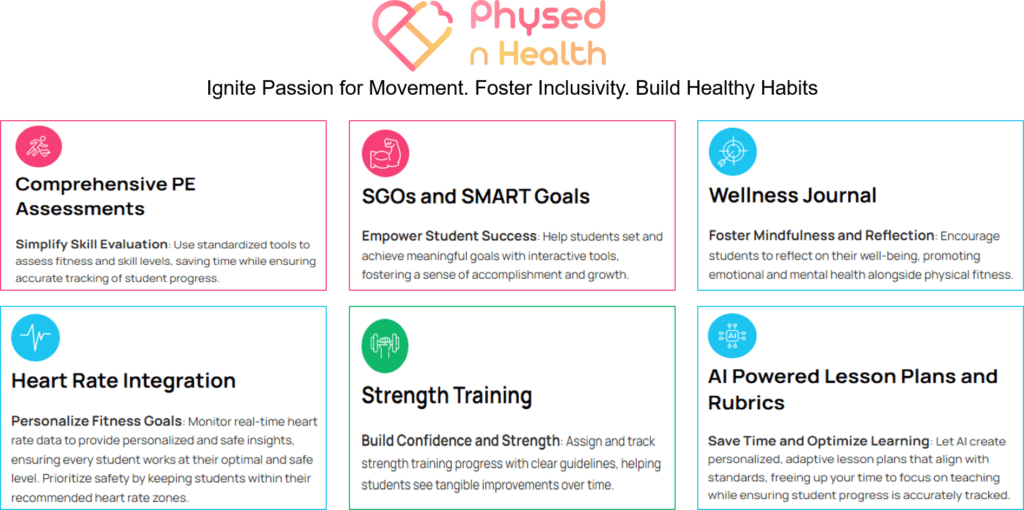
Is your PE program keeping pace with the demands of today’s students? Transforming Physical Education with Data-Driven Insights is no longer a luxury; it’s essential for student success. PhysednHealth simplifies PE assessments by providing real-time insights, customized evaluation tools, and student progress tracking—all in one platform. A Fitness Assessment & Data Collection Powerhouse 📊 Streamlined Fitness Assessments & Progress Tracking 💡 Results That Speak for Themselves: Schools using PhysednHealth report that 72.9% of students meet daily physical activity recommendations—a dramatic increase compared to the concerning national average of 20-28% (CDC Physical Activity Statistics). Download our Free PDF Guide: PhysednHealth Solution to The Top 5 Recurring Challenges in Physical Education Empowering Students Through Self-Assessment & Goal Setting Traditional PE models don’t always engage students. PhysednHealth redefines student involvement by encouraging self-assessment, goal tracking, and gamification. 🏆 Boost Motivation & Ownership with Goal Setting 💡 The Impact Is Clear: The impact is clear: PhysednHealth fosters healthier habits and improves overall well-being. 🔗 Learn more about the benefits of goal-setting in education from Edutopia. (Link opens in a new tab) Overcoming the Top Challenges in Physical Education Many educators face time constraints, student disengagement, and lack of resources. PhysednHealth is transforming Physical Education with Data-Driven Insights to tackle these common barriers with cutting-edge technology and data-driven solutions. 🚀 1. Limited Time & Resources 🎓 2. Varying Teacher Qualifications & Training 🎮 3. Student Engagement & Motivation 🌍 4. Addressing Diverse Student Needs 🏫 5. Prioritization & Perceived Value of PE Experience the Benefits: Elevate Your PE Program Today Ready to transform your PE program and empower your students with data-driven insights and engaging tools? With PhysednHealth, educators can: Download our Free PDF Guide: PhysednHealth Solution to The Top 5 Recurring Challenges in Physical Education Visit PhysednHealth.com to learn more.📩 Have questions? Contact us at awesome@physednhealth.com PhysednHealth is a leading physical education and student wellness technology platform designed to help schools modernize PE with smart, standards-based tools. Our easy-to-use physical education software empowers teachers to track student progress, set SMART fitness goals, and promote mental and physical well-being. Trusted by educators worldwide, PhysednHealth brings data-driven insights, AI-powered assessments, and personalized learning to PE programs—helping students build lifelong healthy habits.
Addressing Body Image Issues in PE

Body image issues are a growing concern in physical education (PE), often preventing students from fully participating and benefiting from physical activities. By addressing body image issues in PE, educators can help students build confidence, appreciate their bodies, and develop lifelong healthy habits. In this blog, we’ll explore actionable strategies to address body image issues in PE and foster an inclusive, supportive atmosphere. Why Addressing Body Image Issues in PE Matters Body image concerns can significantly impact students’ participation in physical activities. Research shows that adolescents with positive body image are more likely to engage in physical activity and experience higher self-esteem and overall well-being(link). Conversely, negative body-related emotions like shame or embarrassment can lead to lower participation rates and even dropout from sports(link). Creating a positive environment in PE not only helps students feel more comfortable but also promotes long-term physical and mental health benefits. How to Create a Positive Environment in PE 1. Shift the Focus from Appearance to Functionality Encourage students to value what their bodies can do rather than how they look. Activities like strength training, yoga, or dance can emphasize physical capabilities over appearance. Studies show that focusing on body functionality helps students develop a more positive attitude toward their bodies(link). 2. Use Inclusive Language and Practices Avoid language or activities that might make students feel judged or compared to others. Replace traditional fitness tests with collaborative or non-competitive activities that allow all students to succeed at their own pace. This approach reduces social physique anxiety and fosters a supportive environment(link). 3. Incorporate Media Literacy into Lessons Teach students to critically evaluate unrealistic body standards portrayed in media. Programs like “Happy Being Me” have successfully used media literacy to improve body satisfaction among adolescents(link). Integrating similar discussions into your PE curriculum can empower students to challenge harmful stereotypes. 4. Promote Autonomy and Self-Determination A study based on Self-Determination Theory (SDT) found that teacher support of autonomy is linked to greater motivation for PE and improved body appreciation among students(link). Allowing students to choose activities or set personal fitness goals can enhance their sense of control and engagement. 5. Create a Safe Space for All Students Ensure your PE class is a judgment-free zone where all body types are celebrated. Encourage open discussions about body positivity and provide resources for students struggling with self-esteem issues. A welcoming environment helps students feel comfortable participating without fear of criticism(link). The Role of Teachers in Promoting Body Positivity Teachers play a crucial role in shaping how students perceive their bodies during PE classes: By fostering these practices, teachers can create an environment where all students feel valued and motivated to participate in physical activity. Benefits of Addressing Body Image Issues in PE Taking steps to address body image issues in PE can lead to numerous benefits: Creating a positive environment not only benefits individual students but also contributes to a more inclusive school culture overall. Empower Your Students Through Positive Practices Addressing body image issues in PE is essential for helping students feel confident, capable, and motivated to engage in physical activity. By shifting the focus from appearance to functionality, promoting autonomy, and fostering inclusivity, educators can create a supportive space where every student thrives. Start implementing these strategies today to transform your PE class into a hub of positivity and empowerment! For more resources on fostering body positivity through physical education, visit trusted organizations like the Association for Applied Sport Psychology or explore research on body image interventions. By addressing these critical concerns head-on, you’ll not only enhance your students’ experience but also build trust as an educator who prioritizes their well-being—creating lasting impacts both inside and outside the classroom. Learn more at PhysednHealth. Contact us at awesome@physednhealth.com PhysednHealth is a leading physical education and student wellness technology platform designed to help schools modernize PE with smart, standards-based tools. Our easy-to-use physical education software empowers teachers to track student progress, set SMART fitness goals, and promote mental and physical well-being. Trusted by educators worldwide, PhysednHealth brings data-driven insights, AI-powered assessments, and personalized learning to PE programs—helping students build lifelong healthy habits.
Top Trends in Physical Education and Health 2025: What to Expect from the SHAPE America Convention

The 2025 SHAPE America National Convention & Expo offers an exciting preview of what’s next in the world of health and physical education. With innovative exhibitors from across the country, it highlights key trends in physical education and health 2025 that every educator and school leader should have on their radar. Here are the standout trends to watch: 1. Tech-Enhanced Physical Education Technology is transforming the way students move, measure, and stay motivated. This year’s expo features several leaders in fitness tech: With wearables and smart tools becoming mainstream, PE is evolving into a more personalized, trackable, and engaging experience. 2. Prioritizing Mental Health and SEL As schools expand their focus on whole-child education, mental wellness is front and center: This signals a shift toward holistic programs that support both physical and emotional development. 3. Inclusive and Creative Physical Activities PE is getting a fresh update with activities that emphasize fun, inclusivity, and creativity: These tools help educators keep students moving, laughing, and connecting. 4. Health Education & Substance Abuse Prevention Preventative health education is a rising priority, and several exhibitors are offering robust K–12 curricula: By starting early, these programs build foundational knowledge and decision-making skills. 5. Promoting Lifelong Physical Activity This year’s trend isn’t just about short-term fitness—it’s about building lifelong healthy habits: These programs emphasize that physical activity doesn’t end with PE class—it becomes part of a student’s lifestyle. Final Thoughts: The SHAPE America 2025 Convention is a powerful reminder that physical education and health are evolving quickly. Whether through smart tech, mental wellness support, inclusive games, or prevention education, the trends in physical education and health 2025 point to a more comprehensive, compassionate, and connected approach to student well-being. 📍 Planning to attend? Be sure to visit the exhibitors at their booths and explore how these innovations can elevate your teaching and impact student lives. PhysednHealth is a leading physical education and student wellness technology platform designed to help schools modernize PE with smart, standards-based tools. Our easy-to-use physical education software empowers teachers to track student progress, set SMART fitness goals, and promote mental and physical well-being. Trusted by educators worldwide, PhysednHealth brings data-driven insights, AI-powered assessments, and personalized learning to PE programs—helping students build lifelong healthy habits. Discover PhysednHealth innovative approaches to promote health and engagement in physical education. Contact us at awesome@physednhealth.com.